Joybuy Insights

Ergonomic Baby Carrier Guide: Find the Right Model Without Mistakes

As a Joybuy Product Recommendation Officer, I see the vast number of options available to expectant parents every day. An ergonomic baby carrier promises closeness, flexibility, and free hands. However, the market is saturated with products making big promises. Not all of them deliver, and some can even be uncomfortable for both you and your child. This guide will help you identify the essential features and steer clear of common purchasing traps.

The 3 Most Common Traps When Buying a Baby Carrier

Before we dive into the key features, let's highlight the three most common issues that can lead to a poor purchase.

  1. The "Dangling Legs" Trap: Many budget-friendly or outdated models simply let the baby's legs hang straight down. This posture puts strain on the hips, which are not yet fully developed, and fails to support the natural "M-position" (or frog-leg) spread.
  2. The "Back-Breaker" Effect: A carrier without adequate support for your lower back might seem fine for short trips. However, as your child's weight increases, wearing it quickly becomes a strain on your lumbar spine and shoulders.
  3. The "Sweatbox" Syndrome: Materials like thick, unlined polyester are often not breathable. Especially in warmer months or during extended wear, they lead to overheating and discomfort—for both the baby and the wearer.

What Really Matters: The Decisive Features of an Ergonomic Baby Carrier

To avoid these traps, you should focus on three core aspects. These objective criteria will help you assess the quality of a carrier, regardless of marketing claims.

Priority 1: Correct Posture for the Baby (M-Position and C-Spine)

The most important characteristic of an ergonomic carrier is its ability to support your child's healthy posture. Pay attention to the following two points:

  • M-Position Support: Also known as the frog-leg position. The baby's knees should be roughly at navel level, meaning higher than their bottom. The carrier's seat panel must be wide enough to support the thighs from one knee to the other. This promotes healthy hip development.
  • Gently Rounded Back (C-Spine): An infant's spine is not yet S-shaped like an adult's. A good carrier supports the baby's back, allowing it to curve gently. The fabric should mould to the child's body, holding them securely without forcing them into a rigid position.

Priority 2: Comfort for the Wearer (Weight Distribution and Lumbar Support)

A good baby carrier should be comfortable for you, not just for the child. The baby's weight should be distributed evenly to prevent pressure points.

  • Carrier with Lumbar Support: A wide, padded hip belt is crucial. Some models offer additional reinforcement in the lumbar region (lumbar support). This feature helps shift the weight from your shoulders to your hips, effectively preventing back pain.
  • Wide and Padded Shoulder Straps: The straps should distribute weight without digging into your shoulders. For a front-facing baby carrier, crossed straps can further optimise load distribution.

Priority 3: Material and Everyday Practicality

The practical aspects of a carrier only become apparent with daily use.

  • Material: A cotton baby carrier is often an excellent choice. Cotton is breathable, soft against the baby's skin, and generally easy to care for. Check if the material is machine-washable—this makes cleaning significantly easier.
  • Adjustability: The carrier should be simple and intuitive to adjust for different body sizes (for both the child and the parents). Buckles and straps should be easy to reach and secure to operate.

Our Pick for Flexible Family Life

When choosing a carrier that meets these criteria, looking at a specific example is helpful. The following model from the Joybuy range is aimed at parents seeking a versatile and comfortable solution for everyday life.
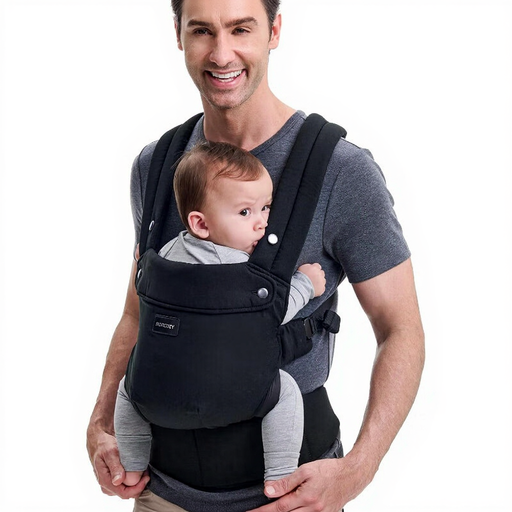
MATCH FOR: EVERYDAY-FOCUSED PARENTS
Momcozy Babytrage - Ergonomisch, Komfortabel & Leicht

Momcozy Baby Carrier - Ergonomic, Comfortable & Lightweight

Why This Fits Their Persona: This model is designed for daily use. It's lightweight and easy to put on, making it practical for running errands, going for walks, or using it at home when you need your hands free.

How It Avoids the Trap

The Momcozy Baby Carrier addresses the common pitfalls: it is designed for the M-position and C-spine posture, features an EVA panel for lumbar support, and is made of 100% cotton for excellent breathability.

Key Advantage & Pros

Wide weight range (approx. 3.2 kg to 20 kg) for long-term use. The material is machine-washable, which simplifies everyday care.

Looking for More Options?

We have compiled a complete, real-time list of products that fully satisfy these strict selection criteria and UK safety regulations.

Frequently Asked Questions (FAQ)

When is a baby carrier suitable for newborns?

This depends on the specific model. Always check the manufacturer's weight specifications. Many carriers are suitable from a weight of around 3.2 kg or 3.5 kg. A baby carrier for newborns should either have an integrated newborn insert or an adjustable seat panel that can be narrowed to fit the baby's small size. Stable head and neck support is also crucial as long as the child cannot yet hold their head up independently.

How do I know if my baby is positioned correctly in the carrier?

Perform a quick check:

  1. M-Position: The knees are higher than the bottom.
  2. Kissable Height: You can easily kiss your baby's head without having to bend forward significantly.
  3. Clear Airways: The baby's face is visible and not covered by fabric. Their chin is not pressed against their chest.
  4. Snug Fit: The baby is held closely against your body and is not slumping down inside the carrier.

Can I use a front carrier in the forward-facing position?

Some carrier systems offer the option to carry the child facing forward. However, this position should only be used for short periods and only once the child has stable head and torso control. The forward-facing position does not optimally support the ergonomic M-position and can overstimulate the child with too much sensory input. For longer durations, the inward-facing front carrier is the better option for the child's ergonomics and well-being.