
Lieferung heute & morgen

Qualitätsgarantie

Willkommens-Angebote freischalten: KOSTENLOSE Lieferung | Bis zu 80 % RABATT | Kostenlose 30-Tage-JoyPlus-Testphase
App herunterladen
An ergonomic baby carrier can be useful in everyday life: when going for a walk, travelling, doing jobs around the house or anywhere a pushchair would be cumbersome. However, models vary considerably in fit, age range, carrying positions and materials. A low price or the word ‘ergonomic’ alone tells you little about whether a carrier is genuinely suitable.
If you’re looking for a baby carrier for newborns or a baby carrier up to 3 years, it’s worth checking a few details carefully before you buy. The following criteria can help you distinguish marketing claims from verifiable product features.
Some manufacturers specify a minimum weight of around 3.5 or 3.6 kg. However, this alone doesn’t confirm that every newborn will fit securely and correctly straight after birth. Height, head control, seat width and the ability to adjust the carrier properly to a small body are also important.
If your baby was born prematurely, has a low birth weight or has specific health needs, seek medical advice before using a carrier. A baby carrier is no substitute for an individual assessment.
Carrying your baby facing towards you is often the natural choice for younger babies. Depending on the model, carrying your baby facing outwards or on your back may require them to be a certain age or height, or to have good head and trunk control.
So a baby carrier for front and back carrying isn’t automatically suitable for every position from birth. Check the manufacturer’s guidance for each carrying position individually.
Mesh fabric can help air circulate, while stretch fabric often fits closely to the body. But shoulder straps, the waist belt, the seat and your child’s clothing all play a part too. A breathable baby carrier won’t necessarily keep your baby cool in summer if it has several layers of fabric or a very close-fitting design.
With a baby carrier with an M-position, your child’s knees sit higher than their bottom. The seat width should be adjustable or suit your child’s body, so their legs don’t hang down without support. However, an ergonomic claim is no substitute for correct adjustment.
Look for:
Always compare the minimum weight, maximum weight and height range. A model listed for 3.5 to 15 kg won’t necessarily fit every child within that range equally well. The wearer’s body shape and maximum hip or waist measurement are also relevant.
A baby carrier strap should not only be quick to put on, but should also stay secure once adjusted. Wide, padded shoulder straps and an adjustable waist belt can distribute weight better than narrow straps. However, you can only assess how comfortable a carrier feels by adjusting it correctly.
Baby carriers may include references to standards such as EN 13209-2:2015. This standard covers requirements and test methods for child carriers. You should be able to verify any such claim on the product itself or in the manufacturer’s information.
Also check:
A baby sling with a ring fastening can be easy to put on and compact to store. With a ring sling, make sure the rings are secure and the fabric is spread evenly over your back and shoulder. Check the product for damage before every use.
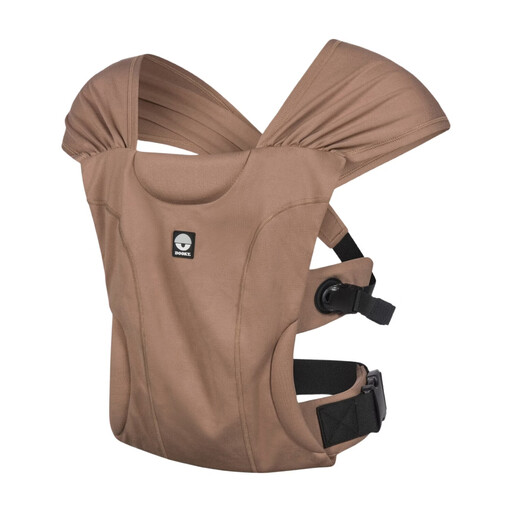
Why this product suits this profile: Its hybrid design combines a sling-like feel with crossed straps, without the need for complicated tying. Suitable for babies from 56 to 74 cm and up to a maximum of 9 kg.
The clearly stated height and weight range helps prevent this model being mistakenly viewed as suitable throughout the toddler years.
Soft, breathable fabric, crossed straps and quick to put on without any wrapping.
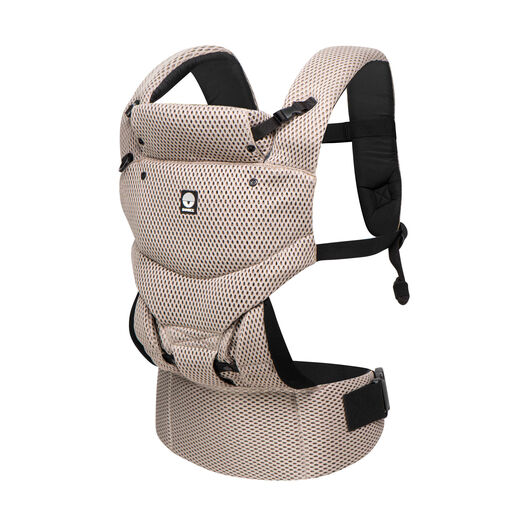
Why this product suits this profile: According to the product information, this model is designed for 3.5 to 15 kg. It features an adjustable M-position, 3D mesh and front and back carrying positions.
The seat and leg supports can be adjusted, rather than relying on a fixed seat width for every age.
3D mesh fabric, padded adjustable straps, a waist belt that extends to 143 cm and a reference to EN 13209-2:2015.
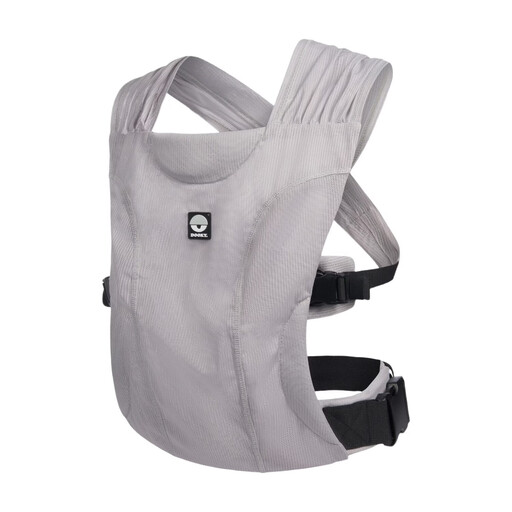
Why this product suits this profile: This water baby carrier for showering and swimming is designed for babies from 56 to 74 cm and intended for use in shallow, supervised water.
The product warnings clearly set limits on use: it is not a life-saving device, must never be used without supervision, and must not be used in deep or open water.
Quick-drying stretch fabric, click fastenings, and information on SGS testing and suitable height.
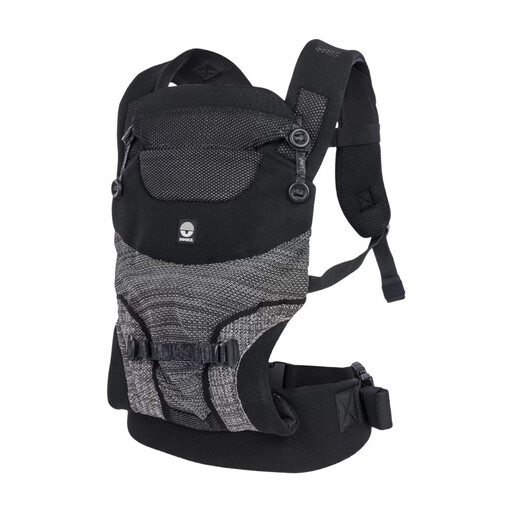
Why this product suits this profile: This model is designed for 3.5 to 15 kg and, according to the product information, can be used from birth to around 3 years. The waist belt extends to 159 cm.
The stated weight range, adjustable seat and different carrying positions make the limits of use clearer.
M-position, soft stretch fabric, three carrying positions and a reference to EN 13209-2:2015.
We’ve put together a complete, regularly updated list of products that meet these strict selection criteria and fully comply with the safety regulations in force in the EU.
It depends on the model and your baby. Check the minimum weight, height, head support and seat adjustment. For a baby carrier for newborns, the manufacturer should explicitly state the minimum size it is designed for. If your baby was born prematurely or has specific health needs, it’s sensible to speak to a medical professional.
The period of use is limited by the weight and height range, seat width and comfort. According to product information, some models are suitable up to around 15 kg or approximately 3 years. This doesn’t guarantee a consistent fit throughout that entire period. Regularly check the straps, seams and fastenings, as well as your child’s position.
This type of carrier is not a swimming aid or life-saving device. According to the product information, the Dooky Splash is restricted to showering and shallow water under constant supervision. Your child must remain within reach at all times. Deep water, open water and use without supervision are not permitted.