
Lieferung heute & morgen

Qualitätsgarantie

Willkommens-Angebote freischalten: KOSTENLOSE Lieferung | Bis zu 80 % RABATT | Kostenlose 30-Tage-JoyPlus-Testphase
App herunterladen
An ergonomic baby carrier can make everyday life easier: you keep both hands free, your baby sits close to your body, and getting around the home, town or on holiday can be more flexible. However, carriers vary considerably in fit, weight range and materials. If you focus only on terms such as “lightweight”, “comfortable” or “ergonomic”, you may overlook important details.
The label alone doesn’t tell you much. More useful are clear product features, such as an adjustable seat, a described M-position for the legs, and adjustments to suit your baby’s height and weight. Your baby’s knees should sit higher than their bottom. However, a baby carrier is no substitute for individual advice from a healthcare professional. If you have any concerns about your baby’s hip or spinal development, speak to your midwife or GP.
A baby carrier up to 20 kg may be designed for use over a longer period. That doesn’t automatically mean that every baby will sit in it optimally at every stage of development. Check the manufacturer’s guidance on minimum height, minimum weight and head control. A carrier for babies from around 3 months should only be used if your baby meets the relevant requirements.
“Cooling” and “airy” aren’t standardised properties. An breathable baby carrier should specify the materials used around the back and neck. Cotton can feel soft, while mesh fabric may help improve air circulation. For warmer days, longer walks or travel, it’s also worth checking whether the carrier is machine washable.
Look for three details:
Age is therefore only a guide. Your baby’s height, stage of development and correct adjustment also matter.
With a baby carrier with an M-position, the thighs should be supported, with the knees higher than the bottom. Padded leg openings can help reduce pressure points. Younger babies also need suitable head and neck support. In a front-facing baby carrier, your baby’s face must remain visible; their mouth and nose must not be covered by fabric or by the adult carrying them.
A baby carrier with lumbar support may improve how the load is distributed across your torso, as long as it’s positioned and adjusted correctly. Models with crossed shoulder straps or several adjustment points can often be fitted more easily to different body shapes. The carrier’s own weight matters too: a lightweight baby carrier weighing around 771 grams may be easier to handle over longer periods, but it can’t make up for a poor fit.
Before you buy, also check:
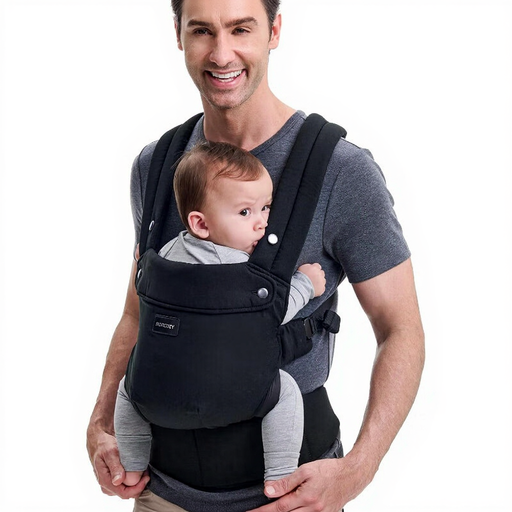
Why this product suits this profile: This cotton carrier is designed for front carrying and, according to the product information, accommodates around 3,18 to 19,96 kg. It’s a straightforward option for parents looking for something practical for everyday use and walks.
The manufacturer specifies weight limits, an M-position and an adjustable design, rather than relying on general claims about comfort.
100% cotton, machine washable, EVA lumbar support and a product weight of around 771 grams.
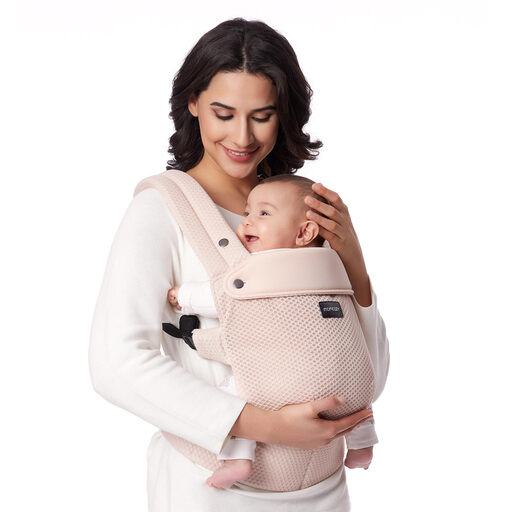
Why this product suits this profile: The Air-Mesh fabric and cooling neck area are designed with warmer days in mind. It’s a good option for parents who value air circulation on outings and trips.
The material is specifically described as Air Mesh. The product information also gives a weight range of around 3,18 to 19,96 kg and three adjustment positions.
Breathable mesh fabric, X-shaped shoulder straps, EVA waist support and padded leg openings.
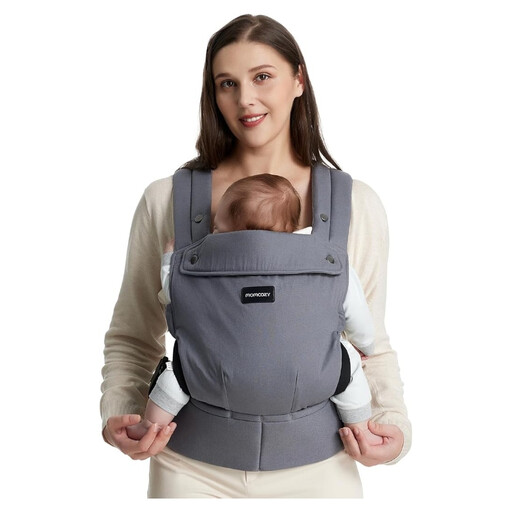
Why this product suits this profile: This front carrier, made from 100% cotton, combines a wide weight range with three types of support. It’s a good choice for parents who want to carry their baby regularly as part of everyday life.
The product information specifies C-shaped back support, an M-position, padded leg openings and clear minimum and maximum weight limits.
Cotton fabric, a foldable neck support, an EVA panel and a stated weight of 771 grams.
Before each use, check the buckles, straps, seams and fabric. Damaged or missing parts mean the carrier should not be used. Make sure all fastenings click securely into place. Your baby should sit upright and close to your body, with their face visible. Don’t use the carrier while cycling, jogging, cooking over an open flame or doing anything else that could put you at risk of a fall or burn.
A comfortable baby carrier will only stay comfortable if you adjust the straps regularly. Stop using it immediately if you experience pain or notice pressure points, or if your baby has difficulty breathing. Follow the care instructions for your model to avoid putting unnecessary strain on the fabric, padding and fastenings.
We’ve put together a complete, regularly updated list of products that meet these strict selection criteria and fully comply with the safety regulations in force in the EU.
It depends on the model, minimum weight, your baby’s height and their ability to hold their head up. The models featured here are described as suitable from around 3 months. Always follow the instruction manual and the manufacturer’s safety guidance.
According to the product information, the Momcozy models featured here are designed for babies from around 3 to 24 months and up to around 19,96 kg. How long you can actually use the carrier depends on your baby’s growth, seating position, fit and the condition of the carrier.
A cotton baby carrier can feel soft, and the models featured here are machine washable. Mesh fabric may help improve air circulation in warm weather. For trips and longer journeys, it’s also worth considering the packed size, weight, ease of cleaning and how easy the carrier is to adjust.