Joybuy Insights

Ergonomic Baby Carrier Buying Guide to Avoid Common Mistakes

Choosing an ergonomic baby carrier is a decision for closeness, flexibility, and the health of both your child and you. But the market is overwhelming and full of promises. Many parents invest in a model that ends up in a closet after a short time because it's uncomfortable or doesn't fit properly. This guide shows you which critical features to look for and how to avoid common buying traps.

As your Joybuy Product Recommendation Officer, I filter the essential information for you, so you can make an informed decision based on facts, not marketing hype.

The 3 Most Common Baby Carrier Buying Traps

Before we dive into the important features, let's look at the three most common problems that lead to frustration and buyer's remorse.

  1. The "One-Size-Fits-All" Trap: Many carriers claim to be suitable from birth to toddlerhood. In practice, these models are often a compromise: the seat is too wide or the support is inadequate for newborns, while for larger children, the back panel becomes too short and the weight is no longer optimally distributed.
  2. The "Quick to Wear" Fallacy: Simplicity is an important criterion. However, some very simply designed carriers neglect weight distribution. The result: after a 20-minute walk, your shoulders and back ache because the entire load rests on a small area.
  3. The Material Dilemma: A thickly padded, cozy-looking material can quickly turn into a disadvantage. In heated indoor spaces or on warmer days, a lack of air circulation causes both the baby and the wearer to overheat. A breathable baby carrier is often the more practical choice.

Crucial Criteria: What to Look for Before You Buy

To avoid the traps mentioned above, focus on three objective core parameters. These determine the safety, comfort, and longevity of your baby carrier.

1. The Foundation for Healthy Development: The Spread-Squat Position (M-Position)

The most important criterion for an ergonomic baby carrier is its ability to support the child's correct posture. Make sure the carrier allows for a baby carrier M-position.

  • What does this mean? The baby's knees are positioned higher than their bottom, and their thighs are slightly spread apart. Viewed from the front, the baby's bottom and legs form the letter "M".
  • Why is this important? This posture, also known as the spread-squat position, promotes healthy development of the hip joints and helps prevent hip dysplasia. The carrier's seat should be wide enough to support the baby from one knee pit to the other. At the same time, the baby's back should be slightly rounded (a C-shape), which supports the natural posture of the spine in infancy.

2. Comfort for the Wearer: Load Distribution via Waist Belt and Shoulder Pads

A good front-facing baby carrier should be comfortable not only for the child but also for you. The key to this lies in intelligent weight distribution.

  • Baby carrier with a waist belt: A wide and sturdy padded waist belt is essential. It shifts a large portion of the weight from the shoulders to the hips, which can bear a much heavier load. This relieves the spine and prevents back pain.
  • Crossed or wide shoulder straps: Well-padded shoulder straps, which can ideally be crossed on the back (X-shape), distribute the remaining weight evenly and prevent pressure points.

3. Material Choice by Season: From Cotton to Breathable Baby Carriers

The material has a direct impact on comfort.

  • For summer and active parents: A summer baby carrier made of mesh fabric or other lightweight, air-permeable materials is ideal. It prevents heat buildup and ensures that you and your child do not sweat excessively, even in warm temperatures.
  • For year-round use: High-quality cotton is a good all-around solution. It is soft, durable, and naturally quite breathable. Look for certifications that guarantee skin-friendliness.

Top Selection By Use

Here are some models tailored to specific needs that meet the criteria mentioned above.
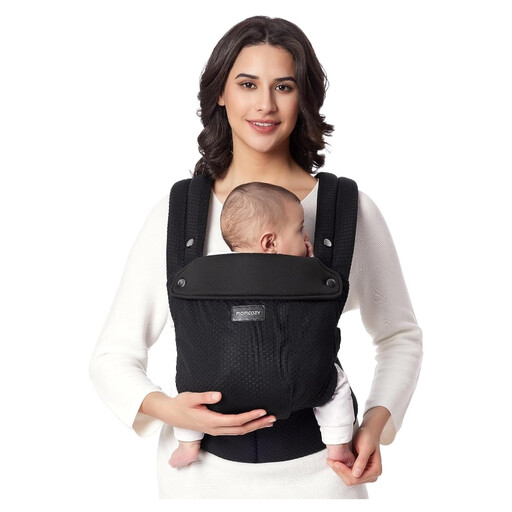
MATCH FOR: ACTIVE SUMMER DAYS
Momcozy Breathable Mesh Baby Carrier, Ergonomic Design, Lightweight & Easy to Use, for 3.2-20 kg, Enhanced Lumbar Support, All-Day Comfort, Hands-Free, Black

Momcozy Breathable Mesh Baby Carrier, Ergonomic Design, Black

Why This Fits Their Persona: Ideal for parents who spend a lot of time outdoors in the summer or live in well-heated homes. The mesh fabric maximizes air circulation and prevents heat buildup for both child and wearer.

How It Avoids the Trap

Solves the problem of overheating with a specially designed, breathable material without compromising on ergonomic support.

Key Advantage & Pros

Maximum air circulation through mesh fabric; supports the M-Position and relieves back strain with an X-shaped strap system and a waist belt.
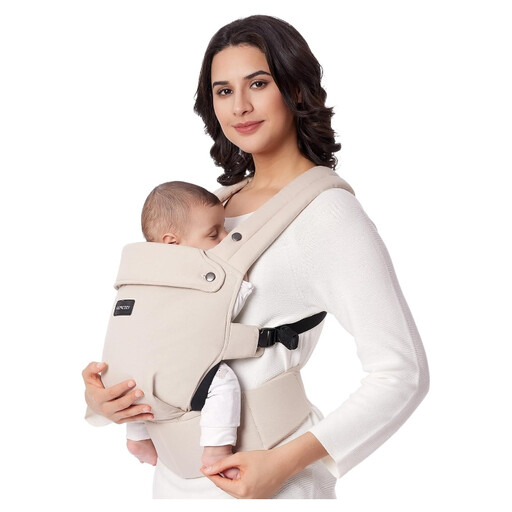
MATCH FOR: THE EVERYDAY ALL-ROUNDER
Momcozy Baby Carrier - Ergonomic, Comfortable and Lightweight, for 7-44 lbs (3-20 kg) Babies, Easy to Wear, Hands-Free, Enhanced Lumbar Support, Solid Color for Infants and Toddlers, Khaki

Momcozy Baby Carrier - Ergonomic, Comfortable and Lightweight, Khaki

Why This Fits Their Persona: A reliable choice for daily use—from running errands and doing housework to going for walks. The soft cotton is suitable for most situations, and the focus is on straightforward, lasting comfort.

How It Avoids the Trap

Directly addresses the trap of poor weight distribution. The combination of an EVA waist support and padded straps actively prevents back and shoulder strain.

Key Advantage & Pros

Made from 100% cotton for year-round comfort; features a well-designed strap system for excellent load distribution.
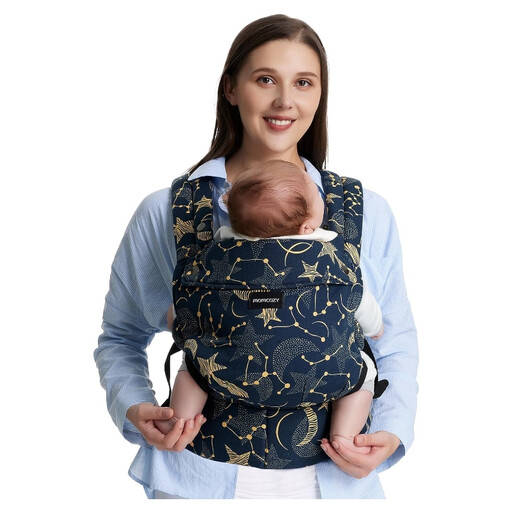
MATCH FOR: STYLE-CONSCIOUS PARENTS
Momcozy Baby Carrier - Ergonomic, Comfortable & Lightweight, for 7-44lbs (3-20kg) Babies, Easy to Wear, Hands-Free, Enhanced Lumbar Support, Starry Pattern, gifts for mom

Momcozy Baby Carrier - Ergonomic, Starry Pattern

Why This Fits Their Persona: For parents who also see their baby carrier as a fashion accessory and want a design that stands out from the crowd, without compromising on core ergonomic functions.

How It Avoids the Trap

Proves that an attractive design doesn't mean sacrificing important ergonomic principles like the M-position and solid back support for the wearer.

Key Advantage & Pros

Eye-catching starry pattern design; combines all the ergonomic benefits of the standard models, including C- and M-position support.

Looking for More Options?

We have compiled a complete, up-to-date list of products that fully meet these strict selection criteria and UK safety regulations.

Frequently Asked Questions (FAQ)

When is an ergonomic baby carrier suitable for newborns?

Most ergonomic carriers are designed for babies from a certain minimum weight (often around 3.2 kg) and height. A baby carrier suitable from birth should always provide good head and neck support, as newborns cannot yet hold their heads up independently. Always check the manufacturer's specifications. Some models require a separate newborn insert for the smallest babies.

How do I ensure my baby is in the correct M-position?

Check these three points:

  1. Your baby's knees are visibly higher than their bottom.
  2. The carrier's fabric supports the thigh from one knee pit to the other.
  3. Your baby's back is slightly rounded and gently supported by the carrier, not pressed flat.

How do I care for and clean my baby carrier?

Most modern baby carriers are easy to care for. However, it is important to always follow the manufacturer's care label. Many models, like those from Momcozy, are machine washable, which is a significant advantage in daily life with a baby. Use a mild detergent and let the carrier air dry to protect the materials and buckles.