
Lieferung heute & morgen

Qualitätsgarantie

Willkommens-Angebote freischalten: KOSTENLOSE Lieferung | Bis zu 80 % RABATT | Kostenlose 30-Tage-JoyPlus-Testphase
App herunterladen
An ergonomic baby carrier can make everyday life easier: on walks, when travelling, around the house or wherever a pushchair would be impractical. At the same time, baby carriers vary considerably in terms of age range, seat width, materials and ease of use. An appealing product description alone is therefore not enough to make an informed purchasing decision.
Three common pitfalls are particularly likely to lead to the wrong purchase:
A baby carrier for newborns should only be used once the stated minimum weight and required height have been reached. Some models start at around 3 to 3.5 kg. According to the product details, other carriers are only suitable from approximately three months, particularly if the baby cannot yet hold their head independently.
For a baby carrier up to 3 years, the maximum load is also important. The selection includes models with a stated range up to 15 kg, as well as versions suitable for up to around 20 kg. The actual end of the usable period depends on whether the child is still adequately supported and whether the carrier can be adjusted to fit their size.
With a baby carrier featuring an M-position, the knees sit higher than the bottom. The seat should be adjustable so that the leg panel is neither too narrow nor too wide. An adjustable head and neck support can provide additional support for younger babies.
Important: the airways must remain clear at all times. The face should be visible, and the nose and mouth must not be covered by fabric or by the person carrying the baby. Premature babies, babies with a low birth weight or children with particular health needs should be discussed with a medical professional before use.
An breathable baby carrier made from 3D mesh or air mesh can offer better air circulation on warm days. Cotton or soft stretch materials often feel comfortable, but may feel different from mesh fabric at higher temperatures.
For parents, wide, padded shoulder straps, an adjustable waist belt and clear weight distribution are important. A baby carrier with back support can be useful on longer journeys. Before buying, check whether all the straps can be put on and readjusted without assistance. A lightweight baby carrier is convenient when you are out and about, but this should not come at the expense of seating stability and support.
The carrying positions should also be considered. Some models allow the baby to be carried on the front facing the wearer, facing outwards and on the back. With the models mentioned, back carrying is in some cases only recommended from around six months. The relevant instructions for use always take precedence.
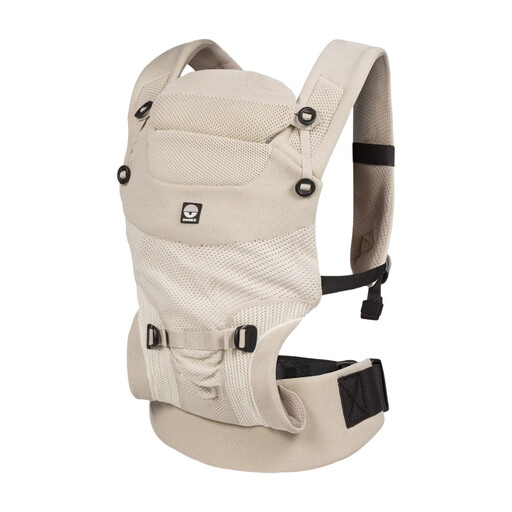
Why this product suits this profile: According to the product details, this carrier is suitable for 3.5 to 15 kg, making it designed for a longer period of use from early infancy to around three years. Three carrying positions cover a range of everyday situations.
The stated weight range is clearly specified. The seat and leg supports are adjustable and, according to the description, support the M-position.
Three carrying positions, padded shoulder straps and a waist belt; suitable for a waist measurement of up to 159 cm.
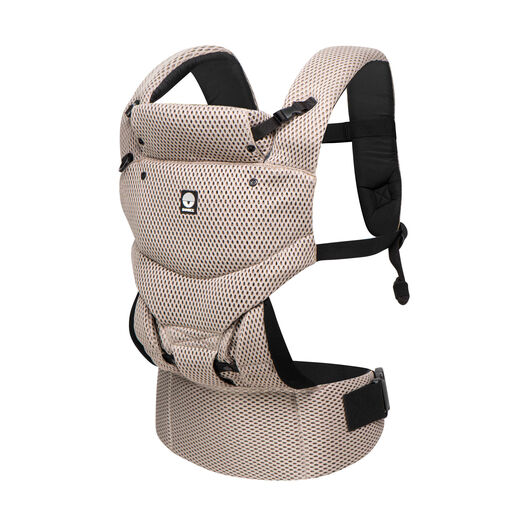
Why this product suits this profile: This model combines adjustable seat and leg supports with 3D mesh fabric. According to the product details, it has been tested to EN 13209-2:2015 and recognised by the International Hip Dysplasia Institute.
The information on the standard, weight range of 3.5 to 15 kg and maximum waist measurement of 143 cm makes it easier to check the details before buying.
3D mesh for ventilation, three carrying positions and padded, adjustable straps for the wearer.
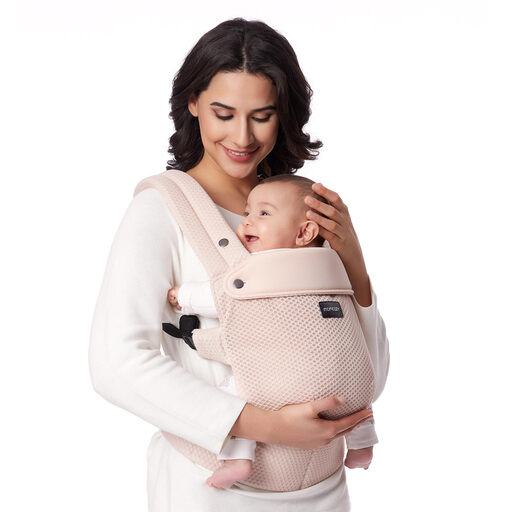
Why this product suits this profile: For warm days, journeys through town or travelling, the air-mesh material with cooling-contact fabric is designed to promote ventilation. According to the product details, the carrier is suitable for approximately 3.18 to 19.96 kg.
The material addresses the common problem of heat build-up. Three adjustable size positions help adapt the carrier as the child grows.
Air-mesh fabric, X-shaped back system, EVA waist support and padded leg openings.
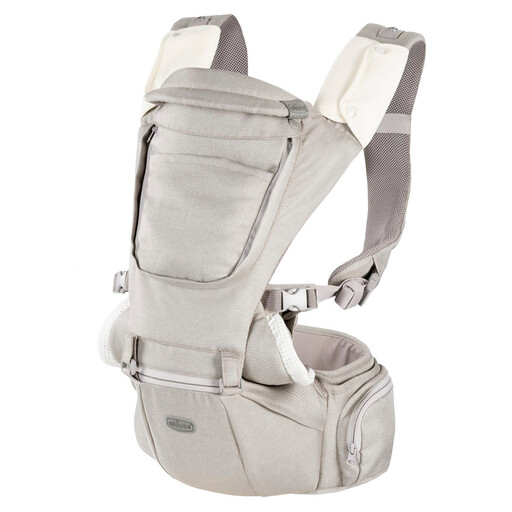
Why this product suits this profile: The 3-in-1 system can be used together, as a hip seat or as a fabric carrier. According to the product details, it offers eight carrying positions and is suitable for 3 to 15 kg.
The individual ways of using the product are clearly separated. This makes it possible to check before buying whether a hip seat is genuinely needed for everyday use.
Removable hip seat, eight configurations and, according to the product details, recognition by the International Hip Dysplasia Institute.
We have put together a complete, regularly updated list of products that fully meet these strict selection criteria and the safety regulations applicable in the EU.
This depends on the model. According to the manufacturer, some products are suitable from a minimum weight of around 3 to 3.5 kg. Others are intended for babies from approximately three months. The weight range, height, head control and information in the instructions for use are always decisive.
The baby should sit upright and close to the body, without the nose or mouth being covered. The knees should be higher than the bottom in the M-position. The shoulder straps, waist belt and head support should then be adjusted. Before every use, check the buckles, seams and straps.
The usable life depends less on a fixed period and more on the condition of the materials, the load limit and the fit. A carrier for babies and toddlers can be used for several years if it remains within the stated weight range and shows no damage to the straps, buckles or seams. If you experience pain or pressure points, stop using the carrier and check the adjustment.