
Lieferung heute & morgen

Qualitätsgarantie

Willkommens-Angebote freischalten: KOSTENLOSE Lieferung | Bis zu 80 % RABATT | Kostenlose 30-Tage-JoyPlus-Testphase
App herunterladen
An ergonomic baby carrier can be practical in everyday life: on walks, when travelling, around the house or whenever a pushchair is not suitable. However, there is a huge choice, and product descriptions often use terms such as “ergonomic”, “breathable” or “from birth” without clearly explaining the important details.
Three common buying misconceptions particularly often lead to unsuitable purchases:
When choosing a baby carrier for newborns, parents should first check the details for the specific model. For a baby carrier suitable from birth, the following information is particularly relevant:
The statement “baby carrier up to 20 kg” only describes the maximum load. It does not automatically mean that the model is suitable for a newborn or for every carrying position from birth. The instructions should therefore be the deciding factor when buying.
An ergonomic baby carrier should allow the child to adopt a natural posture. In a baby carrier with M-position, the child’s knees are slightly higher than their bottom. The fabric or seat should adequately support the thighs without pressing into the backs of the knees.
Useful features include:
Recognised certification can provide additional guidance. For example, the Chicco Baby Carrier Hip Seat is stated to have recognition from the International Hip Dysplasia Institute. However, this information should not be interpreted as a medical guarantee.
Wide, padded shoulder straps and an adjustable waist belt can help distribute the weight more evenly. A baby carrier with a waist belt is particularly suitable for longer walks or trips, provided that the belt fits your body shape and feels secure without being uncomfortable.
A baby carrier with a hip seat also provides a wide seating surface. This can be useful when carrying an older baby or toddler for short periods, but it is often heavier and bulkier than a soft carrier.
Mesh panels and quick-drying fabrics are appealing for warm days. However, a baby carrier for summer should not only be breathable. Sun protection, suitable clothing for the child and regular breaks remain important. The face must be visible, and the mouth and nose must remain unobstructed.
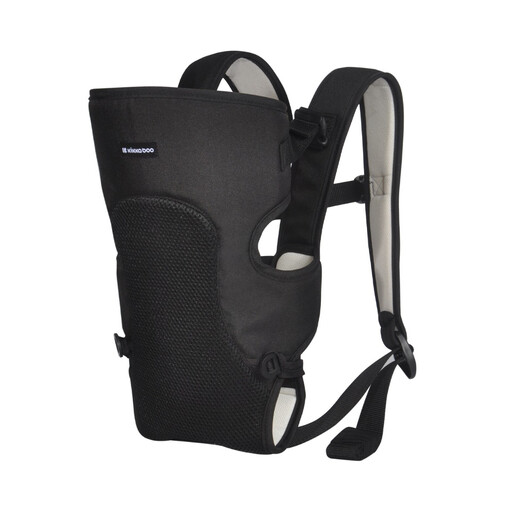
Why this product suits this profile: This model offers three carrying positions and, according to the product details, is intended for children from around 3 months up to a maximum of 9 kg. It is therefore suitable for parents looking for a straightforward solution for the early carrying stage.
The clear weight limit helps prevent the stated 3-in-1 function from being confused with use through the toddler years. The mesh material is designed to promote air circulation.
Breathable mesh, padded shoulder straps, a cross strap to prevent the straps from slipping and conformity stated in accordance with EN 13209-2.
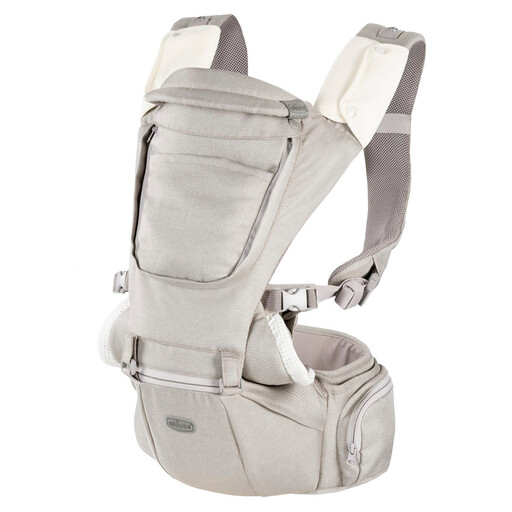
Why this product suits this profile: The 3-in-1 system combines a fabric carrier with a detachable hip seat and, according to the stated details, can be used from 3 kg up to 15 kg. It is aimed at parents who want to use different carrying options.
The individual ways of using it are clearly separated: base, fabric carrier or the complete combination. This makes it easier to adapt the carrier to the child’s age, weight and situation.
Eight stated carrying configurations, machine-washable cover and a hip seat with a wide support surface.
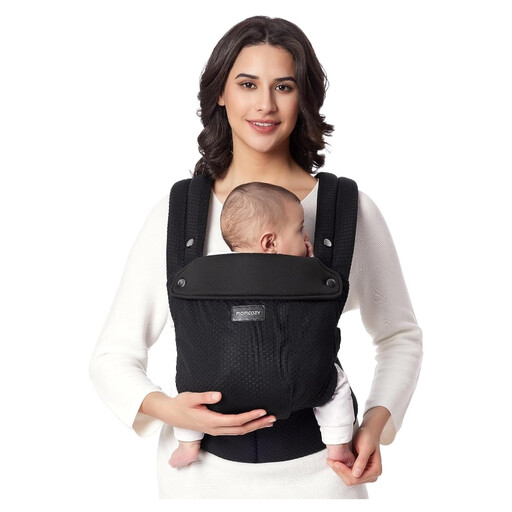
Why this product suits this profile: According to the product details, this breathable baby carrier is designed for approximately 3.18 to 19.96 kg, making it suitable for everyday use, outings and warm days.
The product details specify both the weight range and three adjustable size positions. This allows the fit to be adapted as the child grows, rather than relying solely on a general age indication.
Air-mesh panel, cooling fabric at the neck, EVA waist support, padded leg openings and machine-washable material.
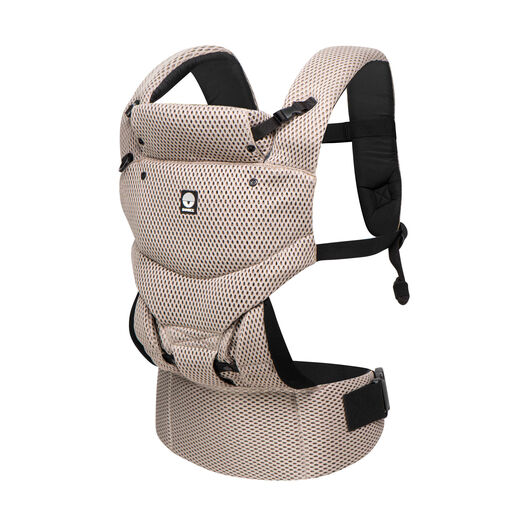
Why this product suits this profile: According to the manufacturer’s details, this model is intended for 3.5 to 15 kg and approximately 0 to 3 years. It can be worn at the front facing inwards, at the front facing outwards and on the back from 6 months.
The adjustable seat and stated M-position address the question of fit. At the same time, the maximum load of 15 kg remains clearly defined.
3D mesh, padded shoulder straps, waist belt up to 143 cm, foldable design and stated testing in accordance with EN 13209-2:2015.
We have put together a complete, regularly updated list of products that fully meet these strict selection criteria and the safety regulations applicable in the EU.
Regardless of the model, parents should before use:
A baby carrier is not a protective system in the event of falls or road accidents. It should not be used when jogging, cycling, cooking over an open flame or during any other activity involving an increased risk of falling.
According to the product details, models with a stated minimum weight of around 3 to 3.5 kg may be suitable from birth. Parents should also check that the child is safely supported and that the instructions permit use without an additional newborn insert. For premature babies or children with specific health conditions, it is advisable to seek individual advice from a medical professional.
This depends on the child’s weight, height and seat width, as well as the carrier’s design. Some models are suitable up to 9 kg, while others can be used up to 15 kg or 20 kg. The indication “0 to 3 years” should therefore always be considered together with the maximum load and the approved carrying positions.
Mesh or air-mesh material can improve air circulation. However, it does not automatically prevent overheating. Lightweight clothing, shade, regular breaks and checking the child’s neck, back and face remain essential.