
Lieferung heute & morgen

Qualitätsgarantie

Willkommens-Angebote freischalten: KOSTENLOSE Lieferung | Bis zu 80 % RABATT | Kostenlose 30-Tage-JoyPlus-Testphase
App herunterladen
An ergonomic baby carrier can make walks, travel and quick everyday errands easier. At the same time, unclear sizing information, poorly adjustable straps or exaggerated comfort claims can quickly lead to a disappointing purchase. It is particularly important that the carrier suits your child’s weight and stage of development, and can be adjusted to fit the wearer’s body.
Details such as “for 3 to 20 kg” may initially appear versatile. However, they do not by themselves indicate whether the carrier can be adjusted correctly for every child within that range. Other important factors include the minimum height, the baby’s head control, leg position and the adjustability of the seat width.
A baby carrier for newborns and toddlers should therefore always be used in accordance with the manufacturer’s specifications and instructions. The models featured here are intended for use from around three months. According to the product information, they are not suitable for babies who cannot yet hold their head independently.
The term alone does not describe a particular design. Look for clear, verifiable features such as:
A baby carrier with lumbar support can improve weight distribution for adults. However, it does not replace correct adjustment and should not be considered a medical aid.
A breathable baby carrier with mesh fabric can promote air circulation. In warm weather, however, clothing, body contact and the ambient temperature also remain relevant. So check whether the material allows enough air through around the back and neck, and whether the carrier is machine washable.
The product information should state a clear minimum and maximum load. For the selected Momcozy models, the stated range is approximately 3.18 to 19.96 kg or 20 kg, depending on the variant. The recommended age range is approximately three to 24 months.
A front baby carrier is suitable for parents who want to carry their child close to their body while walking or travelling. Hands-free use is practical, but that does not mean every activity can be carried out safely while wearing one. Activities involving a risk of falling, cycling, jogging and cooking over open flames are not intended according to the safety instructions.
After putting the carrier on, check that:
A lightweight baby carrier weighing around 760 to 771 grams can be practical for travelling and longer walks. However, the actual carrying comfort also depends on the strap configuration and how well it fits the adult wearer.
Cotton can feel soft and is machine washable on several models. Mesh fabric is designed to promote air circulation and may be particularly appealing on warm days. Before buying, check the care instructions, fastenings and seams.
A washable baby carrier is especially useful for everyday life with young children. Use the washing method recommended by the manufacturer and inspect the carrier after washing for damaged seams, loose straps or misshapen padding.
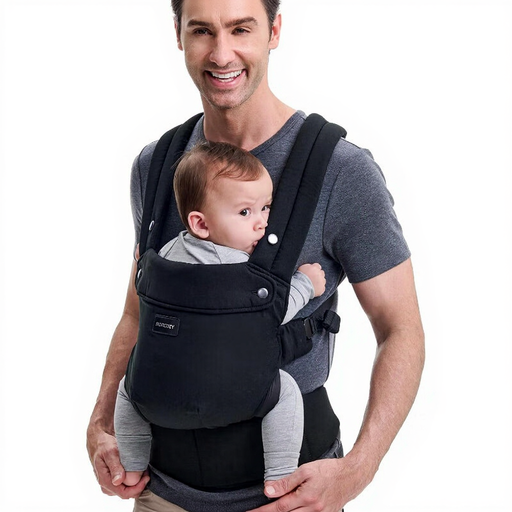
Why this product suits this profile: This model is designed for front carrying and, according to the product information, covers approximately 3.18 to 19.96 kg. Cotton construction and machine-washable care make it well suited to hassle-free everyday use.
The weight limit and recommended age range are clearly stated. This makes it easier to assess suitability than relying on general comfort claims.
100% cotton, machine washable, front carrying position and an EVA element to support weight distribution.
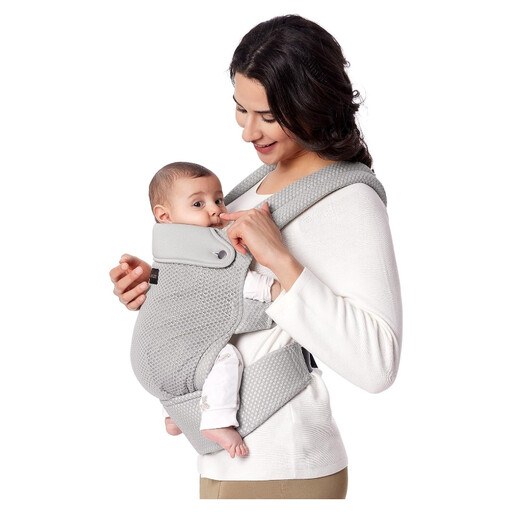
Why this product suits this profile: The Air Mesh material and cooling neck fabric are designed for warm days. Three adjustable size positions help accommodate different stages of development.
Rather than simply claiming to be “breathable”, the product description specifies Air Mesh, cooling neck fabric and clear weight limits.
Mesh fabric, front carrying position, three size positions, padded leg openings and integrated EVA waist support.
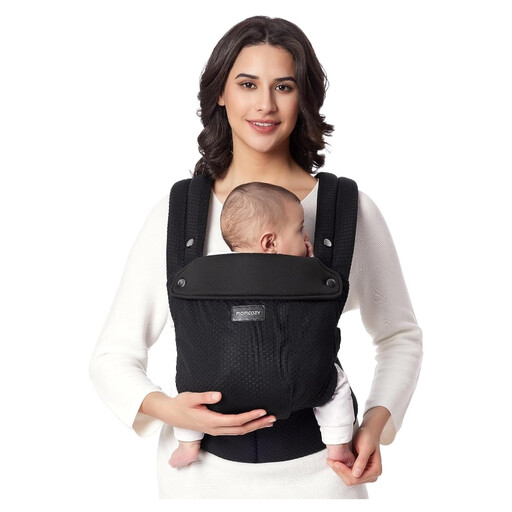
Why this product suits this profile: For frequent journeys, travel and use in warmer temperatures, this model combines a weight of around 760 grams with mesh fabric, a front carrying position and a range of approximately 3 to 20 kg.
The information specifies the material, product weight, carrying range, care instructions and safety limits. This makes it easier to compare the carrier with your actual usage needs.
Breathable mesh, cooling neck fabric, X-shaped back support, EVA waist support and machine-washable care.
We have put together a complete, regularly updated list of products that fully meet these strict selection criteria and the safety regulations applicable in the EU.
This depends on the model. According to the product information, the carriers mentioned here are intended for children from approximately three months of age and a minimum weight of around 3.18 kg. Babies who cannot yet hold their head independently should not be carried in them. The instructions and the child’s development remain the deciding factors.
The usable lifespan depends on weight, height, seating position and fit. Models with a range of around 3 to 20 kg can accommodate several stages of development. Once the child can no longer sit correctly in the M-position, the straps cannot be adjusted sufficiently or discomfort occurs, the carrier should no longer be used.
Apart from the purchase price, ongoing costs are usually low. These may include detergent, occasional replacement parts and, where necessary, replacing damaged straps or buckles. A washable baby carrier can make care easier. Before every use, inspect the carrier for signs of wear and stop using it if it is damaged.