
Lieferung heute & morgen

Qualitätsgarantie

Willkommens-Angebote freischalten: KOSTENLOSE Lieferung | Bis zu 80 % RABATT | Kostenlose 30-Tage-JoyPlus-Testphase
App herunterladen
An ergonomic baby carrier can make everyday life easier: on walks, when travelling or whenever you need both hands free. At the same time, choosing the right one can be challenging. Claims such as “ergonomic”, “breathable” or “for babies and toddlers” are not, on their own, sufficient buying criteria.
Parents should above all check whether the carrier is suitable for their child’s weight and stage of development, whether the seating position can be adjusted correctly, and whether the shoulder straps and hip area offer sufficient adjustment. Our selection is based on clear product data rather than sweeping marketing claims.
An ergonomic carrier should not only be comfortable for the person carrying the child. It is equally important that the child is adequately supported. A wide, padded seat can help support an M-shaped leg position. For small babies, you must also ensure that the height is suitable and the back is properly supported.
If there are no specific details about seat width, weight range or adjustment options, it is difficult to assess how suitable the carrier will be for everyday use. A baby carrier from 3 months is not automatically suitable for every child of that age. The child’s weight, height and individual development must be checked against the manufacturer’s specifications.
A breathable baby carrier can feel more comfortable in warmer temperatures. However, how warm it feels also depends on clothing, the weather, body contact and the carrying position. Terms such as “air-permeable” should therefore be supported by specific material details.
The Momcozy baby carrier BC001 is listed as being made from 100% cotton with OEKO-TEX Standard 100. This standard relates to testing textiles for certain harmful substances; it is not a blanket guarantee covering every property of the entire product. According to the product details, the carrier is machine washable. The buckles should be fastened before washing, and the care instructions should be followed.
The description baby carrier up to 20 kg initially sounds versatile. For prolonged use, however, it is important to know whether the carrier can be adjusted correctly for children of different sizes. Three adjustable size positions, adjustable straps and stable hip support are all relevant features.
The carrier’s own weight also matters. A model weighing 0.81 kg can become noticeably heavier over longer distances when combined with the child’s weight. A good fit for the person carrying the child therefore remains important even when carrying toddlers.
When comparing products, look out for the following:
The manufacturer’s information does not replace an individual assessment. After putting the carrier on, check the straps, buckles and seating position. The child’s face must remain clear, and their chin must not be pressed against their chest for prolonged periods.
A baby carrier with hip support transfers some of the weight to the pelvis. This can be more comfortable over longer distances than a design that rests solely on the shoulders. X-straps, also known as cross-back straps, can distribute the weight across the shoulders and back. However, whether this system is suitable depends on your height, shoulder width and personal preference.
Useful features include:
Many users find cotton comfortable against the skin. With a machine-washable baby carrier, the care instructions should be followed carefully, as the washing temperature, spin cycle and drying method can affect its shape and stability. A quick visual check of all buckles and straps is recommended before every use.
The Momcozy BC001 is described as a lightweight design made from breathable cotton. The product is intended for children from approximately 3 to 24 months and weighing 3.18 to 20 kg. The age range is intended as a guide; the child’s specific physical requirements remain the deciding factor.
The product data provided includes a baby carrier that directly matches the subject of this comparison. The same model is therefore assessed for different usage situations, rather than recommending unrelated products from other categories.
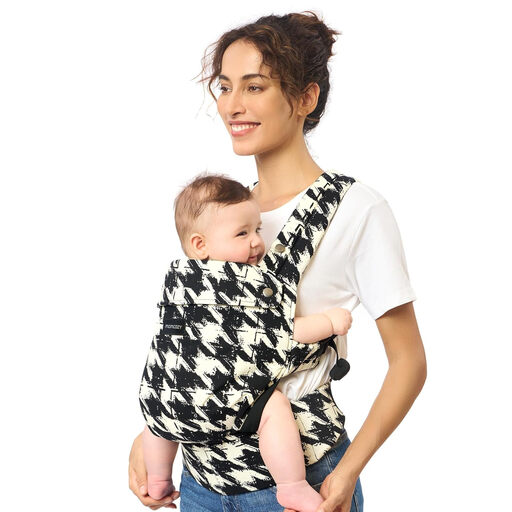
Why this product suits the profile: The adjustable buckles and three size positions provide a clearly defined range of functions for parents looking for one carrier suitable for different stages of development.
The manufacturer specifies clear weight and age ranges, as well as a wide seat, rather than relying solely on an ergonomic description.
Three adjustment positions and cross-back straps; product weight stated as 0.81 kg.
Why this product suits the profile: The stated cotton material and OEKO-TEX label appeal to buyers who want to check material information before purchasing.
The material specification is more specific than a general claim about how the fabric feels against the skin or its breathability. The standard is not presented as a medical property.
100% cotton according to the product details; OEKO-TEX Standard 100 specified; machine washable.
Why this product suits the profile: For regular journeys, travelling and longer carrying periods, hip support, X-straps and easy care are especially relevant.
The design specifies both a cross-back system and additional support in the lumbar area. The fit must be checked individually before longer journeys.
Weight range up to 20 kg according to the manufacturer; machine-washable design; intended for front carrying.
We have put together a complete, regularly updated list of products that fully meet these strict selection criteria and the safety regulations applicable in the EU.
This depends on the model and the child. According to the product details, the Momcozy BC001 is intended for approximately 3 to 24 months and 3.18 to 20 kg. Before buying, compare your child’s age, weight and height with the manufacturer’s specifications. If your baby is very small or has specific physical requirements, seeking additional advice is advisable.
There is no fixed time period that applies to every child and every carrier. Clear breathing, a stable seating position and regular breaks are essential. Change position if the child appears unsettled, starts to slump or the carrier straps can no longer be adjusted correctly. The person carrying the child should also watch for pressure points and tiredness over longer distances.
With a machine-washable baby carrier, all buckles should be fastened before washing and the manufacturer’s care instructions followed. The carrier must be allowed to dry completely after cleaning. Check the stitching, straps, padding and fasteners before every use. Damaged components should not be used again.