
Lieferung heute & morgen

Qualitätsgarantie

Willkommens-Angebote freischalten: KOSTENLOSE Lieferung | Bis zu 80 % RABATT | Kostenlose 30-Tage-JoyPlus-Testphase
App herunterladen
An ergonomic baby carrier can be a practical carrying aid for parents in everyday life, when travelling or out on a walk. Both hands stay free while your baby is carried close to your body. However, models differ significantly in terms of fit, weight, material and permitted usage.
Many purchasing decisions fail not because of design, but because of the details: a carrier doesn’t suit your baby’s age, the weight distribution puts strain on your shoulders and back, or the material is too heavy for warm days. So before you buy, it’s worth looking at the actual product specifications rather than general marketing claims.
The description baby carrier from birth is only meaningful if the minimum weight, height, head control and specific carrying positions in the instruction manual are appropriate. A model with a minimum weight of around 3.2 kg is not automatically suitable for every newborn. Even a carrier that can be used up to the age of three may need regular adjustments for height and seat width.
A baby carrier with M-position should support the legs so that the knees are higher than the bottom. However, the correct adjustment of the panel, straps and waist belt is also crucial. If the legs are too cramped or hang downwards, the advertised sitting position may not be achieved.
A baby carrier with hands-free function allows you to have your hands free for light everyday tasks. However, it is not a protection system in the event of a fall and does not replace supervision. Your baby’s face must remain visible, their airways must be clear, and the child must sit upright and close to your body. Activities such as cycling, running or cooking over open flames are not suitable.
Compare the manufacturer’s specifications with your baby’s current weight. For the products featured here, the specifications range from around 3 to 20 kg depending on the model. The age guidance is only a rough guide, because babies develop at different rates.
A baby carrier for babies and toddlers should offer adjustable straps, an adaptable seat width and adequate head support. Also check whether only front carrying or back carrying is also possible.
Look for a demonstrably adjustable seat area, padded leg openings and support for your child’s back. The so-called C-shape describes a slightly rounded back posture, while the M-position supports the legs with the knees positioned higher.
For the wearer, a wide waist belt, padded shoulder straps and a baby carrier with back support are important. They distribute the weight across several areas of your body. If you experience pain, pressure points or an unstable fit, the carrier should be readjusted or no longer used.
A breathable baby carrier with mesh fabric can be more pleasant for warm days than tightly woven cotton. However, you should look for sturdy seams, secure buckles and a clear care instruction guide. A lightweight baby carrier reduces the carrier’s own weight, but must not offer too little support for the child and the wearer.
A washable baby carrier is practical for family life. For the Momcozy models described, machine washing is specified. Always follow the care instructions, as incorrect washing temperatures or unsuitable drying can damage the material and the buckles.
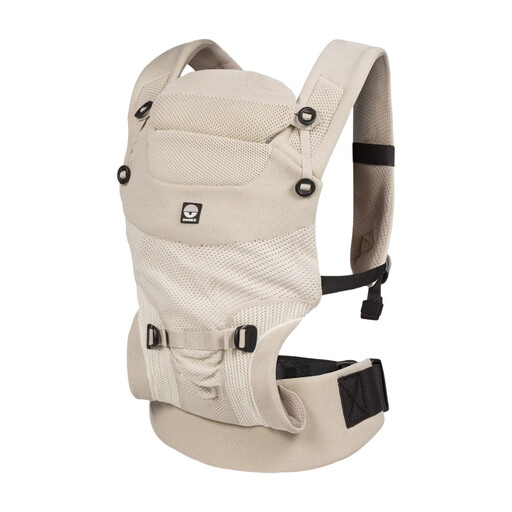
Why this product suits the profile: According to the product specifications, this model is suitable for approximately 0 to 3 years and 3.5 to 15 kg. Three carrying positions and an adjustable seat make it ideal for families looking for a versatile baby carrier for on the go.
The specifications state the minimum and maximum weight as well as specific carrying positions. This makes it easier to match the suitability with your child’s developmental stage.
Stretch knit, M-position, padded shoulder straps and a waist belt. According to the supplier, the model has been tested and approved to EN 13209-2:2015.
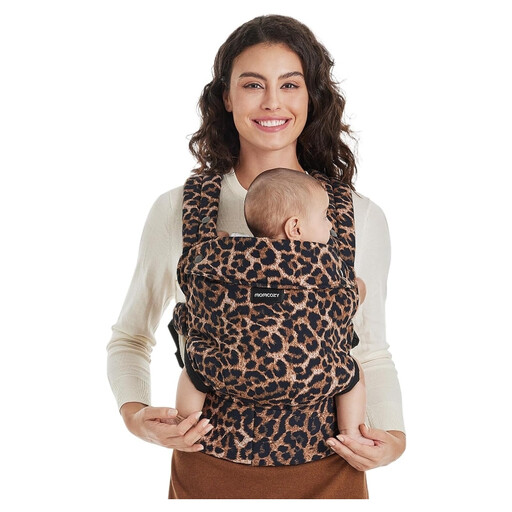
Why this product suits the profile: This front carrier made from 100% cotton features a three-point support system, an EVA panel and adjustable elements for babies and toddlers within the specified weight range.
The manufacturer specifies clear limits of approximately 3.18 to 19.96 kg and advises that the carrier must be checked before each use.
771 g product weight, machine-washable cotton, neck support and padded leg openings. The specifications refer to front carrying only.
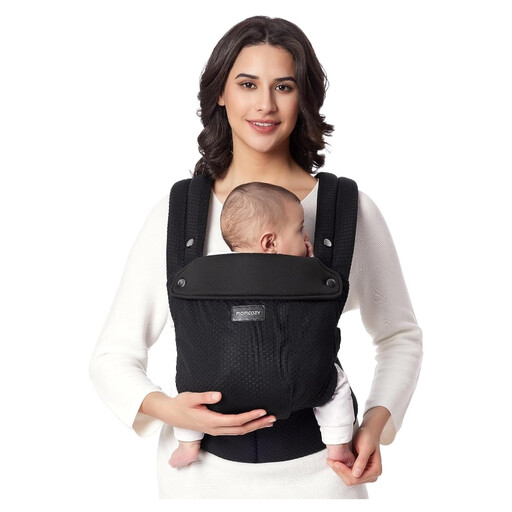
Why this product suits the profile: This mesh model is designed for warm days, travel and frequent everyday use. According to the product data, it weighs 760 g and is suitable for approximately 3.18 to 19.96 kg.
The breathable mesh material addresses the common pitfall of a carrying system that is too warm. The washability makes regular care easier.
Mesh fabric, adjustable size options, EVA waist belt and machine-washable material. According to the specifications, the carrier is intended exclusively for front carrying.
Before each use, check the buckles, seams, straps and fabric for any damage. Fasten all closures completely and check the fit by making slight adjustments. Your baby should sit upright, visible and close to your body. Their chin must not be pressed against their chest.
For longer walks, it’s a good idea to get your baby used to the carrier gradually. Also check regularly whether your child’s weight is still within the specified range. A baby carrier for on the go should be compact and foldable, without putting permanent strain on the buckles or padding.
We have put together a complete, regularly updated list of products that fully meet these strict selection criteria and the safety regulations in force in the EU.
This depends on the specific model and the instruction manual. Some products are specified by the supplier as suitable from around 0 months, others only from around 3 months or from a certain minimum weight. For babies without secure head control, only a carrier that is expressly suitable for this purpose should be used.
The duration of use depends on the weight range, seat width and developmental stage. Some models are specified for approximately 3 to 24 months, others for 0 to 3 years. What matters is whether your child can still sit safely, upright and in the correct M-position.
In addition to the purchase price, the main costs are for detergent, water and electricity. Machine washing according to the care instructions is usually more predictable in everyday life than a non-washable construction. Check before you buy whether the entire carrier or only certain parts can be washed.