
Lieferung heute & morgen

Qualitätsgarantie

Willkommens-Angebote freischalten: KOSTENLOSE Lieferung | Bis zu 80 % RABATT | Kostenlose 30-Tage-JoyPlus-Testphase
App herunterladen
An ergonomic baby carrier can make everyday life easier. Whether you’re out for a walk, travelling or doing things around the house, it keeps your hands free while your baby stays close. However, the choice can feel overwhelming. Terms such as ‘ergonomic’, ‘comfortable’ or ‘back-friendly’ don’t automatically mean a carrier is right for you.
Three common marketing pitfalls can lead to the wrong purchase:
When choosing a baby carrier for newborns, don’t just look at the minimum weight. According to the product information, the models featured here are designed for babies from around 3 months old or weighing approximately 3.18 kg or more. The safety information also states that they shouldn’t be used for babies who can’t yet hold their heads up unaided.
In other words, a minimum weight of 3.18 kg doesn’t automatically make a carrier suitable for a newborn. Before buying, check:
According to the product descriptions, Momcozy models cover a range of approximately 3.18 to 19.96 kg, or around 3 to 24 months. However, whether a particular model is suitable still depends on your baby’s development and how well the carrier is adjusted.
A suitable carrier should position your baby’s legs so that their knees can sit higher than their bottom. This posture is often called the M-position. Your baby should sit upright, with their face clear and their airways easy to see. The carrier shouldn’t be so loose that your baby slumps away from your body, but it shouldn’t feel uncomfortably tight either.
The Momcozy models mentioned here are described as having a C-shaped back position. However, this doesn’t replace correct adjustment. Once the carrier is on, check that:
The search term baby carrier with hip support can refer to different designs. The Momcozy models are described as having an integrated EVA waist support. It helps distribute weight around the waist and pelvis, but it isn’t the same as a separate hip seat or a medical aid.
A breathable baby carrier can be a good choice in warm weather or for longer outings. According to the product information, Momcozy’s mesh models use Air Mesh fabric and cooling material around the neck. The cotton versions are made from 100 per cent cotton and are machine washable, according to the product details.
As well as the outer fabric, consider these practical features:
Before each use, check the buckles, seams, straps and fabric. Don’t use the carrier if any parts are damaged or missing. A carrier won’t protect your baby from falls or road accidents. Don’t use it while cycling, jogging, cooking over an open flame or doing other activities where there’s a higher risk of falling.
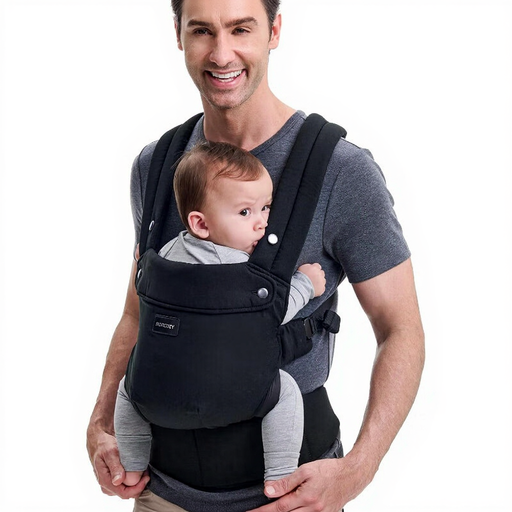
Why this product suits this profile: According to the product information, this cotton carrier is designed for babies aged around 3 to 24 months and weighing 3.18 to 19.96 kg. It’s suited to everyday outings when front carrying is all you need.
The specific weight range and guidance on the M-position are provided, making it easier to check whether the carrier is right for your baby’s stage of development.
Made from 100 per cent cotton, according to the product information. It’s machine washable and features EVA waist support and padded leg openings.
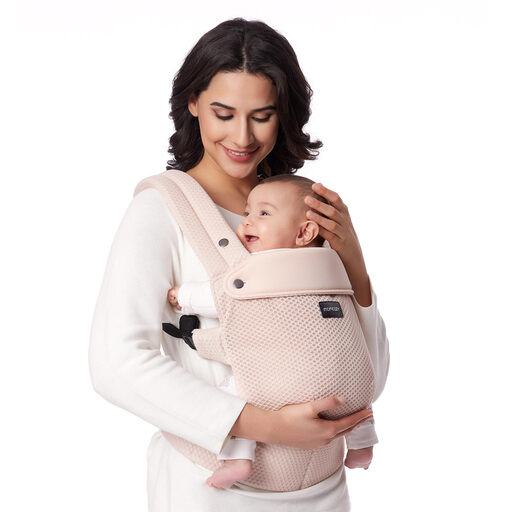
Why this product suits this profile: This model is for parents who want to compare materials, adjustability and ventilation carefully, and are looking for a carrier for warmer days.
The Air Mesh fabric isn’t presented as offering complete protection from heat. You’ll still need to check the fit, your baby’s temperature and their airways regularly.
Air Mesh fabric, cooling neck material, three adjustable size positions and an X-shaped back strap system, according to the product description.
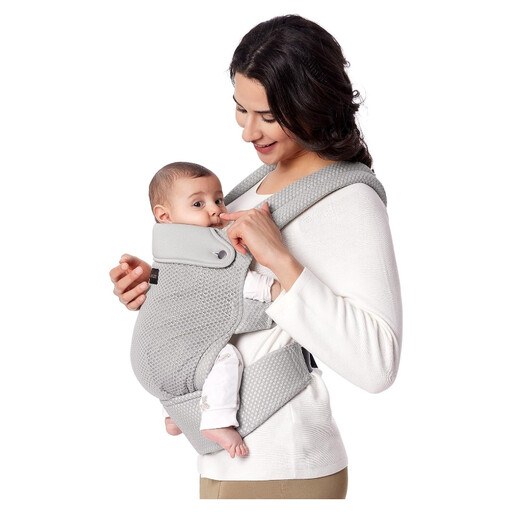
Why this product suits this profile: For frequent outings, travel and longer hands-free carrying, the grey mesh version offers a lightweight, washable design with a stated weight range of approximately 3.18 to 20 kg.
The weight limit is clearly stated as approximately 20 kg. This makes it easier to plan how long you can use the carrier, rather than relying only on general age guidance.
Product weight of 771 g, according to the stated specifications, plus Air Mesh fabric, three size positions, EVA waist support and machine-washable material.
We’ve put together a complete, regularly updated list of products that meet these strict selection criteria and fully comply with the safety regulations in force in the EU.
A baby carrier should always be put on according to the instructions. It’s worth doing a quick check before every use:
If you feel pain or notice pressure points, stop using the carrier and check the fit. A baby carrier is intended for supervised carrying. It isn’t a car seat and mustn’t be used as a restraint system in a vehicle.
It depends on the model. According to the product information, the Momcozy carriers mentioned here are designed for babies aged around 3 to 24 months and weighing approximately 3.18 kg or more. The safety information says they aren’t suitable for babies who can’t yet hold their heads up unaided. Always follow the instructions and take your baby’s individual development into account.
There’s no single recommended time limit. Check your baby’s position, breathing, temperature and comfort regularly, and take breaks. If your baby becomes unsettled, has difficulty breathing or seems uncomfortable, take them out of the carrier and check the fit.
EVA waist support or an adjustable strap system can affect how the weight is distributed. However, you can’t assume that this will have a particular effect on back pain. The key things are getting the fit right, choosing a size that suits your body and carrying a load that feels comfortable for you.