
Lieferung heute & morgen

Qualitätsgarantie

Willkommens-Angebote freischalten: KOSTENLOSE Lieferung | Bis zu 80 % RABATT | Kostenlose 30-Tage-JoyPlus-Testphase
App herunterladen
An ergonomic baby carrier can come in handy on walks, when travelling or while getting a few jobs done around the house. But unclear age guidance, poorly distributed weight and exaggerated claims about materials can all lead to the wrong purchase. The key is to look beyond the design and consider the combination of fit, weight range, carrying positions, material and care.
Not every baby carrier advertised with a low minimum weight will automatically fit every newborn. A carrier for babies from 3 months old is not the same as one designed for the first few weeks of life. Check:
If your baby cannot yet hold their head up unaided, follow the instructions for use particularly carefully. If your baby was born prematurely or has specific health needs, it’s a good idea to seek advice from a medical professional.
An ergonomic baby carrier should hold your baby upright and close to your body. In a baby carrier with an M-position, your baby’s knees sit higher than their bottom, while their thighs are supported. However, a narrow seat or poor adjustment can affect this position.
For parents, wide shoulder straps, an adjustable waist belt and even weight distribution are important. A so-called back support or a baby carrier with hip support may distribute the load differently, but it doesn’t replace correct adjustment.
A breathable baby carrier made from mesh can improve airflow. However, that doesn’t automatically make it suitable for every season or carrying position. Cotton can feel soft, while mesh may have benefits in warmer weather. Also look for:
A lightweight baby carrier weighing around 550 to 810 grams is easier to carry when you’re out and about. However, the child’s permitted weight range is more important than the weight of the carrier itself. Some models are designed for children up to 9 kg, while others are baby carriers for children up to 20 kg.
Examples from the product details:
How long you can actually use a carrier depends on your child’s height and weight, the seat width and their development. A higher maximum weight on its own doesn’t guarantee comfortable use throughout the whole period.
When choosing a baby carrier with an M-position, look for an adjustable seat or leg supports that can be adapted to your baby. Good head and neck support is also important for smaller babies. The carrier should fit close to your body without covering your baby’s face.
Before each use, check:
A baby carrier is not a safety system for falls or road accidents. Activities such as cycling, jogging or working near open flames are not suitable while wearing one.
A machine-washable baby carrier is handy for everyday use, as skin contact, sweat and spills are not always avoidable. According to the product details, some Momcozy models are made from 100% cotton and can be machine washed. The mesh versions use breathable mesh fabric and are also described as machine washable.
The Dooky Terra Nova is described as having a soft stretch fabric, while the Dooky Urban Comfort models feature 3D mesh according to the product details. The Kikka Boo Myra Mesh is made from polyester and is recommended for hand washing. Check that the care instructions fit with your usual routine before buying.
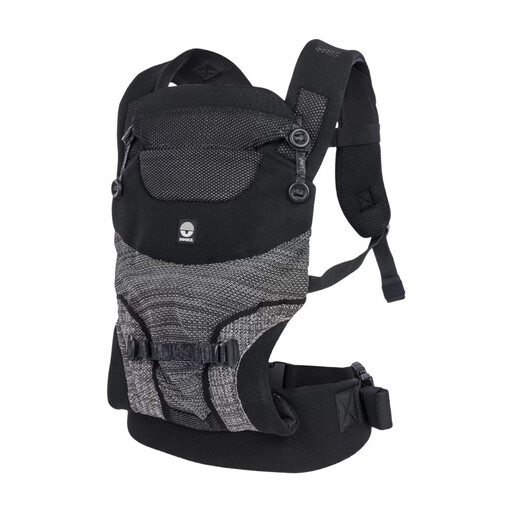
Why this product suits this profile: According to the product details, this model is designed for around 3.5 to 15 kg and offers three carrying positions. It’s a good choice for parents looking for a versatile carrier for everyday use and walks.
The details specify a clear weight range, an adjustable seat and an M-position, rather than making a blanket claim that it suits every age.
Three carrying positions, an adjustable waist belt and padded shoulder straps; according to the product details, it folds away and has been tested to EN 13209-2:2015.
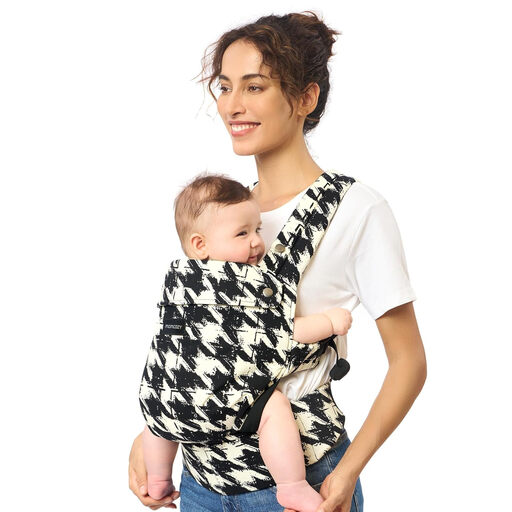
Why this product suits this profile: According to the product description, this carrier combines 100% cotton, cross-back straps and reinforced lumbar support. It’s designed for babies from around 3 months old up to 20 kg.
The stated weight range and three adjustment positions make it easier to choose than models with unclear sizing information.
OEKO-TEX Standard 100-certified cotton according to the product details, machine washable, with cross-back straps and C-shaped back support.
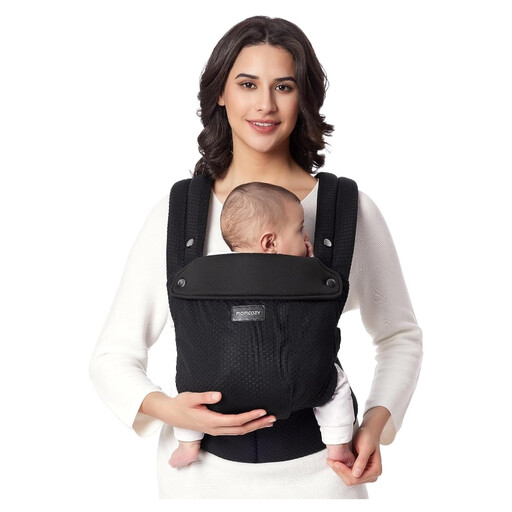
Why this product suits this profile: This mesh model is aimed at parents looking for a breathable baby carrier for warm days, travel and frequent outings.
The material is clearly identified as mesh, and the minimum and maximum weights are specified, along with safety checks for the buckles and straps.
Weighs 760 grams according to the product details, with machine-washable mesh, an X-shaped back panel and three adjustment positions.
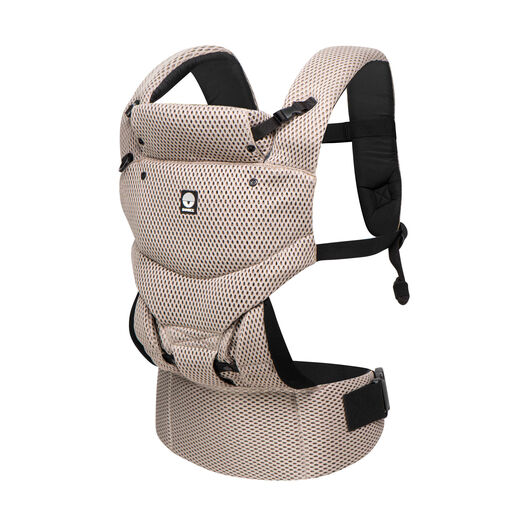
Why this product suits this profile: According to the product details, this model is suitable for around 3.5 to 15 kg and supports front and back carrying. It’s a good fit for parents looking for a carrier with several options for babies and toddlers.
The product details specify the weight range, carrying options and M-position, and give clear guidance on checking the straps and buckles.
3D mesh, adjustable seat and leg supports, and three carrying positions; according to the product description, it has been tested to EN 13209-2:2015.
We’ve put together a complete, regularly updated list of products that meet these strict selection criteria and fully comply with the safety regulations in force in the EU.
A hands-free baby carrier leaves your hands free, but that doesn’t mean you can leave your child unattended. Take your time putting the carrier on and check the fit before each use. On longer outings, short breaks can help you check your child’s position, temperature and comfort.
When choosing a baby carrier for going out, also consider its packed size, whether it’s washable and how much it weighs. A foldable model can be handy for air or rail travel. If you use it frequently, check the buckles, seams and straps regularly for wear and tear.
It depends on the model and your child’s weight. An age guide such as “from 3 months” is only meaningful alongside the minimum weight, height and head control requirements. The manufacturer’s guidance should always take precedence.
How long you can use it depends on the maximum weight, your child’s height and the fit. Models for children up to 20 kg can cover a wider weight range than carriers for children up to 9 or 15 kg. Stop using the carrier if any straps, buckles or seams are damaged.
Not all of them. Some mesh and cotton models are described as machine washable, while others require hand washing and air drying. Before buying, check the care label for the specific product and follow the stated temperature and detergent instructions.