
Lieferung heute & morgen

Qualitätsgarantie

Willkommens-Angebote freischalten: KOSTENLOSE Lieferung | Bis zu 80 % RABATT | Kostenlose 30-Tage-JoyPlus-Testphase
App herunterladen
An ergonomic baby carrier can be a real lifesaver in daily life – whether you're out for a walk, travelling, doing chores around the house, or when the pushchair just isn't practical. However, carriers vary significantly in terms of fit, weight range, material and ease of use. A carrier that looks sophisticated isn't automatically suitable for every baby or every body type.
Claims like "from 3 kg to 20 kg" may sound flexible. What really matters, though, is whether your baby already has the necessary head and trunk control, and whether the carrier is approved for their particular stage of development. A baby carrier for newborns must be especially adjustable and provide adequate head support. If the instructions lack a clear age or weight specification, the product should not be used on a hunch.
Mesh material can improve air circulation. Even so, the back area, hip belt and shoulder straps remain relevant heat zones. With a breathable baby carrier, parents should check where mesh is actually used and whether the design remains comfortable when wearing summer clothing. Polyester mesh can also have different care requirements than cotton.
Buckles and rings make it easier to put the carrier on, but they must be checked before every use. Your baby should sit upright, close to your body, with their face visible. Their airways must not be obstructed by fabric, their chin or their posture. A baby carrier is not a protective system for falls and is not intended for jogging, cycling or working near open flames.
With an ergonomic baby carrier in the M-position, your baby's knees are positioned higher than their bottom. The lower legs do not necessarily hang straight down but can be angled out to the sides. An adjustable seat width helps you adapt the sitting area to your child's size.
The often-mentioned C-shape refers to a gently curved spine. It must not cause your baby to slump forward or have their face pressed against your chest. The specific adjustment should always be made according to the manufacturer's instructions.
A baby carrier with back support distributes the weight not only across the shoulders. A wide hip belt, padded straps and an adjustable back section can spread the load across several parts of the body. It is important that the carrier fits your height and waist size.
Parents should pay particular attention to the following points:
A lightweight baby carrier weighs roughly half a kilo to just under a kilo, depending on the design. This makes it easier to transport, but on its own says little about its stability. Cotton can feel soft and is machine-washable in many models. Mesh fabric promotes air circulation but sometimes requires hand washing or air drying.
Even a washable baby carrier should be treated according to the care instructions. Damaged buckles, stretched-out seams or heavily worn fabric areas are reasons to stop using the carrier.
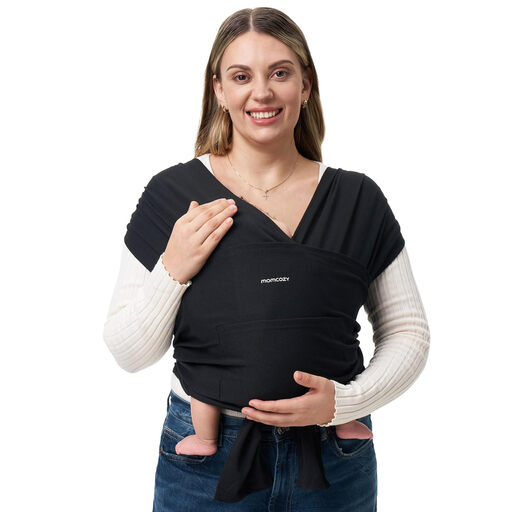
Why this product fits the profile: This model is relatively light at 0.66 kg and, according to the product details, is designed for 3.6 to 15 kg. The double-ring fastening allows adjustment without any knot-tying technique.
The stated weight range and pre-formed back support make selection easier compared to a carrier without specific data. Rings and fabric must still be checked before each use.
Cotton-elastane fabric, machine washable at 30 °C according to the label, and a compact storage pouch.
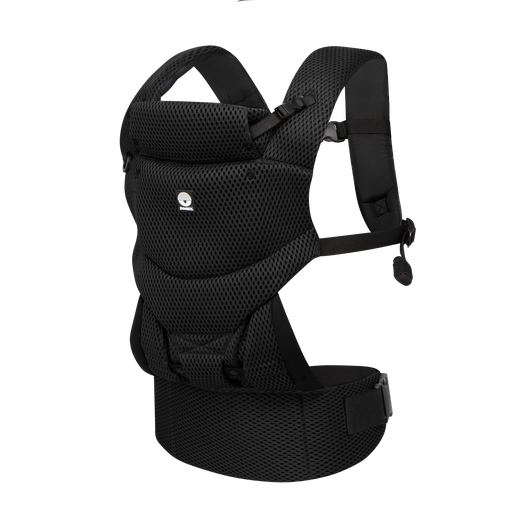
Why this product fits the profile: According to the product description, this model is designed for 3.5 to 15 kg and offers both front and back carrying positions. It features adjustable seat and leg areas as well as a hip belt.
The clear information about the M-position, weight range and EN 13209-2:2015 makes technical checking easier. Use must still follow the instructions.
3D mesh material, padded straps and, according to the supplier, an adjustable waist circumference of up to 143 cm.
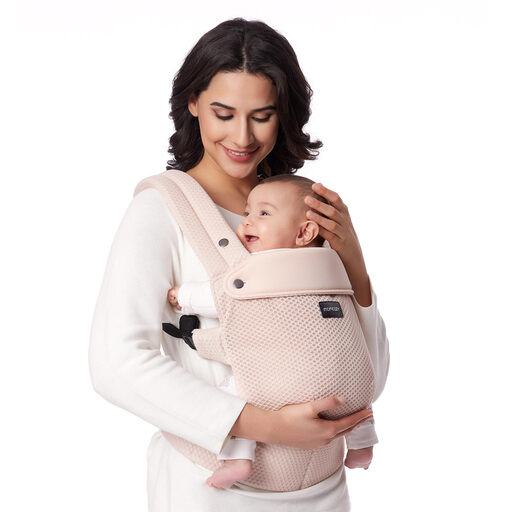
Why this product fits the profile: For warm days and frequent outings, this model offers air-mesh fabric according to the product data, three size positions and a weight range of approximately 3.18 to 19.96 kg.
The mesh fabric addresses the typical problem of heat build-up. The specific fit should still be checked against the adult's clothing and body size.
Machine-washable material according to the label, EVA waist support, X-shaped back section and padded leg openings.
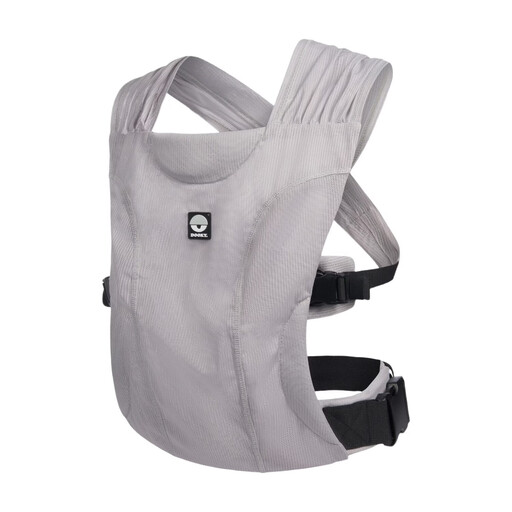
Why this product fits the profile: This model is designed for a specific use case: showers or pool areas with a baby measuring approximately 56 to 74 cm. It is not an everyday carrier or a swimming aid.
The product's limitations are clearly stated: not for deep or open water and not without direct supervision. This reduces the risk of incorrect use.
Quick-drying stretch material and click fastenings according to the product description. The supplier mentions an SGS test.
We have put together a complete, regularly updated list of products that fully meet these strict selection criteria and the safety regulations in force in the EU.
Before your first long walk, we recommend a short trial fitting at home. During this, parents should:
A baby carrier for babies and toddlers does not need to be set the same way at every stage. As your child grows, when wearing thicker clothing, or if you change the carrying position, a new adjustment is necessary.
This depends on the specific model. According to the manufacturer, some products are suitable from around 3.2 to 3.6 kg, while others are only suitable from about 3 months. The decisive factors are the weight limit, head control, fit and the instruction manual. For premature babies or those with particular health conditions, use should be discussed with a medical professional beforehand.
There is no fixed general time limit. Parents should regularly check your baby's posture, breathing, temperature and skin, and give them breaks. If your baby becomes restless, develops pressure marks, has breathing difficulties, or if the adult experiences pain, the carrier should be removed immediately.
Aside from the purchase price, ongoing costs are usually low. Relevant expenses include laundry detergent, occasional replacement parts and possibly a second carrier for different seasons. A machine-washable baby carrier can be more practical for daily use; care instructions such as temperature, air drying and avoiding bleach must be followed.