
Lieferung heute & morgen

Qualitätsgarantie

Willkommens-Angebote freischalten: KOSTENLOSE Lieferung | Bis zu 80 % RABATT | Kostenlose 30-Tage-JoyPlus-Testphase
App herunterladen
An ergonomic baby carrier can be useful in everyday life: on walks, when travelling, on public transport or whenever you want to keep both hands free. But with so much choice, it’s easy to end up with the wrong one. Claims such as “from birth”, “breathable” or “all-day comfort” don’t mean the same thing for every model.
The points below can help expectant parents, mums and dads assess product descriptions objectively and choose a suitable baby carrier.
A baby carrier from birth needs to do more than state a low minimum weight. The actual fit, head support, adjustable seat width and the manufacturer’s guidance on your baby’s development all matter, too. Some models are designed for babies weighing around 3 kg, but the manufacturer may only recommend them once your baby can hold their head up unaided.
A newborn baby carrier should only be used in accordance with the instructions. If your baby was born prematurely, has a low birth weight or has particular health needs, it’s sensible to seek medical advice before using a carrier.
A baby carrier up to 20 kg may be suitable for longer use. But that doesn’t automatically mean a toddler will be comfortable in every carrying position. Check whether the waist belt is supportive enough, the shoulder straps are adjustable and the weight is distributed across your upper body and hips.
Your own body size matters, too. Before buying, compare the maximum hip or waist measurement with your own.
A breathable baby carrier may be made from 3D mesh, air mesh, cotton or stretch fabric. These materials differ in ventilation, feel, care requirements and support. A thin layer of fabric won’t necessarily feel more comfortable if it compromises support for your baby’s back, head or hips.
For summer, mesh panels can be a useful feature. In cooler months, softer cotton or stretch fabrics may better suit your needs.
In a baby carrier with an M-position, your baby’s knees sit higher than their bottom. The leg support should suit your baby’s size without pressing into the backs of their knees. An adjustable seat width is useful if you want the carrier to grow with your baby over time.
The word “ergonomic” alone isn’t enough to make a decision. Look for specific information about seat width, leg support, back support and the maximum weight.
With young babies, their face and nose must always be visible and clear. The carrier should fit snugly against your body without covering their mouth or nose. Depending on the model, a fold-down or adjustable head support may provide extra support, but it doesn’t replace regular checks while you’re carrying your baby.
The instructions explain which positions are suitable at each stage of your baby’s development. A front-facing position isn’t suitable for every age.
Wide, padded shoulder straps and an adjustable waist belt can help distribute the load. A baby carrier with hip support is particularly worth considering as your baby gets heavier or if you’re planning longer walks. The key is to adjust the straps to fit you properly so they don’t dig in.
If you experience pain, numbness or strong pressure, take the carrier off and check the fit. Baby carriers aren’t designed for sports, cycling, cooking over open flames or activities with a higher risk of falling.
For products sold in Europe, the EN 13209-2:2015 marking may be relevant. It sets out requirements and test methods for soft-structured baby carriers. However, always consider any reference to a standard alongside the specific weight, size and safety information for the model.
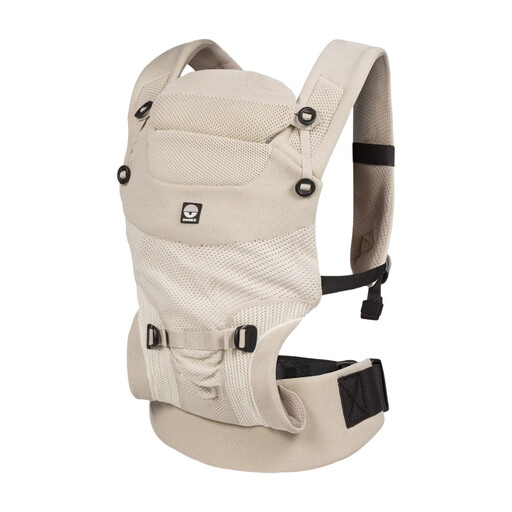
Why this product suits this profile: According to the product details, this model is designed for babies weighing around 3.5 to 15 kg and offers three carrying positions. It’s a good option for parents looking for a versatile carrier with a straightforward range of features.
The description specifically mentions an adjustable seat and leg support, as well as the M-position. It also gives a maximum waist measurement of 159 cm.
Soft stretch knit fabric, padded shoulder straps, an adjustable waist belt and three carrying positions. The product details also state that it meets EN 13209-2:2015.
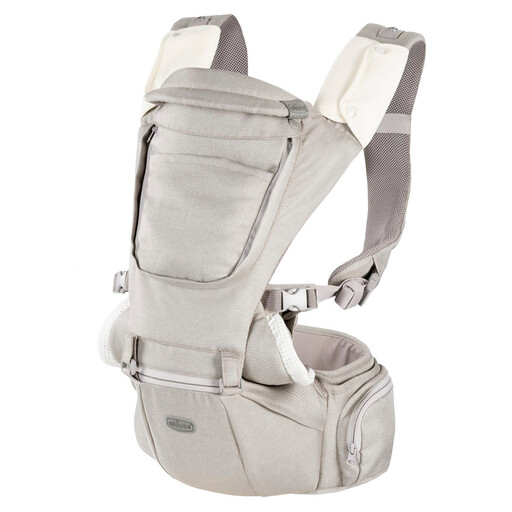
Why this product suits this profile: The 3-in-1 design is aimed at parents who value different ways to use their carrier and a range of adjustment options.
Rather than giving just one weight limit, the manufacturer describes three separate ways to use it, with eight carrying positions in total. The recommended weight range is 3 to 15 kg.
Detachable hip seat, machine-washable design and M-position, according to the product description. The product details state that it’s suitable from newborn to around 3 years.
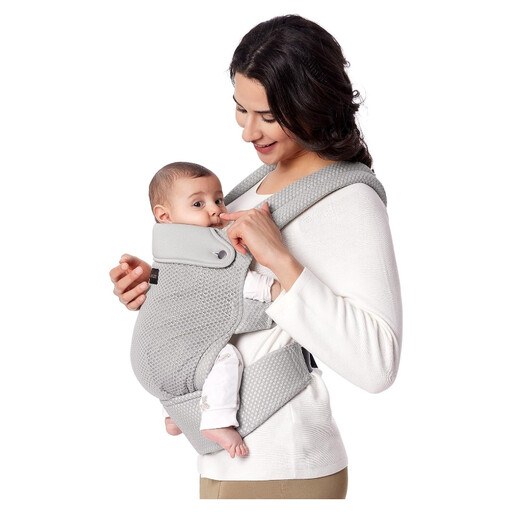
Why this product suits this profile: The mesh design is made for warmer days and frequent everyday outings. According to the product details, it supports babies weighing around 3.2 to 20 kg.
The description explicitly says it’s suitable from around 3 months. This helps avoid the common assumption that every baby carrier with a 20 kg limit is automatically suitable for newborns.
Breathable mesh, three adjustable size settings, an X-shaped back design and integrated EVA hip support. The product details state that the carrier is machine washable.
We’ve put together a complete, regularly updated list of products that meet these strict selection criteria and fully comply with the safety regulations in force in the EU.
It depends on the model, its minimum weight and your baby’s development. A carrier labelled “from birth” should only be used if its seat width, head support and fit are suitable for a newborn. Other models may only be recommended by the manufacturer from around 3 months, or once your baby can hold their head up unaided.
Always follow the manufacturer’s guidance on weight, size and carrying positions. A model with a 15 kg limit isn’t automatically suitable up to your child’s third birthday. If you’re considering a baby carrier up to 20 kg, also check that the waist belt and shoulder straps can be adjusted comfortably as your child gets heavier.
The price depends on factors such as the material, adjustment options, waist belt, carrying positions and care requirements. A low price doesn’t have to rule out a carrier, but compare it with the product specifications. Clear weight limits, easy-to-understand safety warnings and straightforward instructions are especially important.