
Lieferung heute & morgen

Qualitätsgarantie

Willkommens-Angebote freischalten: KOSTENLOSE Lieferung | Bis zu 80 % RABATT | Kostenlose 30-Tage-JoyPlus-Testphase
App herunterladen
An ergonomic baby carrier can be a practical everyday essential: it keeps your hands free, makes travelling on public transport easier, and provides closeness between you and your child. However, models differ significantly in seat width, weight range, carrying positions and adjustability. An appealing product description alone is therefore not enough to base your purchase on.
The claim baby carrier from birth must always be considered alongside the minimum weight and body length. A model approved from 3.5 kg is not automatically suitable for every very small or premature baby. What matters is whether the head, back and airways are safely supported, and whether the adjustment sits closely enough against the body.
A baby carrier with multiple carrying positions can be versatile. Even so, parents should check the age for which each position is intended. Carrying your baby facing outwards, for example, requires sufficient head and trunk control. A back carry is also not generally suitable for the first few months of life.
A comfortable baby carrier shouldn’t just be softly padded. Seat panels that are too narrow or non-adjustable can restrict your baby’s leg position. Even heavily padded shoulder straps are of little help if the hip belt doesn’t fit properly or the weight isn’t distributed evenly. Breathable fabrics are pleasant for longer walks, but they don’t replace a secure fit.
With a baby carrier with M-position, your baby’s knees are positioned higher than their bottom. The seat panel between the legs should be adjustable so that it reaches from the back of one knee to the other without causing pressure points. For a baby carrier for babies and toddlers, a growing seat is especially important, because body proportions change significantly between the first few months and toddlerhood.
A product claim like “ergonomic” should therefore be backed up with specific information:
Recognition by the International Hip Dysplasia Institute is a useful piece of product information, but it doesn’t replace correct adjustment and use according to the instructions.
A baby carrier for 0 to 3 years can be cost-effective if it actually covers the stated weight range properly. Parents shouldn’t just look at the upper limit. A model for 3.5 to 15 kg can have a different adjustment range than a carrier designed from around 3 months and 3.18 kg.
The maximum load must never be exceeded. Likewise, the carrier should not be used if buckles, seams, straps or fabric are damaged. A long lifespan therefore depends on material care, regular checks and your child’s development.
Wide, padded shoulder straps and an adjustable hip belt can distribute the load across several areas of your body. For a good fit, you should also consider the maximum hip or waist circumference and whether the straps can be adjusted with one hand.
A breathable baby carrier with mesh elements can improve air circulation in warm weather. In cooler conditions, make sure your baby’s face and nose remain uncovered and that thick layers of clothing don’t interfere with the fit between your body and the carrier.
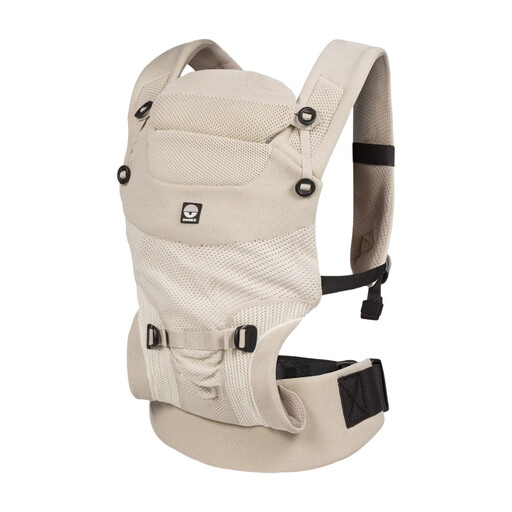
Why this product fits the profile: The stated range of 3.5 to 15 kg and three carrying methods make it suitable for parents looking for a versatile ergonomic carrier for everyday use and walks.
The product details mention an adjustable M-position, breathable material and specific weight limits rather than vague age-based marketing.
Three positions, soft stretch fabric, padded shoulder straps and a hip belt up to 159 cm according to the product description.
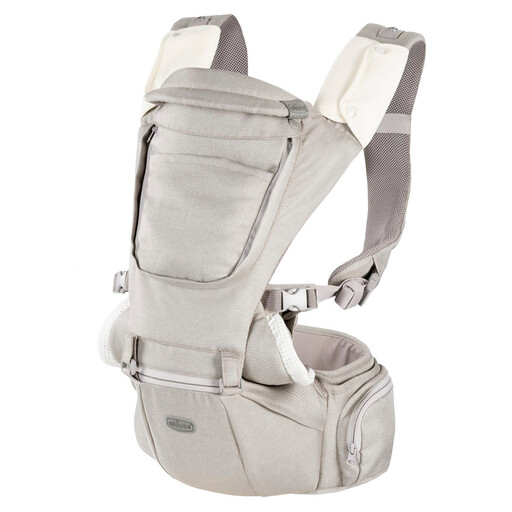
Why this product fits the profile: The 3-in-1 system is aimed at parents who want to switch between a classic carrier, a hip seat and a full combination.
The eight stated configurations are described with specific orientations. This prevents “versatile” from remaining a vague claim without practical context.
Suitable from 3 kg to 15 kg, with a detachable hip seat, M-position and a machine-washable cover at 30 °C.
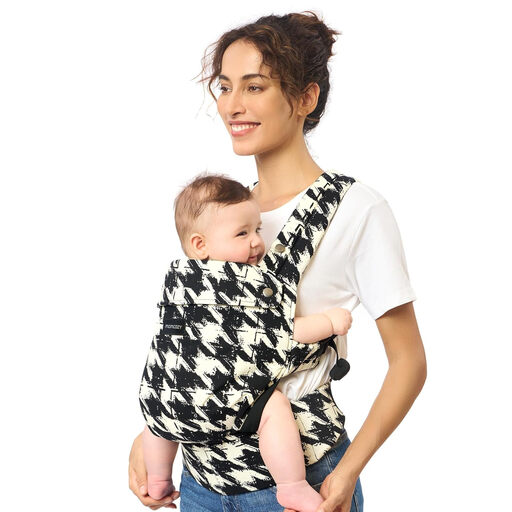
Why this product fits the profile: This model is of interest to parents who prefer a lightweight front carrier with cross straps and machine-washable cotton material.
The manufacturer states a range of 3.18 to 20 kg as well as three adjustment positions. According to the details, use is intended for front carrying only.
100 % cotton according to the product details, cross straps, padded seat and additional lumbar support as described.
We’ve put together a full, regularly updated list of products that fully meet these strict selection criteria and the safety regulations in force in the EU.
Regardless of the model you choose, before each use you should:
A baby carrier is not a protective system in the event of an accident. It is not intended for sport, cycling, cooking over an open fire or other activities with an increased risk of falling.
That depends on the minimum weight, size and construction. A baby carrier from birth should offer adequate head support and a tightly adjustable seat and back section. The manufacturer’s specifications must match your baby’s actual weight. For premature babies or special health situations, medical advice should be sought before use.
The duration of use depends on the weight limit, fit and condition of the product. Models with a range of around 3.5 to 15 kg are intended for several developmental stages according to the respective product details. You should stop using the carrier as soon as your child no longer sits securely or the maximum weight range has been reached.
A baby carrier with a hip seat can provide extra support when carrying a larger child. However, it changes the weight, structure and freedom of movement of the carrier. Parents should check whether the hip belt fits properly and whether the child can be secured safely. “More comfortable” is therefore an individual question and not an automatically guaranteed result.