
Lieferung heute & morgen

Qualitätsgarantie

Willkommens-Angebote freischalten: KOSTENLOSE Lieferung | Bis zu 80 % RABATT | Kostenlose 30-Tage-JoyPlus-Testphase
App herunterladen
An ergonomic baby carrier can be a practical everyday essential – whether you're out for a walk, travelling, doing chores around the house, or when the pushchair isn't suitable. However, not every carrier labelled as "ergonomic", "lightweight" or "hands-free" automatically makes the right choice. What really matters are the details on weight, age, carrying positions, adjustability and safety checks.
A baby carrier for newborns isn't automatically suitable for every baby from birth. Some models state a weight range from around 3 kg, but also require that your baby can hold their head up independently. Other carriers are expressly designed for use from around 3 months onwards.
Always check the following:
A baby carrier with M-position should support your baby's legs so that their knees are higher than their bottom. However, this alone doesn't tell you anything about carrying comfort for the wearer. Wide shoulder straps, an adjustable hip belt or a baby carrier with lumbar support can all affect how the weight is distributed.
Pay attention to whether the advertised support is actually described as an adjustable component or padding in the product specifications.
A breathable baby carrier can be made from mesh fabric, cotton or a blended material. These materials differ in terms of airflow, care requirements and thermal comfort. A lightweight baby carrier isn't necessarily designed for warm weather either. What matters are the material details, product weight and care instructions.
A baby carrier from 3 months should match your child's current weight and offer enough adjustability. Models with a range of around 3 to 20 kg can be used for longer, provided the fit can be correctly adjusted at every growth stage.
With a baby carrier up to 20 kg, pay particular attention to the construction of the hip belt and shoulder straps. The maximum weight alone doesn't guarantee a comfortable fit. For toddlers, a wider seat or an additional hip seat can be useful.
The M-position means your baby's knees are positioned higher than their bottom. The seat width and leg supports should be adjusted so that the legs don't dangle and there's no pressure behind the knees.
An adjustable head and neck support can provide extra support for younger babies. However, it must not cover their face. The airways must remain clear at all times, the face should be visible, and your baby should be positioned upright.
Practical features include:
A baby carrier with hip seat can be useful when you're frequently switching between carrying and briefly picking your baby up. However, the solid base also adds weight and bulk. For travel, a classic, lighter front carrier may be more practical.
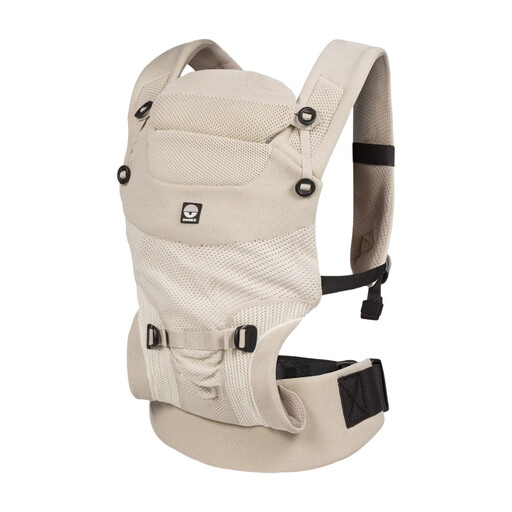
Why this product fits the profile: This model is designed for approximately 3.5 to 15 kg and offers three carrying positions. The adjustable seat and compact folding option make it ideal for parents looking for a versatile starter carrier.
The product details explicitly mention the M-position, an adjustable seat and a hip belt. This means the key selection criteria are clearly described and verifiable.
Three carrying positions, wide padded shoulder straps and suitability up to around 3 years according to the product description.
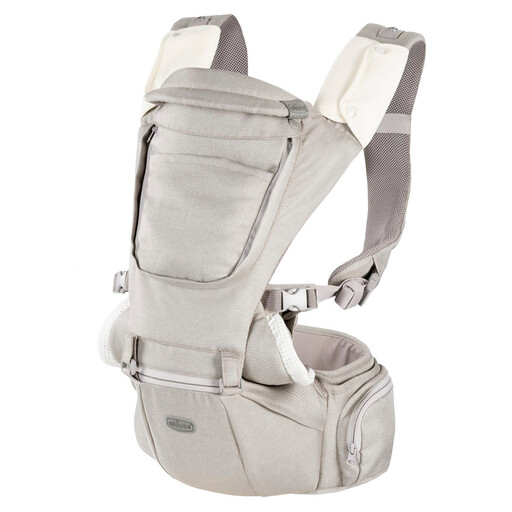
Why this product fits the profile: The 3-in-1 system combines a fabric carrier with a firm hip seat. According to the product details, it's suitable from 3 kg to 15 kg and offers several carrying configurations.
The specifications clearly distinguish between the full carrier, the fabric component and the separately usable hip seat. This makes it easier to choose based on the situation and your baby's developmental stage.
Suitable from birth according to the manufacturer, up to 15 kg, removable hip seat and machine-washable cover.
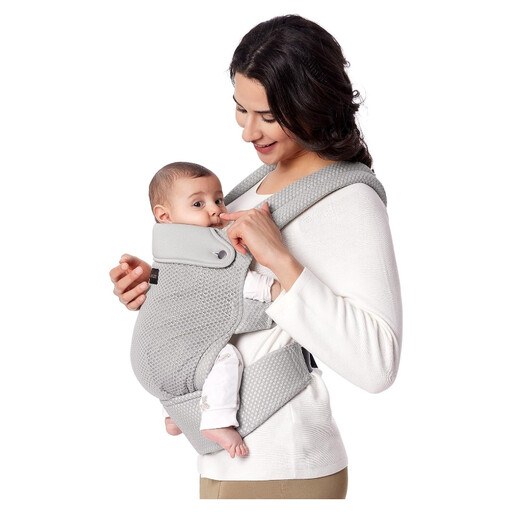
Why this product fits the profile: This mesh model is designed for parents who frequently go for walks, travel or carry their baby in warmer weather. According to the product data, it's suitable for approximately 3.18 to 20 kg.
The material, weight and weight range are all clearly specified. However, the breathable structure doesn't replace the need for correct adjustment and regular checks of seams and buckles.
Breathable mesh, washable material, X-shaped back panel and integrated EVA support according to the product description.
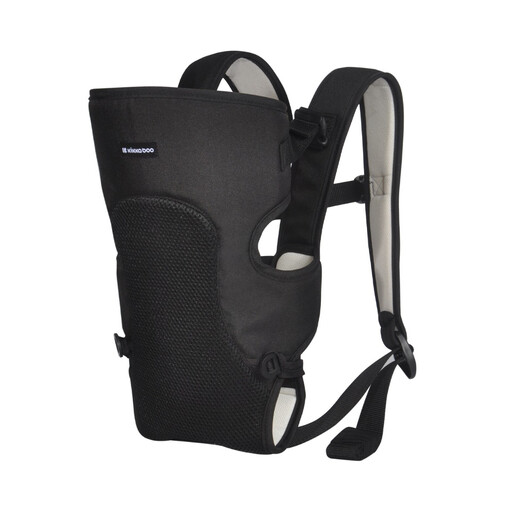
Why this product fits the profile: With a product weight of around 550 g and a stated carrying capacity of up to 9 kg, this lightweight baby carrier is aimed at parents for the early carrying phase.
The limited carrying capacity of up to 9 kg is clearly stated. This helps you avoid mistakenly planning a lightweight model as a solution for the entire toddler period.
Mesh material, padded shoulder straps, three carrying positions and stated compliance with EN 13209-2.
We've put together a complete, regularly updated list of products that fully meet these strict selection criteria and the safety regulations in force in the EU.
Before each use, you should check the buckles, seams, straps and fabric. All fastenings must be fully closed. Your baby should sit close to your body, upright and with their face visible. Their mouth and nose must not be covered by fabric or the head support.
Don't bend forward suddenly, and don't use the carrier when jogging, cycling, cooking over an open flame or during any other activities that carry a risk of falling or burns. If you experience pain or pressure points, adjust the settings and stop using the carrier if necessary. For premature babies or children with specific health conditions, individual medical advice is recommended.
This depends on the minimum weight, construction and manufacturer approval. A baby carrier for newborns must enable the correct posture and provide adequate head support. If your baby isn't yet able to hold their head up independently, a model with that restriction must not be used. Always refer to the product details and instruction manual.
The length of use depends on your child's weight, height, the seat width and the condition of the carrier. Models with a range up to 15 or 20 kg can generally be used for longer. A carrier with a maximum of 9 kg, on the other hand, is intended more for the early baby stage. Check the buckles and seams regularly.
A hip seat can be useful when you're frequently picking your baby up for short periods or switching between carrying positions. However, it's usually heavier and takes up more space than a lightweight front carrier. For travel or longer walks, you should therefore compare the weight, packed size and desired carrying comfort.