
Lieferung heute & morgen

Qualitätsgarantie

Willkommens-Angebote freischalten: KOSTENLOSE Lieferung | Bis zu 80 % RABATT | Kostenlose 30-Tage-JoyPlus-Testphase
App herunterladen
An ergonomic baby carrier can be a practical everyday essential – whether you're out for a walk, travelling, doing chores around the house, or visiting places where a pushchair is awkward. However, models differ significantly in weight range, carrying positions, materials, and the support they offer for both parent and child.
The product name alone doesn't tell you much. What really matters are clear, verifiable details about fit and intended use. If you focus only on a low weight or the longest possible age range, you could end up with a baby carrier that no longer fits well after a short time.
Claims like "from birth to three years" look versatile at first glance. In practice, however, your baby's minimum weight, height and head control must match the carrier's design. Some models are suitable from 3 kg according to the product specs, while others start from around 3 months and a weight of roughly 3.18 kg.
With a baby carrier for newborns especially, parents should carefully check the instructions. If your baby cannot yet hold their head up independently, the carrier must not be used contrary to the manufacturer's guidelines.
A baby carrier with M-position should support the legs so that the knees are higher than the bottom. For this to work, the seat width and leg supports need to be adjustable. A vague marketing claim without any details about adjustability isn't very helpful.
Similarly, a baby carrier with hip support or a baby carrier with lumbar support doesn't automatically distribute weight correctly. The shoulder straps, hip belt and back panel must be adjusted to fit the wearer. If you experience pain or pressure points, stop using the carrier and re-check the settings.
A breathable baby carrier made from mesh can improve air circulation. Even so, heat builds up between your body and the carrier. On hot days, parents should regularly check the baby's neck and back, avoid direct sunlight, and ensure the airways are clear. A thin material alone doesn't make a carrier suitable for every weather condition.
Don't just compare age ranges – look at:
A baby carrier for 3 to 24 months might, for example, be designed for babies weighing between roughly 3.18 and 20 kg. That doesn't mean every carrying position is recommended for the entire period. When using an outward-facing position, additional conditions often apply.
The seat should support your baby from the back of one knee to the other, without letting the legs dangle down. An adjustable seat can be useful if you want the carrier to grow with your child. For products that claim to offer an M-position, parents should check whether the leg supports can actually be adjusted.
The information about hip position should be understood as design and usage guidance. It does not replace individual medical advice.
Wide, padded shoulder straps and a sturdy hip or lumbar belt can distribute the load more effectively. This is especially important for a baby carrier for hands-free carrying in daily life. Also look for:
A lightweight baby carrier is easier to transport, but depending on the design, it may offer less padding or fewer adjustment options.
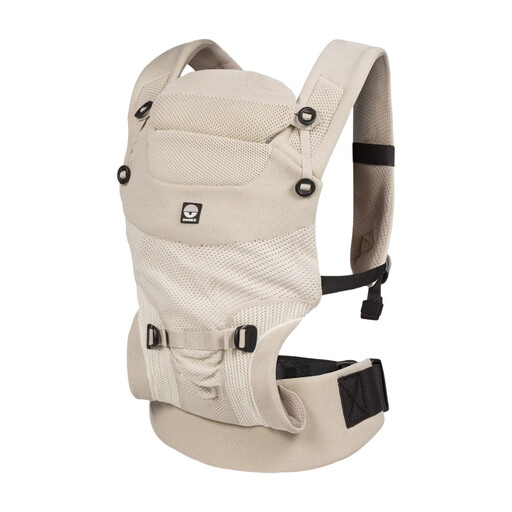
Why this product fits the profile: According to the product specs, this carrier is designed for babies from roughly 3.5 to 15 kg and offers three carrying positions. That makes it a good choice for parents looking for a versatile solution for everyday use and walks.
The specs state minimum and maximum weight, M-position, and adjustable seat and leg areas, rather than just a blanket age recommendation.
Three carrying positions, soft stretch-knit fabric, and a hip belt that fits up to 159 cm according to the product description.
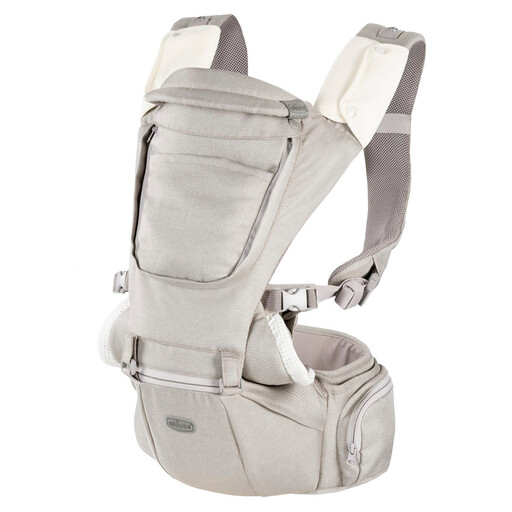
Why this product fits the profile: The 3-in-1 system combines a carrier, a separately usable hip seat, and a fabric carrier. According to the product specs, it offers up to eight carrying positions and is suitable from 3 kg up to 15 kg.
The individual usage modes and maximum weight are clearly stated. The base must not be used without the fabric carrier securely locked in place.
Detachable hip seat, machine-washable cover at 30 °C, and, according to the supplier, recognition by the International Hip Dysplasia Institute.
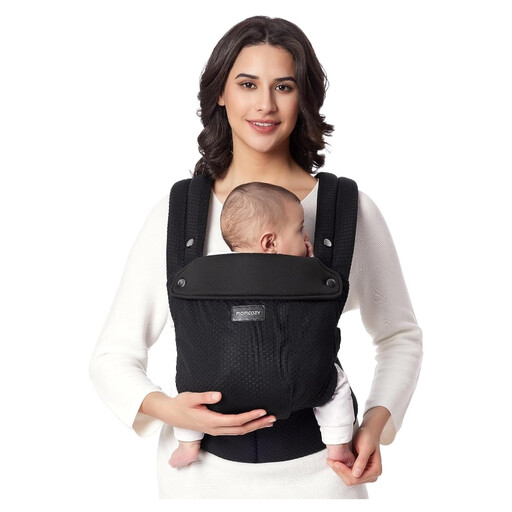
Why this product fits the profile: According to the product specs, this model is designed for babies from roughly 3.18 to 19.96 kg and uses mesh material. It's aimed at families who are often on the go or need a baby carrier for warmer days.
The breathable material is paired with specific care and weight instructions. Use is limited to the front-carrying position intended by the manufacturer.
Mesh fabric, machine-washable care, and integrated EVA support in the hip area according to the product description.
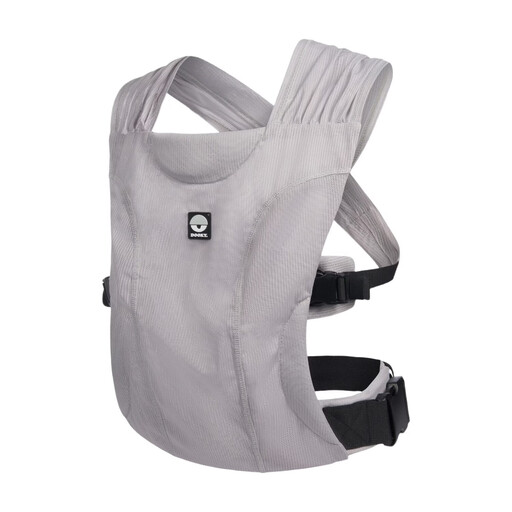
Why this product fits the profile: According to the product specs, this water carrier is designed for babies from roughly 56 to 74 cm and dries quickly. It's intended for use in the shower and pool, not for deep or open water.
The product warnings clearly define the scope of use: not to be used as a flotation device, not for unsupervised use, and not for use in deep water.
Quick-drying stretch material and click-fast buckles for use in the shower or pool under direct supervision.
We've put together a full, regularly updated list of products that fully meet these strict selection criteria and the safety regulations in force in the EU.
Before each use, you should:
A baby carrier is not a safeguard against falls or accidents. Activities such as running, cycling, cooking over an open fire, or other tasks with a high risk of falling are not suitable.
That depends on the specific model. Some carriers are suitable from birth and a minimum weight of 3 kg according to the product specs, while others start from around 3 months. What matters are the manufacturer's instructions, your baby's head control, and correct support for the head, back and legs.
The length of use depends on your baby's weight, height, the seat width, and the condition of the carrier. Models rated up to 15 kg or 20 kg may fit for different lengths of time. Check regularly that the straps, seams and buckles are intact, and that your baby is still sitting safely in the intended position.
Follow the care label and the instruction manual. Some models are machine-washable, while others should only be hand-washed and air-dried. Fasten all closures before washing. A damaged or heavily stretched carrier should not be used any further.