
Lieferung heute & morgen

Qualitätsgarantie

Willkommens-Angebote freischalten: KOSTENLOSE Lieferung | Bis zu 80 % RABATT | Kostenlose 30-Tage-JoyPlus-Testphase
App herunterladen
An ergonomic baby carrier can make everyday life easier: on walks, while travelling or whenever you need both hands free. However, to prevent the carrier from being left unused in the cupboard after just a few weeks, parents should look beyond colours, marketing claims or a high weight limit. The key factors are the fit for the child, how the weight is distributed for the wearer and whether the instructions are clear and easy to follow.
The term baby carrier for newborns does not mean the same thing for every model. Some products are approved from a minimum weight of 3 kg, while others are only suitable from a certain age or once the baby can hold their head unaided. A newborn insert is not always included. Parents should therefore always check the minimum weight, height, recommended age and permitted carrying position together.
A baby carrier up to 20 kg may sound versatile, but it says nothing about how comfortable it will actually be with a larger child. Wide shoulder straps, an adjustable waist belt and a supportive back or lumbar support are important. The wearer’s height and maximum waist circumference must also be suitable. A high weight limit does not replace correct adjustment.
An airy baby carrier should ideally state exactly what fabric is used in the ventilated areas. 3D mesh or air mesh can support air circulation, while cotton is often described as soft and easy to care for. Even breathable materials can create warmth through direct body contact, however. On hot days, parents should also ensure that the airways remain clear, the nose is visible and regular breaks are taken.
With an ergonomically designed carrier, the baby should not sit with their legs hanging down. The so-called M-position baby carrier describes a sitting posture in which the knees are higher than the bottom and the thighs are adequately supported. The seat width and leg supports should be adjustable and suitable for the child’s height.
A C-shaped back may be listed as a design feature in product descriptions. However, it is no substitute for correct adjustment. The baby should sit upright and close to the wearer’s body without slumping. Their face and nose must remain visible at all times. In the case of premature babies, low birth weight or specific health conditions, individual medical advice should be sought before use.
A baby carrier with hip support or a wide waist belt can help prevent the weight from resting solely on the shoulders and neck. For longer journeys, padded shoulder straps, cross-back straps and an adjustable baby carrier with lumbar support are also useful features.
When putting the carrier on, make sure that all buckles click securely into place. You can then check that the straps are neither digging in nor too loose. Pain, pressure marks or noticeable pulling in the back are reasons to adjust the carrier or stop using it.
Compare the specifications in kilograms, not just pounds. A model with a range of 3.2 to 20 kg is not automatically approved for every carrying position at every age. For example, the instructions may only permit back carrying from a certain age.
The following points are relevant for everyday use:
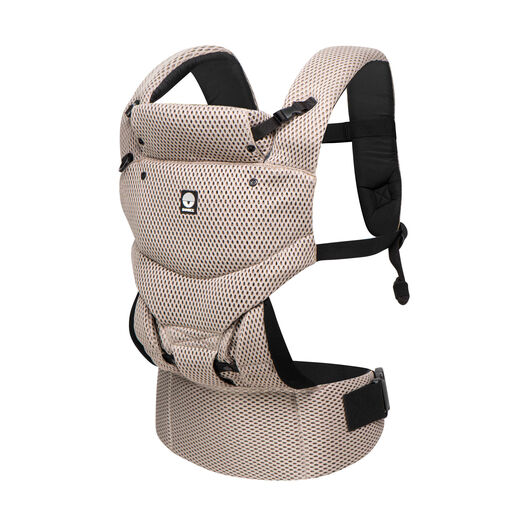
Why this product suits this profile: According to the product details, this model is designed for 0 to 3 years, or 3.5 to 15 kg, and supports both front and back carrying.
The specifications clearly state the weight range, M-position and adjustable seat and leg support. This makes it easier to compare the details before buying.
3D mesh fabric, padded shoulder straps and waist belt, plus the stated testing in accordance with EN 13209-2:2015.
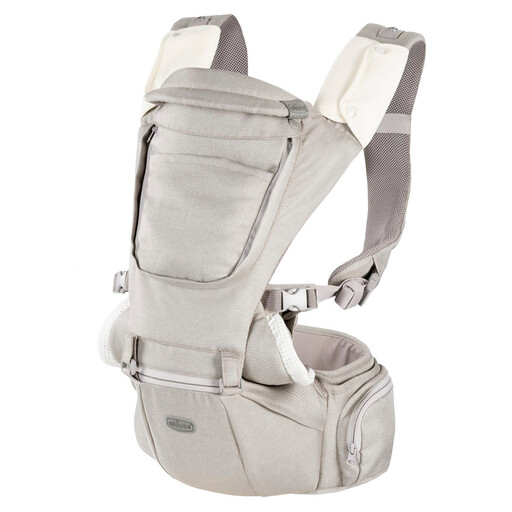
Why this product suits this profile: According to the manufacturer’s details, the 3-in-1 system is suitable from 3 kg to 15 kg and can be used with or without the detachable hip base.
Rather than simply stating a high weight limit, the product description highlights several components and explains the relevant ways to use them.
Detachable hip base, several carrying configurations and stated recognition by the International Hip Dysplasia Institute.
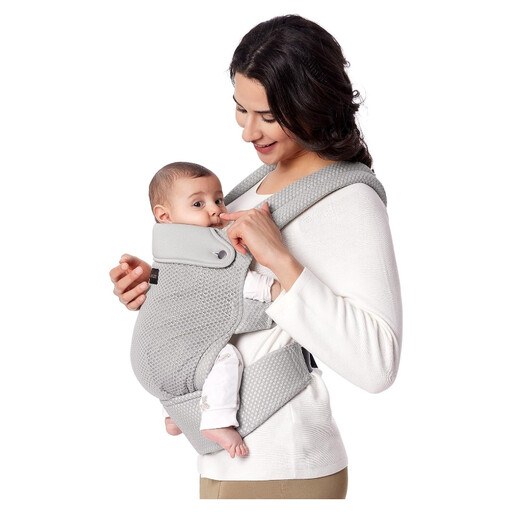
Why this product suits this profile: The mesh design is appealing to parents who are frequently out and about and are looking for a front carrier for approximately 3.18 to 20 kg with ventilated panels.
The material, care instructions, minimum and maximum weights, and restriction to front carrying are all clearly specified.
Air mesh material, cooling neck fabric, X-shaped back construction and integrated EVA waist support.
We have put together a complete, regularly updated list of products that fully meet these strict selection criteria and the safety regulations applicable in the EU.
This depends on the model. Check the minimum weight, height and requirements for head control. Some carriers are approved from around 3 kg, while others should only be used from three months. The manufacturer’s specifications and the instructions supplied with the carrier are the deciding factors.
The period of use depends on the weight range, seat width, height and carrying comfort. Models for 3 to 15 kg can often be used into the toddler years; a baby carrier up to 20 kg offers a wider specified weight range. You should stop using the carrier as soon as the child no longer sits correctly in the intended position or the wearer experiences pain.
In addition to the purchase price, there are mainly care and, where necessary, replacement costs. Machine-washable models can be less demanding in everyday use. Wear parts such as buckles, straps and seams should be checked regularly. If there is visible damage, stop using the carrier, regardless of the product’s age.