
Lieferung heute & morgen

Qualitätsgarantie

Willkommens-Angebote freischalten: KOSTENLOSE Lieferung | Bis zu 80 % RABATT | Kostenlose 30-Tage-JoyPlus-Testphase
App herunterladen
Long days at a desk, whether in the office or at home, take their toll. Neck tension, lower back pain, and a decline in concentration are common consequences of improper seating. An ergonomic office chair is often presented as the solution, but the market is flooded with models whose promises don't hold up in practice.
Choosing the right chair is an investment in your health and productivity. However, before you make a decision, it's crucial to recognise common marketing traps and understand which features truly make a difference.
Many chairs are advertised as "ergonomic" without meeting the basic requirements. Watch out for these three typical problems to avoid a bad purchase:
To find a chair that will reliably support you for years, you should look for specific, verifiable features. These three parameters are non-negotiable for long and healthy sitting.
A chair with lumbar support is crucial for supporting the natural S-curve of the spine and relieving pressure on the lumbar region. However, there are qualitative differences:
A truly adjustable desk chair offers customisation options beyond simple height adjustment. Look for the following settings:
The choice of material directly affects comfort and longevity. A breathable office chair with a mesh backrest is particularly advantageous for prolonged sitting, as it promotes air circulation and prevents heat buildup.
Also, check the maximum weight capacity. An office chair rated for up to 150 kg is an indicator of a robust build and high-quality materials, especially for the gas lift and the base. Look for recognised safety certificates like T?V/GS or BIFMA, which confirm that the chair has been tested for safety, durability, and stability.
Based on these criteria, we have identified models suitable for various requirements and work styles.
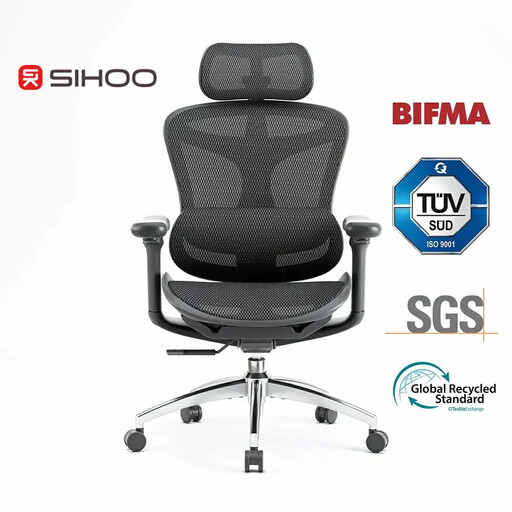
Why This Model Fits: Ideal for individuals who spend more than eight hours a day at their desk and are looking for an uncompromising, preventative solution against postural damage.
This model goes beyond the mere "ergonomic" marketing label. It offers a verifiably dynamic lumbar support that adapts to movements, as well as synchronised 3D armrests.
The intelligent, weight-sensitive tilt mechanism and the 4-level adjustable backrest provide personalised support for users up to 150 kg. Certifications according to EN1335 and BIFMA attest to its tested quality.
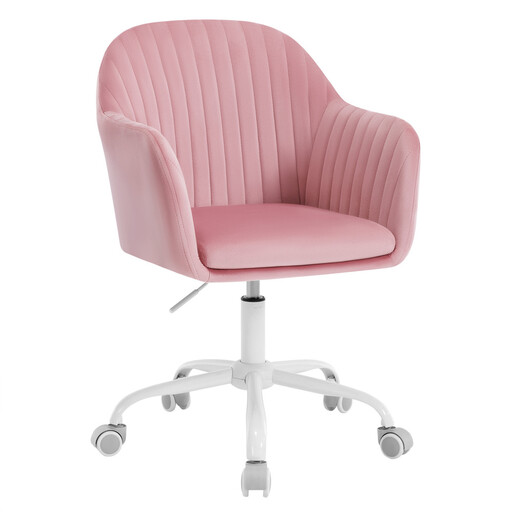
Why This Model Fits: For users seeking a chair for moderate work hours that blends seamlessly into a home environment while providing fundamental ergonomic comfort.
This model avoids the trap of being a mere design object. It combines a homely velvet look with an ergonomically shaped backrest, height adjustability, and a stable construction.
The high weight capacity of up to 150 kg and the SGS-certified gas lift signal a more robust build than typical decorative chairs. The soft velvet cover ensures high comfort for short to medium periods of sitting.
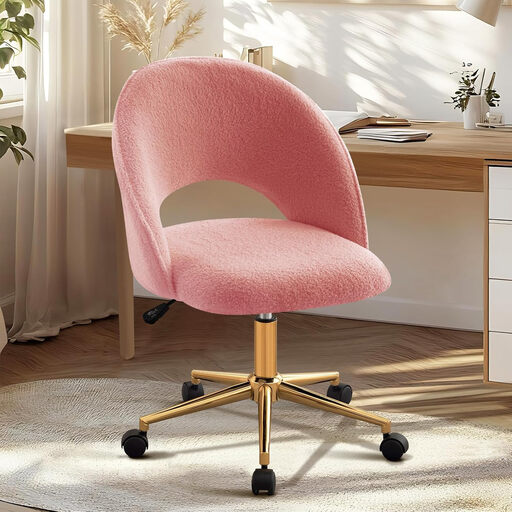
Why This Model Fits: Perfect for individuals who use their desk for only a few hours a day and want a chair that also functions as a chic accent piece in the bedroom or living room.
This model offers more than just an appealing look. With features like height adjustability, 360° swivel, and a solid weight capacity of up to 135 kg, it stands out from unstable, purely decorative chairs.
The combination of soft Sherpa fabric and a golden metal frame creates a luxurious aesthetic. Its basic ergonomic functions make it suitable for light office work and as a vanity chair.
An ergonomic chair is the foundation, but a fully functional workspace needs more. Discover matching mobile storage solutions to keep your desk area perfectly organised and tidy.
The lifespan of a high-quality ergonomic office chair depends heavily on the material quality, construction, and usage. Models with BIFMA or T?V certification are tested for longevity and can last 7 to 10 years or more with proper care. Wear-and-tear parts like casters or the gas lift can be replaced on many quality chairs if needed, further extending their lifespan.
Both materials have specific advantages and disadvantages. A breathable mesh back is ideal for warmer environments or for people who tend to sweat, as it allows for excellent air circulation. Additionally, the flexible fabric conforms well to the contours of the back. A padded chair, on the other hand, can provide a softer, more luxurious feel and may be perceived as more comfortable in cooler rooms. The choice is ultimately a matter of personal preference and environmental conditions.
A high price is not automatically a guarantee of ergonomics, but crucial adjustment mechanisms like dynamic lumbar support, seat depth adjustment, and 4D armrests are predominantly found in mid- to high-end models. Consider the purchase a long-term investment in your health. A cheaper model may suffice for occasional use, but for daily, multi-hour use in a home office chair, the cost of a high-quality model is amortised through greater comfort, higher productivity, and the prevention of health issues.