
Lieferung heute & morgen

Qualitätsgarantie

Willkommens-Angebote freischalten: KOSTENLOSE Lieferung | Bis zu 80 % RABATT | Kostenlose 30-Tage-JoyPlus-Testphase
App herunterladen
Long hours at a desk, whether in a home office or a corporate setting, can lead to strain and discomfort. A suitable ergonomic office chair is not an afterthought but a fundamental component of a healthy and productive workspace. This article serves as your guide, explaining which features to look for and presenting a selection of models tailored to different needs. As your Joybuy Product Recommendation Officer, I have compiled the relevant product information to provide you with an objective basis for your decision.
The market is vast, and technical specifications can be overwhelming. The following three criteria will help you identify the features that are most important for your needs.
A chair can only be ergonomic if it can be adapted to your body. Rigid models force the body into an unnatural posture. Therefore, look for the following adjustment options:
A key feature of an ergonomic chair is targeted support for the spine. A desk chair with lumbar support is particularly important here. This support fills the natural curve of the lower back, helping to maintain an upright posture. Whether the lumbar support is fixed or adjustable in height and depth depends on the model.
The backrest material also plays a role. A mesh back office chair offers high breathability, which is especially beneficial on warm days or during long periods of sitting, as it promotes air circulation. Padded backrests, on the other hand, often provide a softer feel.
The durability and safety of an office chair depend on its construction and the materials used. Look for a stable base, usually made of steel, aluminium, or robust plastic, as well as high-quality casters that are suitable for your flooring.
Certifications such as BIFMA (Business and Institutional Furniture Manufacturer's Association) or SGS tests can be an indicator of a chair's resilience and safety. These standards define tests for durability, stability, and material strength. A chair that has passed such tests has been designed for a specific load and duration of use.
Based on the criteria above, we have compiled a selection of models that offer different features and priorities.
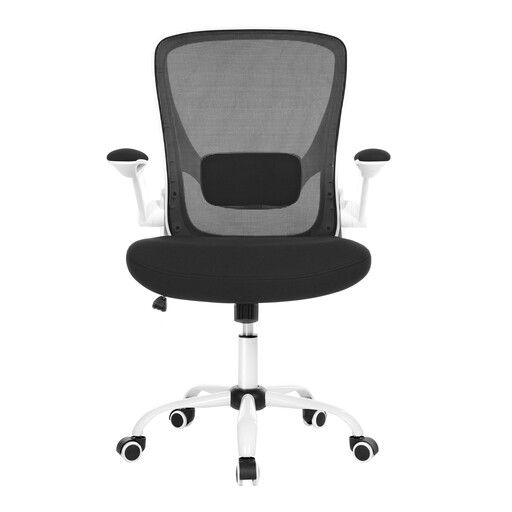
Why this model stands out: This model combines essential ergonomic functions with a space-saving design. The flip-up armrests allow the chair to be pushed completely under the desk, making it ideal for smaller workspaces or a home office chair.
Benefits:
Who is this model for? This model is a practical choice for students and home office professionals looking for a functional and compact ergonomic swivel chair for daily use.
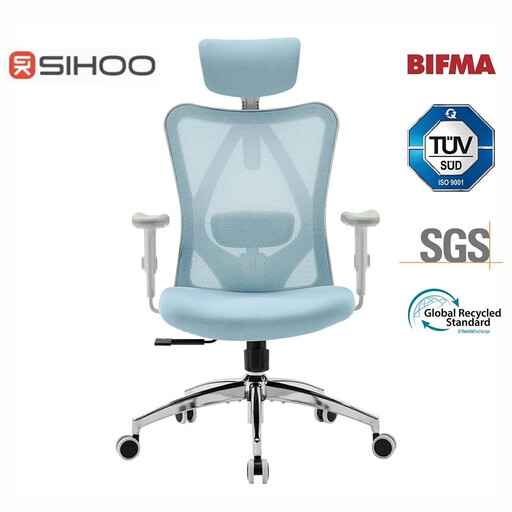
Why this model stands out: The SIHOO M18 offers comprehensive adjustment options, including an adjustable headrest to relieve neck strain. According to the manufacturer, the chair is BIFMA and SGS certified and has passed a static pressure test of 1136 kg, indicating a robust construction.
Benefits:
Who is this model for? This chair is aimed at users who spend many hours at their desk and place a high value on certified quality and versatile adjustment options, including head and neck support.
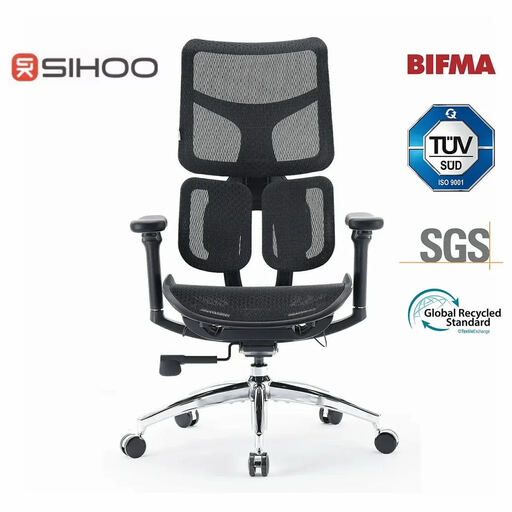
Why this model stands out: The Sihoo Doro S100 is equipped with advanced ergonomic features, such as a dual dynamic lumbar support system and 4D armrests. According to the manufacturer, the system automatically adapts to different body postures, providing continuous lower back support.
Benefits:
Who is this model for? This model is designed for demanding users who seek maximum adjustability and advanced ergonomic support for intensive and long workdays. It serves as a high-end executive chair with a rocking function and comprehensive customisation.
If the models presented do not exactly meet your requirements, or if you would like to compare a wider range of designs and features, you can find more models in our home office chair category. There, you can filter by specific features to find the perfect solution for your workspace.
1. What makes an office chair ergonomic? An office chair is considered ergonomic when it offers a variety of adjustments to adapt to the user's individual body measurements and sitting habits. These typically include adjustable seat height, seat depth, armrests, and a reclining backrest with lumbar support. The goal is to promote a healthy posture and minimise physical strain.
2. How important is lumbar support in a desk chair? Lumbar support is very important because it supports the natural S-curve of the lumbar spine. Without this support, many people tend to slouch in their lower back, which can lead to strain on the spinal discs and cause pain. Good support helps to keep the upper body upright and relieves muscle tension.
3. How long does a good ergonomic office chair last? The lifespan heavily depends on the quality of materials, construction, and intensity of use. Models with a sturdy metal base and high-quality upholstery generally last longer than simpler versions. Certifications like BIFMA provide an indication of durability, as the products undergo standardised stress tests. With regular care and proper use, a high-quality chair can perform its function for many years.