
Lieferung heute & morgen

Qualitätsgarantie

Willkommens-Angebote freischalten: KOSTENLOSE Lieferung | Bis zu 80 % RABATT | Kostenlose 30-Tage-JoyPlus-Testphase
App herunterladen
By Joybuy Product Recommendation Officer, August 29, 2026
Long hours at a desk, whether at home or in the office, take their toll. An unsuitable chair often leads to tension, back pain, and fatigue. But the office chair market is overwhelming and full of marketing hype. Many models advertised as "ergonomic" turn out to be costly mistakes.
This guide will help you identify the crucial features and avoid common traps. We'll show you what truly matters when choosing a durable and comfortable chair, so you can make an informed decision for your health and productivity.
Before we dive into the important features, let's highlight the typical pitfalls that often lead to disappointment.
To avoid a bad purchase, focus on three objective criteria. These determine whether a desk chair is truly suitable for long and healthy sitting.
Adjustability is the heart of a good office chair. Without it, any ergonomic design is ineffective. Check for the following features:
The material significantly influences both comfort and longevity.
The base of any good office chair is its foundation.
Based on the criteria above, we have identified a few models suitable for different user profiles and needs, whether for a home office chair or daily office use.
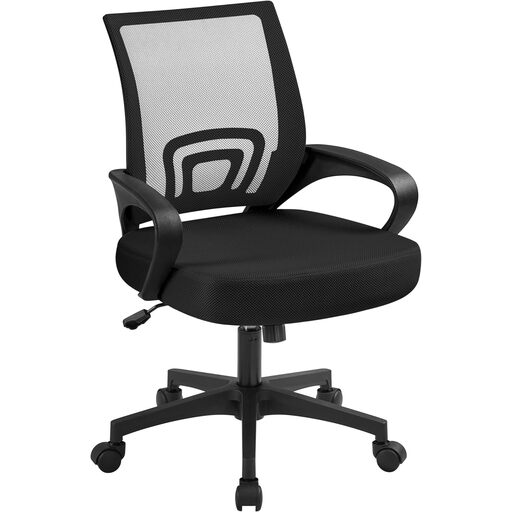
Why it's a match: Ideal for students or those new to working from home. It provides the essential ergonomic basics to replace a simple dining chair without breaking the bank.
This model is more than just a chair labelled 'ergonomic'. It offers adjustable seat height, a rocking function, and integrated lumbar support. The mesh back prevents heat build-up during long sessions.
The combination of a breathable mesh back and a weight capacity of up to 136 kg, confirmed by SGS and BIFMA certifications, offers solid value for money.
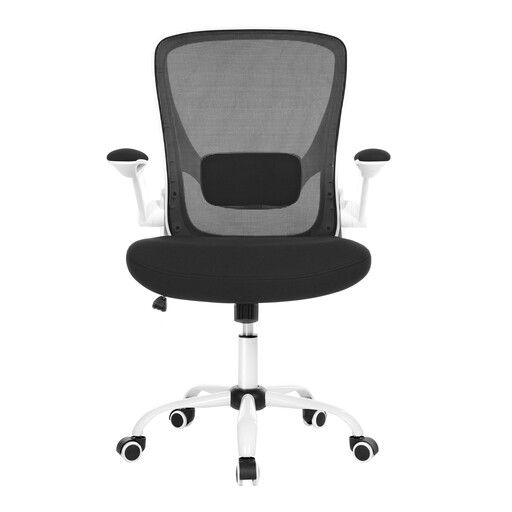
Why it's a match: Perfect for multi-functional rooms or compact workspaces. The flip-up armrests allow the chair to be pushed completely under the desk, saving valuable space.
This model goes beyond standard ergonomics. It not only offers height-adjustable lumbar support but also the practical feature of flip-up armrests, setting it apart from many basic models.
The combination of a space-saving design with flip-up armrests and a full suite of ergonomic features, including adjustable lumbar support and a rocking function.
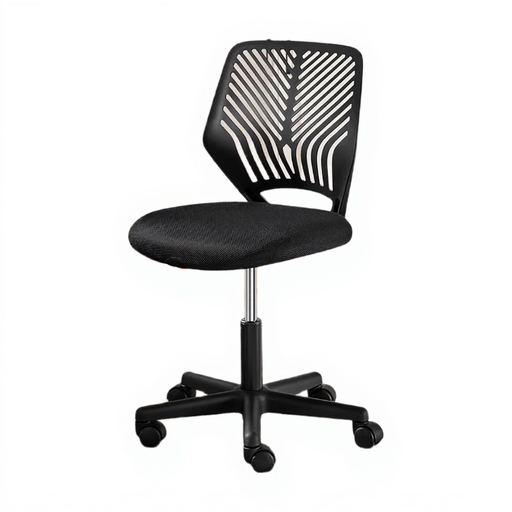
Why it's a match: Ideal for very tight workspaces or for users who need maximum freedom of movement, such as when playing an instrument. The armless design is a deliberate functional choice here.
Despite its minimalist design, it doesn't skimp on stability. The chair is SGS-certified, the gas lift is tested for durability, and the base is robust. The ergonomically shaped backrest still provides good support.
Maximum flexibility and space efficiency. The chair can be pushed completely under any desk and doesn't interfere with lateral movements. The breathable backrest ensures comfort.
The right **computer chair** is an investment in your well-being. If you'd like to compare more models that meet our selection criteria, you can find a comprehensive overview here.
The lifespan of an office chair depends heavily on the intensity of use, the quality of the materials, and its maintenance. Entry-level models might last about 2 to 3 years with daily use. Higher-quality chairs with robust mechanics and durable upholstery can have a lifespan of 5 to over 10 years. Regular maintenance, such as tightening screws every few months, can significantly extend its stability and longevity.
Neither option is universally better; it depends on personal preference and the work environment. A mesh back office chair offers unparalleled breathability, making it ideal for warmer rooms or for people who tend to sweat. A padded backrest can provide a softer, more enveloping feel, which some users find more comfortable. In either case, quality is key: good mesh fabric must not sag, and good padding must remain firm and supportive.
Proper adjustment is simple and crucial for a healthy posture. Sit in the chair and adjust the seat height so that your feet are flat on the floor and your knees form an angle of about 90 degrees. The height should also allow your forearms to rest comfortably and horizontally on the desk surface or armrests. This relieves strain on your entire musculoskeletal system.