
Lieferung heute & morgen

Qualitätsgarantie

Willkommens-Angebote freischalten: KOSTENLOSE Lieferung | Bis zu 80 % RABATT | Kostenlose 30-Tage-JoyPlus-Testphase
App herunterladen
Long hours at a desk, whether in a home office or a corporate setting, take their toll. Neck tension and lower back pain are often the direct result of unsuitable seating. An ergonomic office chair is frequently presented as the solution, but the market is flooded with models whose promises quickly turn out to be empty marketing phrases.
As your Joybuy Product Recommendation Officer, I'll help you identify the crucial features and avoid common buying traps. This guide focuses on objective criteria to help you make an informed decision for greater comfort and productivity.
Many chairs carry the "ergonomic" label without meeting the most basic requirements. Pay attention to these three points to avoid a bad purchase:
To find the right chair, you should focus on verifiable features. These three areas are critical for an ergonomic sitting posture.
Making a swivel chair height-adjustable is just the beginning. Look for the following customisation options:
The longevity and comfort of your chair depend directly on the components used.
Depending on your usage profile, additional features can make all the difference.
Here are some models tailored to specific user profiles that meet the criteria mentioned above.
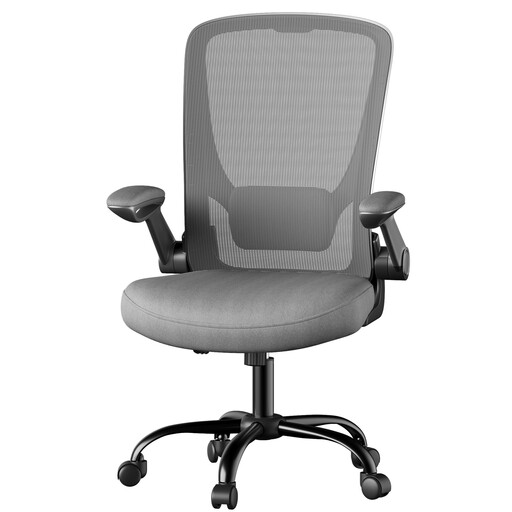
Why This Fits Their Persona: Ideal for home offices with limited space. This model offers essential ergonomic features without breaking the bank. The flip-up armrests allow the chair to be pushed completely under the desk.
Instead of a vague ergonomics label, this chair offers a specifically adjustable lumbar support and a rocking function. The breathable mesh back prevents the heat build-up common in cheap synthetic leather chairs.
Space-saving, flip-up armrests and a breathable mesh back for lasting comfort.
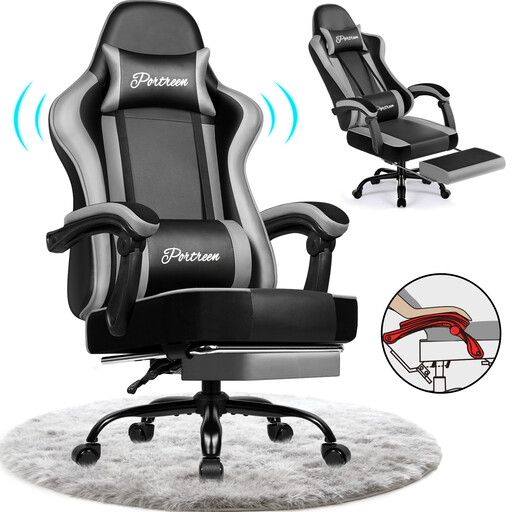
Why This Fits Their Persona: Designed for long, intensive sitting sessions. The high load capacity, deeply reclining backrest, and retractable footrest make it a versatile gaming chair and executive chair with a rocking function for power users.
This model avoids the instability trap with an explicit weight capacity of 150 kg and a construction certified by the manufacturer as BIFMA/SGS compliant. The features are clearly defined, not just vaguely described.
Integrated, retractable footrest for relaxation breaks and a backrest that reclines up to 170 degrees.
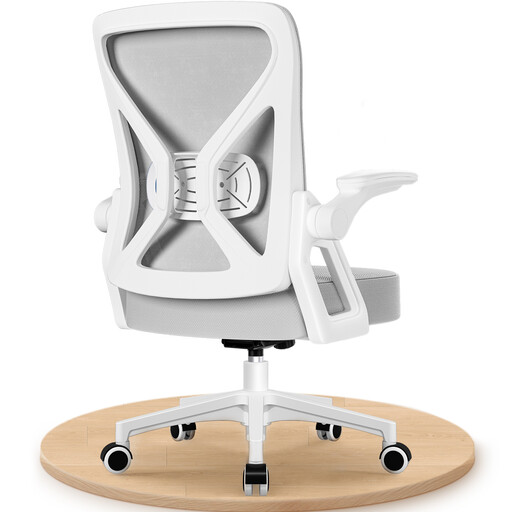
Why This Fits Their Persona: A versatile chair for users who need a balance between focused work and relaxation. The flip-up armrests and adjustable lumbar support offer flexibility for various work situations and body types.
This model offers a clearly defined, adjustable lumbar support and a high load capacity of 150 kg. The rocking function up to 125° is a concrete specification that goes beyond vague promises of comfort.
Flip-up armrests for more freedom of movement and easy storage, plus a high load capacity for a long lifespan.
We have compiled a complete, up-to-date list of products that fully meet these strict selection criteria and relevant safety standards.
For an optimal posture, your feet should be flat on the floor with your knees at an approximate 90-degree angle. Adjust the seat height accordingly. Your arms should also rest at a 90-degree angle on the armrests or desk, without you having to raise your shoulders. The lumbar support should fit comfortably into the curve of your lower back.
The lifespan heavily depends on the intensity of use, the quality of the materials, and the craftsmanship. A solid model can last 5 to 10 years with daily use. Pay attention to the manufacturer's warranty period and consider models with a metal base and a certified gas lift. It is also advisable to regularly check and tighten screws and connections as needed.
Although the lines are increasingly blurring, there are conceptual differences. Gaming chairs often feature a striking, racing-seat-style design, a high backrest with an integrated headrest, and additional comfort features like a footrest. Their focus is on intensive, but often passive, sitting. Classic ergonomic office chairs concentrate on subtle, dynamic support for an active sitting posture during work, often with more advanced synchronous mechanisms. However, many models today combine features from both worlds.