Joybuy Insights

Ergonomic Chair Guide: Avoid Purchase Mistakes

Long hours of sitting in a home office, at the office, or while studying can put significant strain on your back. An ergonomic office chair is often presented as the solution, but the market is flooded with models whose promises quickly turn out to be empty marketing slogans. Many buyers invest in a chair that causes more problems than it solves after just a few months.

This guide will show you how to avoid the typical pitfalls. We focus on the objective features that define a truly supportive chair and help you make an informed decision.

The 3 Most Common Traps When Buying an Office Chair

Before we dive into the important features, you should be aware of the most common traps that often lead to a bad purchase:

  1. The Empty "Ergonomic" Promise: The term "ergonomic" is not a protected designation. Many manufacturers use it for chairs that merely have a curved backrest but offer no essential adjustment options. A true ergonomic desk chair must adapt to your body, not the other way around.
  2. Inferior Mechanics and Gas Lift: A common annoyance is a failing gas lift, which causes the chair to slowly sink. Likewise, a simple rocking function can be insufficient for prolonged sitting, as it does not actively support the back.
  3. Poor Material Choice: Poorly ventilated upholstery fabric leads to uncomfortable sweating, while a low-quality mesh office chair quickly loses its tension and no longer provides adequate support.

What Really Matters: The Decisive Features

To avoid a bad purchase, you should focus your attention on three core areas. These define the quality and functionality of a chair for long periods of sitting.

1. Comprehensive Adjustability: More Than Just Height-Adjustable

A height-adjustable office chair is the absolute baseline. However, for correct posture, further adjustments are essential:

  • Lumbar Support: An adjustable lumbar support is crucial. It supports the lower back (lumbar spine) and helps maintain the natural S-curve of the spine. Ideally, it is adjustable in height and depth.
  • Seat Depth: The ability to adjust the seat depth ensures that there is a gap of about three to four fingers' width between the back of your knees and the front edge of the seat. This promotes blood circulation in the legs.
  • Armrests: Adjustable armrests (in height, width, and depth) relieve tension in the shoulder and neck area. For more flexibility or if space under the desk is limited, flip-up armrests are a practical solution.

2. The Chair Mechanism: The Heart of Movement

The mechanism determines how the seat and backrest move. There are significant differences here:

  • Tilt Mechanism: With this simple mechanism, the seat and backrest tilt backward together at a fixed angle. It is suitable for short sitting periods but offers no dynamic support.
  • Synchronous Mechanism: Here, the backrest and seat move in a synchronized ratio (e.g., 3:1). When you lean back, the backrest tilts more than the seat. This opens up the seating angle, promotes circulation, and supports an active, dynamic sitting posture. For a chair designed for long sitting periods, this mechanism is highly recommended.

3. Material and Build Quality: Comfort and Durability

The material has a direct impact on seating comfort and the chair's durability.

  • Mesh Office Chairs: Mesh backrests are very breathable and conform well to the shape of the back. Pay attention to the high tension of the material so that it does not sag after long-term use.
  • Upholstered Chairs: Fabric or leather upholstery often provides a softer seating feel. High-quality, shape-retaining foams that do not quickly flatten are important here, as are abrasion-resistant and breathable cover fabrics.
  • Base and Casters: A stable base made of metal or robust plastic is the foundation for safety. The casters should be appropriate for the flooring (hard casters for carpet, soft casters for hard floors like parquet or laminate) to prevent scratches and allow for quiet gliding.

Standout Comparisons For You

Instead of making a one-size-fits-all recommendation, we have selected models tailored to specific user profiles and their requirements.
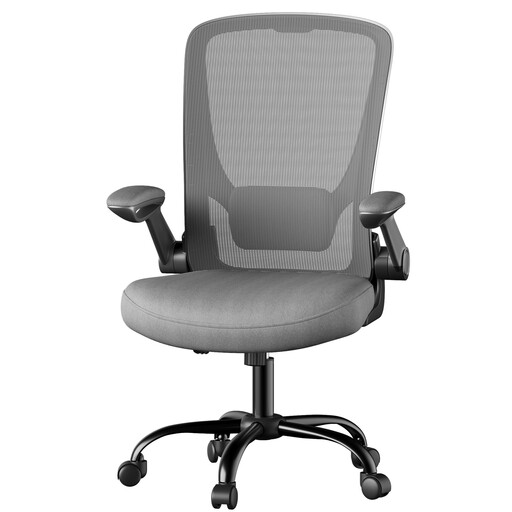
MATCH FOR: The Compact Home Office
JOYFURNOS Mesh Office Desk Chair, Ergonomic Swivel Chair, Folding Armrests, Grey

JOYFURNOS Mesh Office Desk Chair, Ergonomic Swivel Chair, Folding Armrests, Grey

Why This Fits Their Persona: Ideal for users with limited space. The flip-up armrests allow the chair to be pushed completely under the desk, saving valuable space in small apartments or multi-functional rooms.

How It Avoids the Trap

This chair goes beyond the empty "ergonomic" promise by offering an adjustable lumbar support and a rocking function for relaxing breaks—concrete, useful features instead of just a curved shape.

Key Advantage & Pros

Space-saving flip-up armrests and a breathable mesh back for comfort during long workdays.
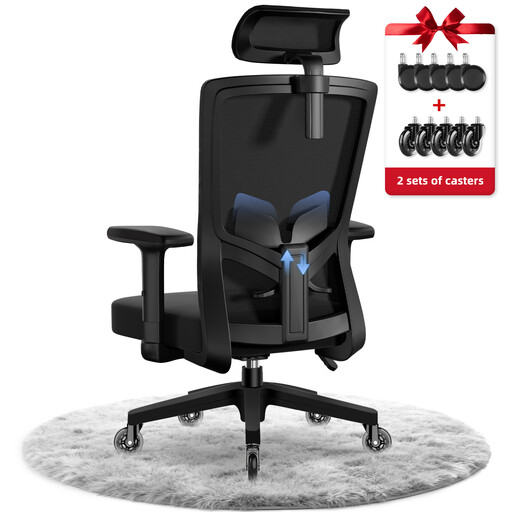
MATCH FOR: Demanding Long-Term Sitters
GTIMEX Friendly Ergonomic Mesh Office Chair with Adjustable Headrest, Armrests, Lumbar Support & Rocking Function

GTIMEX Friendly Ergonomic Mesh Office Chair with Adjustable Headrest, Armrests, Lumbar Support & Rocking Function

Why This Fits Their Persona: Designed for individuals who spend many hours at their desk daily. The comprehensive adjustment options for the headrest, lumbar support, and armrests allow for precise customisation to the body to minimise fatigue.

How It Avoids the Trap

This chair avoids the trap of inferior components. The gas lift is BIFMA and SGS certified and designed for a static pressure test of 1136 kg, ensuring high load capacity and durability for up to 150 kg of body weight.

Key Advantage & Pros

Fully adjustable ergonomics (headrest, lumbar, armrests) and a high maximum weight capacity of 150 kg.
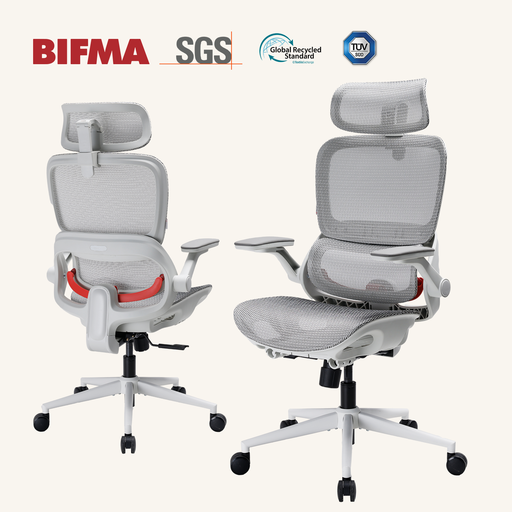
MATCH FOR: Design-Conscious All-Rounders
SIHOO B100 Ultra Ergonomic Office Chair, Mesh with Adaptive Lumbar Support, Light Grey

SIHOO B100 Ultra Ergonomic Office Chair, Mesh with Adaptive Lumbar Support, Light Grey

Why This Fits Their Persona: For users who value modern aesthetics without compromising on ergonomics. The sleek design and light colour scheme blend seamlessly into stylish living and working environments.

How It Avoids the Trap

This chair avoids the "one-size-fits-all" trap with an adaptive lumbar support that adjusts to the user's movements. This provides dynamic, personalised support that is absent in rigid models.

Key Advantage & Pros

Adaptive lumbar support for dynamic stability and a modern, clean design with a wide headrest.

Looking for more options?

We have compiled a complete, up-to-date list of products that fully meet these strict selection criteria and German safety regulations.

Frequently Asked Questions (FAQ)

How long does a good ergonomic office chair last?

The lifespan of an ergonomic office chair depends heavily on the quality of its components and its usage. Models with certified gas lifts (e.g., according to BIFMA standards), robust metal bases, and high-quality upholstery can easily last 5 to 10 years with daily use. On cheaper models, the padding or the mechanism are often the first parts to show signs of wear after 1 to 3 years.

What is the difference between a rocking function and a synchronous mechanism?

A rocking function tilts the entire seat shell (seat and backrest) backward at a fixed angle. This is relaxing but not ideal for active work. A synchronous mechanism is more advanced: when you lean back, the backrest tilts at a greater angle than the seat. This promotes movement, relieves pressure on the intervertebral discs, and supports better posture while working.

How do I correctly adjust my ergonomic office chair?

A basic setup follows these steps:

  1. Seat Height: Adjust the height so your feet are flat on the floor and your knees form an angle of about 90 degrees.
  2. Seat Depth: Sit all the way back. There should be a gap the width of a hand between the back of your knees and the front edge of the seat.
  3. Lumbar Support: Adjust the support so that it fills and supports the natural curve of your lumbar spine.
  4. Armrests: Set the armrests so that your forearms rest comfortably on them with relaxed shoulders, forming a 90-degree angle.