
Lieferung heute & morgen

Qualitätsgarantie

Willkommens-Angebote freischalten: KOSTENLOSE Lieferung | Bis zu 80 % RABATT | Kostenlose 30-Tage-JoyPlus-Testphase
App herunterladen
For many of us, long hours of sitting have become a daily reality, whether in a home office, a corporate setting, or while gaming. A suitable ergonomic office chair is often promoted as the solution for comfort and a healthy posture. However, the market is saturated with products whose promises turn out to be empty marketing buzzwords upon closer inspection. Before you make a decision, it's crucial to understand the common pitfalls that can lead to a poor purchase.
Many chairs are labelled "ergonomic" without offering the necessary adjustment features. Other models prioritise a flashy design over functional, back-friendly properties. Another critical issue is the use of low-quality components, especially in gas lifts and bases, which not only compromise longevity but can also pose a safety risk. This guide will help you navigate these problems and make an informed choice.
To find a chair that truly supports you, you should focus on objective and verifiable criteria. The following two areas are of central importance for a chair for long hours of sitting.
A chair is only truly ergonomic if it can be adapted to your body—not the other way around. Look for the following adjustment options:
The durability and safety of your chair depend directly on the materials used and the quality of its components.
Instead of making a one-size-fits-all recommendation, we have selected models tailored to specific user profiles and their requirements.
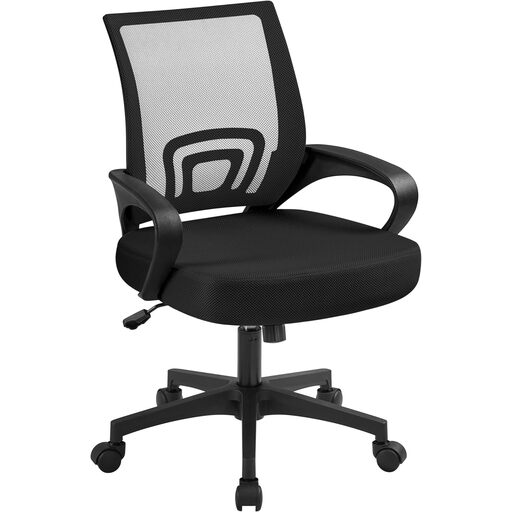
Why this model is a good fit: Ideal for students or those new to a home office setup who need solid basic features without a high initial investment. It provides the essential functions for comfortable work.
This model doesn't just use the term "ergonomic" for marketing; it backs it up with verifiable features like a certified gas lift (BIFMA/SGS) and integrated lumbar support.
Offers safety-tested components and a breathable mesh back, which is a solid combination of safety and comfort in this price range.
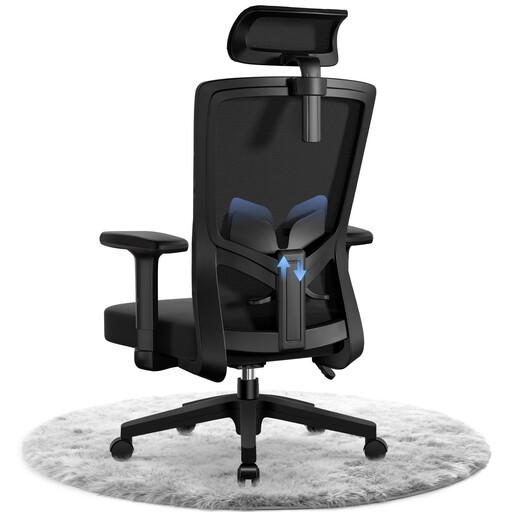
Why this model is a good fit: Designed for individuals who spend more than eight hours a day at their desk. Its comprehensive adjustment options allow for precise customisation to the body to prevent muscle strain.
This model goes far beyond simple height adjustment. It offers a finely adjustable lumbar support (6 cm), headrest (11 cm), and armrests (10 cm), enabling true, personalised ergonomics.
Fully customisable support for the lumbar, neck, and arms, plus a high weight capacity of up to 150 kg, confirmed by BIFMA/SGS certifications.
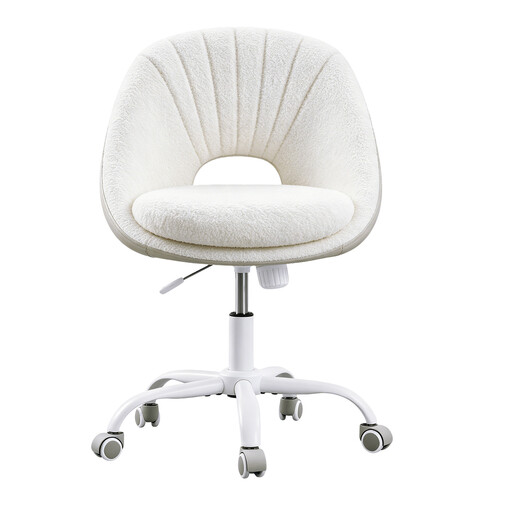
Why this model is a good fit: For users seeking a comfortable chair that seamlessly blends into a living room or bedroom decor and doesn't look like a typical home office chair.
This model resolves the conflict between aesthetics and function. It combines a homey design with Sherpa fabric with functional features like a rocking function and height adjustment.
An appealing, modern design with a residential character. The seat cover is also removable and machine-washable, which simplifies maintenance.
We have compiled a complete, up-to-date list of products that fully meet these strict selection criteria and German safety regulations.
Start with the seat height: your feet should be flat on the floor. Next, adjust the lumbar support so that it comfortably supports your lower back curve. Set the armrests so that your shoulders are relaxed. The seat depth is correct when there is a gap of about two to three fingers' width between the back of your knees and the front edge of the seat.
A gaming chair is often characterized by a racing-style look with a high backrest and pronounced side bolsters. It frequently offers a deep recline function and additional cushions for the neck and lumbar regions. A classic ergonomic office chair focuses more on subtle, integrated, and finely adjustable support mechanisms for a neutral sitting posture during work. Both can be ergonomic, but they have different priorities.
The lifespan of a gas lift depends on its quality and frequency of use. For high-quality, certified models (e.g., according to the BIFMA standard), you can expect a lifespan of several years with normal use. Cheaper, non-certified lifts can lose pressure and fail after only a short time.