
Lieferung heute & morgen

Qualitätsgarantie

Willkommens-Angebote freischalten: KOSTENLOSE Lieferung | Bis zu 80 % RABATT | Kostenlose 30-Tage-JoyPlus-Testphase
App herunterladen
An ergonomic office chair is more than just a place to sit; it's a tool that, when chosen correctly, boosts concentration and helps maintain back health. However, the market is flooded with models whose marketing promises often suggest more than their construction actually delivers. Many buyers invest in a supposedly high-end chair, only to find that the support wanes or crucial adjustment features are missing after just a few months.
As a Joybuy Product Recommendation Officer, I see it as my duty to provide you with objective criteria. This guide focuses on the most common pitfalls and shows you what to look for to make an informed decision for your workspace, whether in a corporate office or your home office.
Before we turn to the decisive features, it's important to know the typical flaws that can quickly render a chair unusable.
To avoid the problems mentioned above, you should focus on three core areas when choosing your chair. These objective parameters will help you evaluate a model's quality, independent of advertising claims.
A truly ergonomic desk chair adapts to you, not the other way around. Look for the following adjustment options:
The longevity of a chair is directly linked to the materials used.
Not every chair is suitable for everyone. For example, a desk chair with a high backrest offers better support for the upper back and head for individuals over 1.80 m. For gamers, an ergonomic gaming chair can be designed with additional features like a reclining backrest and a footrest, which can also be useful in a home office.
Here are some models that, based on objective features, are suitable for different user profiles.
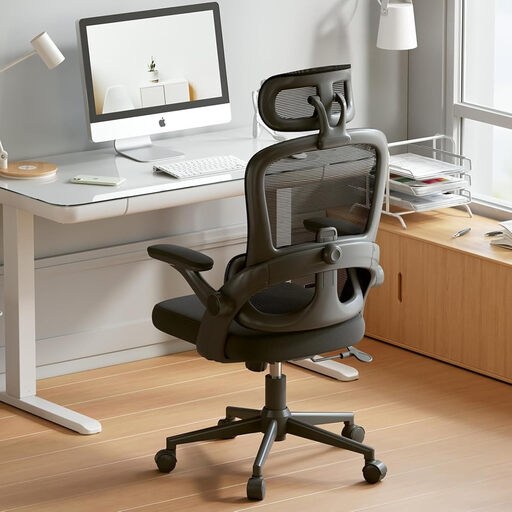
Why This Fits Their Persona: Ideal for home office users or students seeking solid ergonomic fundamentals without needing a premium budget. It covers the most important adjustment needs for daily use.
This model bypasses the "one-size-fits-all" trap with a separately vertically adjustable lumbar support (6 cm), allowing for targeted customisation for the lower back.
Adjustable and flip-up armrests save space by allowing the chair to be pushed under the desk. The weight capacity of up to 136 kg is solid for this price range.
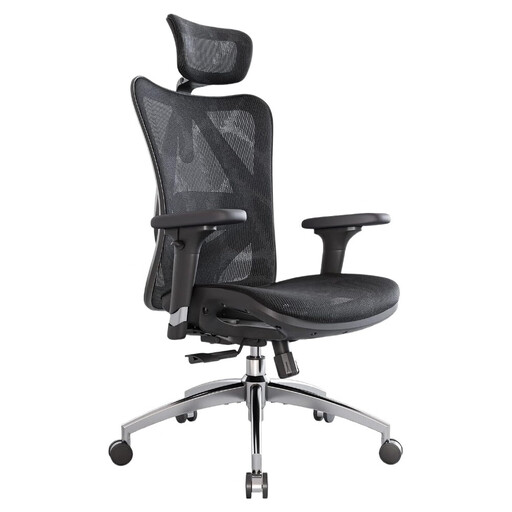
Why This Fits Their Persona: Suitable for professionals and gamers who need a robust and flexibly adjustable chair for long periods of sitting. It offers a good balance of advanced features and durability.
The certified gas lift (BIFMA/SGS) and high weight capacity of up to 150 kg counteract the pitfall of unstable mechanics. The aluminum alloy frame ensures stability.
The 3D armrests (height, depth, rotation) and the S-shaped backrest with adjustable lumbar support offer a high degree of individual customisation for various activities.
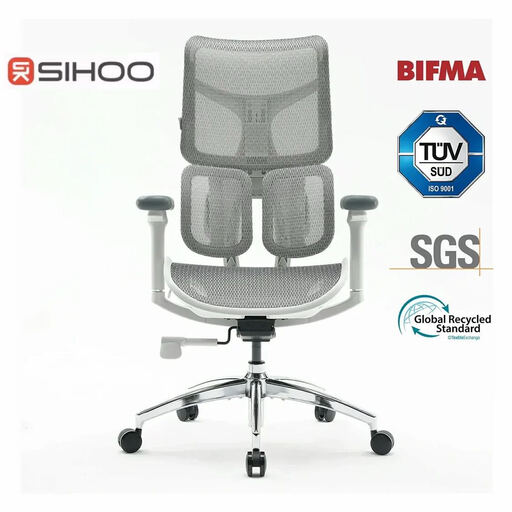
Why This Fits Their Persona: Designed for individuals who spend more than eight hours a day at their desk and require maximum adaptive and dynamic support for their entire body.
The dual dynamic lumbar support with automatic 6D adjustment responds to movements, offering adaptive support that goes far beyond the static systems of simpler models.
4D-coordinated armrests that move with the backrest and an adjustable seat depth (5 cm) ensure a continuous ergonomic chain from the lumbar region to the arms.
If you prefer a specific aesthetic or want to compare more models that meet our selection criteria, you can find a comprehensive overview here.
The lifespan of an ergonomic office chair depends heavily on material quality, construction, and usage. Models with a robust metal frame, a certified gas lift, and high-quality upholstery can last five to ten years or more with regular care and proper use. Pay attention to the manufacturer's warranty period, which is often a good indicator of expected longevity.
Both materials have their pros and cons. A mesh office chair offers excellent breathability, which is particularly advantageous on warm days or during long periods of sitting. It also conforms well to the body's contours. An upholstered chair, on the other hand, can provide a softer, more pressure-relieving feel. The decision depends on personal preference and sensitivity to heat buildup. What's important for both is quality: a high-quality mesh is preferable to low-quality upholstery, and vice versa.
Prices vary considerably. Solid entry-level models with the most important basic ergonomic functions (adjustable lumbar support, armrests) can often be found in the €150 to €300 range. In the mid-range segment (€300 to €600), you typically get more durable materials, advanced adjustment options like 3D/4D armrests, and a more sophisticated synchronous mechanism. Premium models can exceed this price point and often offer specialized, dynamic support systems and particularly high-quality components.