
Lieferung heute & morgen

Qualitätsgarantie

Willkommens-Angebote freischalten: KOSTENLOSE Lieferung | Bis zu 80 % RABATT | Kostenlose 30-Tage-JoyPlus-Testphase
App herunterladen
Long hours at a desk, whether at home or in the office, take their toll. An unsuitable chair often leads to muscle tension and impairs concentration. But the office chair market is overwhelming and full of marketing promises. The search for the right model can quickly become a daunting task.
As a Joybuy Product Recommendation Officer, I'll filter through the noise for you and show you what truly matters. This guide will help you sidestep common purchasing pitfalls and make an informed decision for your back health and comfort.
Many chairs are advertised as "ergonomic" without meeting the basic requirements. Watch out for these three common problems to avoid a bad purchase:
To avoid these traps, focus on verifiable, objective criteria. Two areas are of central importance.
A good ergonomic chair adapts to you, not the other way around. Check for the following adjustment features:
The quality of the components used determines both comfort and lifespan.
Based on these criteria, we have identified several models suitable for different user profiles and requirements.
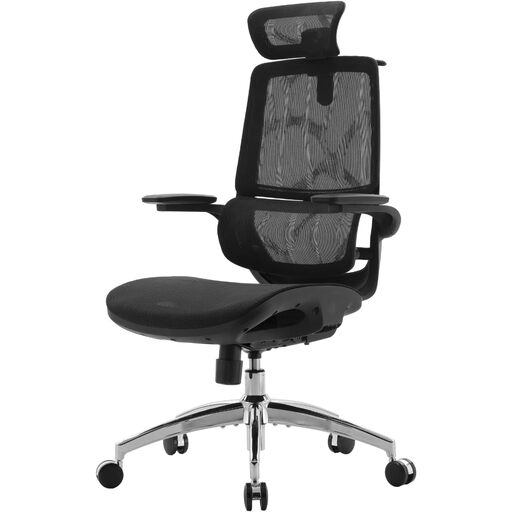
Why This Fits Their Persona: Ideal for users seeking a fully-featured, certified chair for daily, intensive use in a home office without compromising on ergonomics.
This chair bypasses the "pseudo-ergonomics" trap with its adaptive lumbar support and 3D adjustable armrests. The BIFMA and SGS certifications address the stability and material traps.
High weight capacity of up to 150 kg and flip-up armrests for greater flexibility and space-saving. The breathable mesh material ensures comfort during long workdays.

Why This Fits Their Persona: Perfect for students or professionals with limited space who need a functional, ergonomic chair that can be easily stowed away when not in use.
Despite its compact design, it offers genuine ergonomic features like adjustable lumbar support and a tilt function. The sturdy metal base addresses the stability trap.
The flip-up armrests are the key feature for saving space. The combination of breathable mesh and thick foam padding offers a great balance of support and comfort.
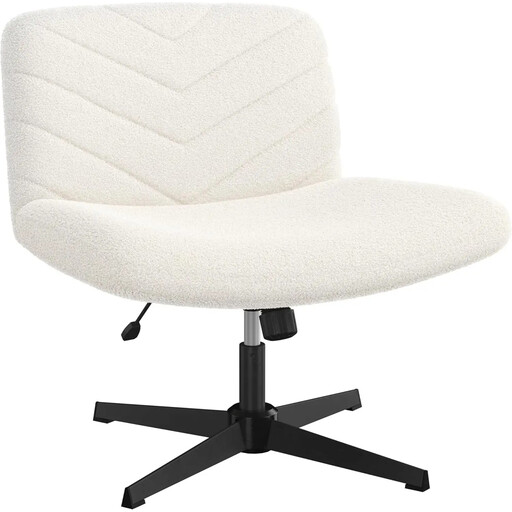
Why This Fits Their Persona: For creative minds and users who value aesthetics and enjoy changing their sitting position, such as working cross-legged.
Although design-oriented, this chair avoids the stability trap with a robust X-shaped metal frame. It forgoes casters in favor of a fixed base, which is advantageous for certain work styles.
The extra-wide seat cushion (67.5 cm) allows for alternative sitting postures. The bouclé fabric and armless design create a cozy, modern aesthetic.
We've compiled a complete, up-to-date list of products that meet these strict selection criteria and applicable regulations.
The lifespan heavily depends on the intensity of use and the quality of the components. With eight hours of daily use, a high-quality model with solid mechanics and robust materials can last five to ten years. Cheaper models often show significant wear and tear on the upholstery, gas lift, or mechanism after just one to two years.
With a tilt mechanism (Wippmechanik), the seat and backrest recline together at a fixed angle. This is a simple mechanism often found in more affordable chairs. A synchronous mechanism is more advanced: when you lean back, the backrest reclines more than the seat. This coordinated ratio (e.g., 2:1 or 3:1) opens up the seating angle, promotes blood circulation, and supports an ergonomically correct posture during movement.
This depends on personal preference. A mesh back offers excellent ventilation, which is a major advantage, especially in warmer environments or for people who tend to sweat. The mesh fabric also conforms well to the contours of the back. A padded backrest, on the other hand, is often perceived as softer and cozier. The crucial factor for both types is quality: high-quality, taut mesh is better than quickly worn-out padding—and vice versa.