
Lieferung heute & morgen

Qualitätsgarantie

Willkommens-Angebote freischalten: KOSTENLOSE Lieferung | Bis zu 80 % RABATT | Kostenlose 30-Tage-JoyPlus-Testphase
App herunterladen
Long hours of sitting at a home office or in a corporate setting have become the norm for many. In this context, a suitable chair is not a luxury purchase but a fundamental necessity for maintaining focus and preventing muscle strain. However, the market is flooded with models that advertise themselves as "ergonomic" but often fail to deliver on their promises in practice.
As a Joybuy Product Recommendation Officer, I see daily which features make a real difference and which are just marketing buzzwords. This guide will help you identify the crucial criteria and avoid three common purchasing traps, ensuring your investment pays off in the long run.
Before we dive into the important features, let's look at the typical pitfalls that lead to dissatisfaction and unnecessary expenses.
To avoid the traps mentioned above, focus on verifiable, technical features. These three parameters are crucial for comfort and durability.
Good back support is more than just a cushion in the lumbar region. A high-quality desk chair with lumbar support offers an adjustable support that can ideally be adjusted not only in height but also in depth. Even better is a dynamic lumbar support that automatically adapts to the movements of your back.
The synchronous mechanism is a central element here. It ensures that the backrest and seat tilt in an ergonomically sensible ratio to each other. This promotes "dynamic sitting," where posture is changed regularly, which relieves pressure on the intervertebral discs and improves circulation.
The armrests are not just a place to rest your arms. An office chair with adjustable armrests helps to relieve tension in the neck and shoulder muscles. Pay attention to the type of adjustability:
Seat depth adjustment is equally critical. It ensures that there is a gap of about three to four fingers' width between the back of your knees and the front edge of the seat. This prevents pressure on the blood vessels and nerve pathways in your legs.
The longevity of a chair depends directly on the materials used.
Based on the criteria mentioned, we have identified some models that represent a well-considered choice for different requirements and budgets.

Why This Fits Their Persona: Ideal for users looking for a solid entry into the world of ergonomic chairs without breaking the bank. It offers the fundamental adjustments for a healthy posture in the home office.
This chair avoids the trap of the empty "ergonomic" label by providing an adjustable lumbar support, an adjustable headrest, and a rocking function—concrete features instead of empty promises.
Breathable mesh back for comfort during long workdays and flip-up armrests to slide the chair under the desk for space-saving storage.
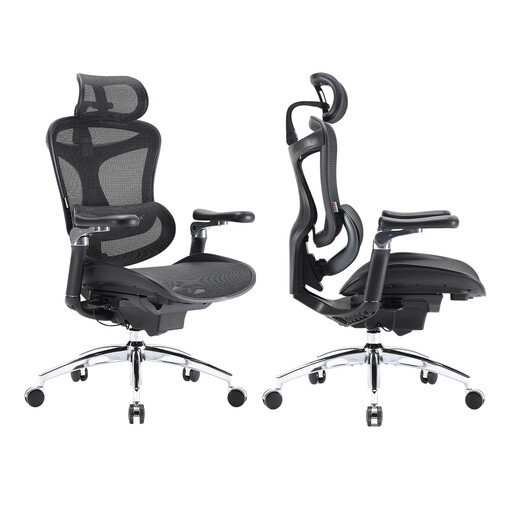
Why This Fits Their Persona: For individuals who spend many hours at their desk daily and demand maximum adjustability. The extensive setting options support an active and healthy sitting posture throughout the entire workday.
It escapes the "one-size-fits-all" trap with a dynamic lumbar support, seat depth adjustment, and 6D armrests. These features allow for precise adaptation to almost any body type and work style.
The dynamic lumbar support automatically adjusts to your movements, and the 6D armrests offer exceptionally flexible positioning for your arms and shoulders.
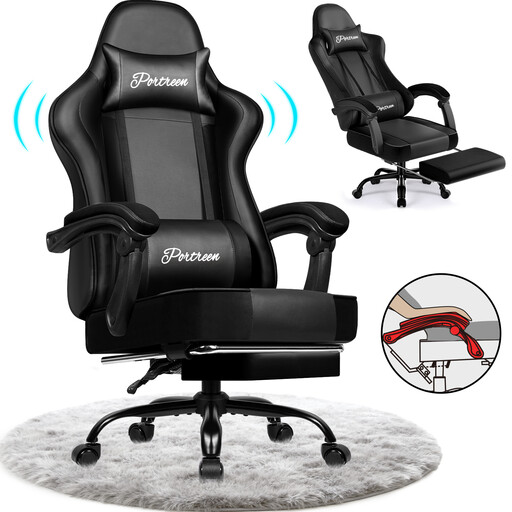
Why This Fits Their Persona: This chair combines the aesthetics of a gaming chair with the functions of an ergonomic office chair. Perfect for long gaming sessions, but also for focused work, with the added bonus of a retractable footrest for breaks.
It refutes the prejudice that gaming chairs are all about looks. With BIFMA and SGS certification, a load capacity of up to 150 kg, and a backrest that reclines to 170 degrees, it offers certified stability and genuine ergonomic functions.
The combination of an executive chair with a footrest and an ergonomic gaming chair makes it versatile. The high load capacity and wide recline angle are clear advantages.
We have compiled a complete, up-to-date list of products that fully meet these strict selection criteria and safety standards.
A truly ergonomic chair can be adjusted to your body. Look for a height- and depth-adjustable lumbar support, a synchronous mechanism, seat depth adjustment, and at least 3D-adjustable armrests. Certification seals like BIFMA or T?V/GS are also an indicator of tested quality and ergonomics.
Start with the seat height: your feet should be flat on the floor and your knees should form an angle of about 90 degrees. Adjust the seat depth so there are 3-4 fingers of space between the back of your knees and the edge of the seat. The lumbar support should support the natural curve of your lower spine. The armrests should be positioned so that your forearms rest at a 90-degree angle with relaxed shoulders.
Some modern, ergonomic gaming chairs are indeed suitable for office work. Models that feature adjustable lumbar support, adjustable armrests, and a high-quality mechanism can offer the same comfort as a good office chair. Make sure the chair not only has a racing seat look but actually focuses on ergonomic adjustability and certified components.