
Lieferung heute & morgen

Qualitätsgarantie

Willkommens-Angebote freischalten: KOSTENLOSE Lieferung | Bis zu 80 % RABATT | Kostenlose 30-Tage-JoyPlus-Testphase
App herunterladen
By a Joybuy Product Recommendation Officer, August 30, 2026
A good office chair is the foundation for productive work from home. However, the market is saturated with models that overpromise and underdeliver. Many advertise themselves as "ergonomic" without offering the crucial features. The result is often not just a poor investment, but also tension and discomfort after long workdays. Before you make a decision, it's important to understand the most common pitfalls.
Two widespread problems often lead to disappointment:
This guide will help you navigate these pitfalls and find a desk chair that intelligently combines functionality, comfort, and design.
A truly ergonomic home office chair is defined by its adjustability. Look for three key adjustment options that are essential for a healthy sitting posture.
Adaptability is the most important factor. A chair should adapt to you, not the other way around.
A chair's mechanism determines how it supports your movements. The synchro-tilt mechanism is a frequently recommended solution here. With it, the seat and backrest tilt in a coordinated ratio, which keeps the body in motion and promotes circulation. Simpler tilt mechanisms, where the angle between the seat and backrest remains fixed, offer less dynamic support.
The material affects both comfort and durability. Breathable mesh fabrics are ideal for good air circulation, while high-quality fabric or leather covers offer a different aesthetic and feel.
Instead of presenting an overwhelming list, we have matched a few models based on typical user profiles.
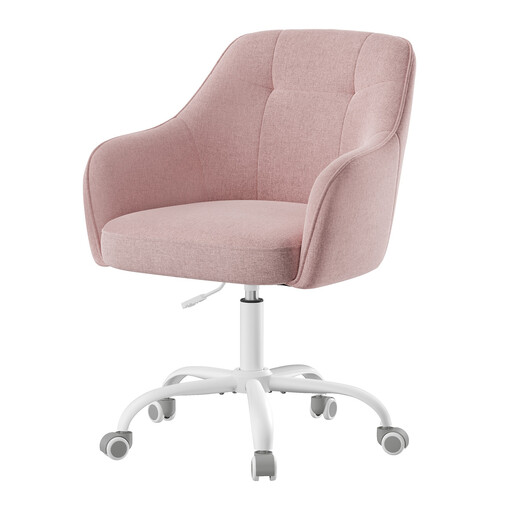
Why This Fits Their Persona: Ideal for users seeking a functional and visually appealing chair for studying or occasional home office days. This chair, also popular as a desk chair for women, combines modern design with essential comfort.
It bypasses the "aesthetics over function" trap by integrating an ergonomically shaped backrest and seamless height adjustment into a stylish design.
A combination of a modern look and fundamental ergonomic features like a padded seat and a supportive backrest. The maximum static load capacity is 110 kg, according to the manufacturer.
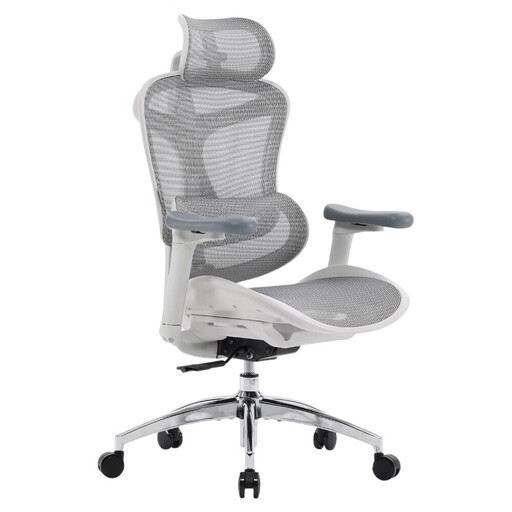
Why This Fits Their Persona: Designed for individuals who spend many hours at their desk daily and need reliable, adaptable support for their back and arms. A classic office chair in white that integrates well into modern work environments.
This chair escapes the "one-size-fits-all" trap through its multiple adjustment options, including a dynamic lumbar support and 3D armrests that adapt to different body proportions.
The self-adaptive lumbar support adjusts to the user's movements. The 3D armrests are adjustable in three directions and synchronize with the backrest's recline.
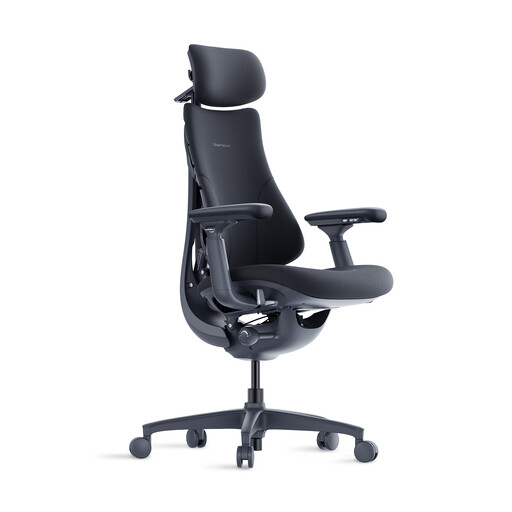
Why This Fits Their Persona: For users who are not just looking for a work chair, but also a solution for relaxation breaks. The office chair with a footrest and a deep recline function is ideal for power naps or relaxed reading.
It refutes the assumption that an office chair is only for sitting upright. By integrating comfort features like a footrest and a recline angle of up to 160°, it offers value beyond its primary work function.
The retractable footrest allows for a relaxed reclining position. The adaptive lumbar support and integrated spinal stretch are designed for maximum relief during long periods of use.
We have compiled a complete, up-to-date list of products that fully meet these strict selection criteria and German safety regulations.
Start with the seat height: your feet should be flat on the floor and your thighs parallel to the ground. Next, adjust the lumbar support so that it supports the natural curve of your lower back. Set the armrests so that your shoulders are relaxed and your forearms rest on the armrests or desk at a 90-degree angle.
The lifespan of an office chair depends on the quality of the materials, the mechanism, and the frequency of use. Entry-level models often last 2-3 years, while high-quality chairs with robust mechanisms and durable upholstery can remain functional for 5 to 10 years or more with proper care. Pay attention to the warranty period offered by the manufacturer.
With a tilt mechanism, the seat and backrest are rigidly connected. When you lean back, the entire chair tilts backward. With a synchro-tilt mechanism, the backrest and seat move in a synchronized ratio (e.g., 3:1). This means the backrest reclines more than the seat. This promotes "dynamic sitting," supports blood circulation, and relieves pressure on the intervertebral discs more effectively.