
Lieferung heute & morgen

Qualitätsgarantie

Willkommens-Angebote freischalten: KOSTENLOSE Lieferung | Bis zu 80 % RABATT | Kostenlose 30-Tage-JoyPlus-Testphase
App herunterladen
Sedentary work places strain on the body, especially the spine. An ergonomic office chair is not a luxury, but a functional necessity for maintaining healthy posture and reducing physical strain during extended work or gaming sessions. Choosing the right model is based on an analysis of technical specifications and individual physical requirements. This guide breaks down the crucial criteria and presents a selection of models with distinct functional features.
The effectiveness of an office chair depends on its adjustment capabilities and the materials used. The following parameters are essential for making an informed decision.
Lumbar support is a critical component for stabilising the lumbar spine. Its function is to support the natural S-curve of the spine, thereby counteracting poor posture in the lower back. Look for models where the support is adjustable not only in height but also, ideally, in depth. This allows for a precise fit tailored to your individual spinal curvature.
Armrests serve to relieve strain on the shoulder and neck muscles. Adjustability is indicated in dimensions (D):
A synchronous mechanism is now standard in high-quality chairs. It links the recline of the backrest with the tilt of the seat, usually at a 2:1 or 3:1 ratio. This promotes "dynamic sitting," which keeps the body in motion and improves nutrient supply to the intervertebral discs.
The choice of material affects comfort, durability, and breathability.
A chair's high load capacity is determined by its base and gas lift. An aluminium alloy base is generally more stable than a plastic one. Look for certifications such as BIFMA (Business and Institutional Furniture Manufacturer's Association) or SGS, which verify testing for safety, durability, and structural integrity.
An office chair with a footrest allows for a near-horizontal position for relaxation breaks. This can promote blood circulation in the legs and relieve pressure on the lumbar spine. An adjustable headrest supports the neck and head area, especially in a reclined position, and can help prevent tension.
The following models have been selected for their specific technical features and customisation options.
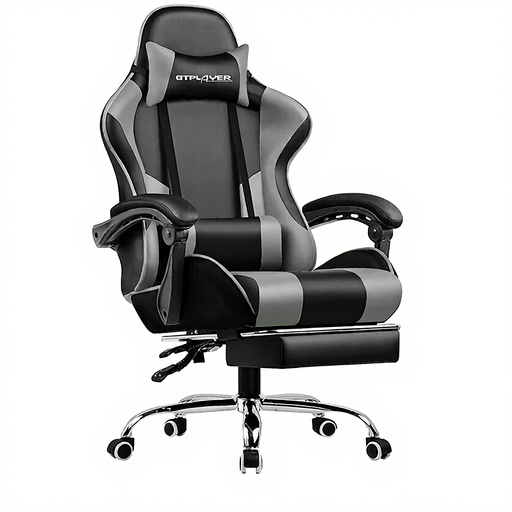
Why We Recommend This Product: The GTPLAYER chair combines the aesthetics of a gaming chair with the functional features of an office chair. A standout feature is its USB-powered massage cushion in the lumbar region, which can help alleviate fatigue. The retractable footrest and a wide recline range from 90° to 150° offer enhanced relaxation options.
Pros:
Who It's For: This model is suitable for home office users and gamers looking for a chair with extra comfort features, such as a massage function and a footrest for breaks.
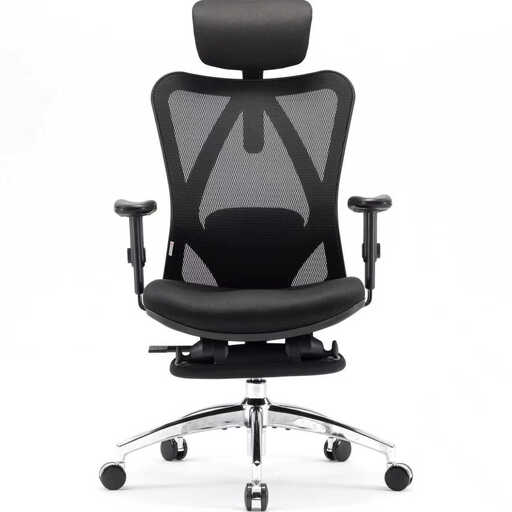
Why We Recommend This Product: The Sihoo M18 Pro is a swivel chair with armrests that stands out for its comprehensive adjustment options and breathable mesh design. It features five key adjustment zones: backrest, headrest, seat height, tilt, and armrests. The mesh backrest promotes air circulation, which is particularly beneficial during long periods of sitting. The W-shaped seat with a waterfall edge is designed to minimise pressure on the thighs.
Pros:
Who It's For: Ideal for individuals who need a highly customisable chair for focused work in the office or home office and who value good back ventilation.
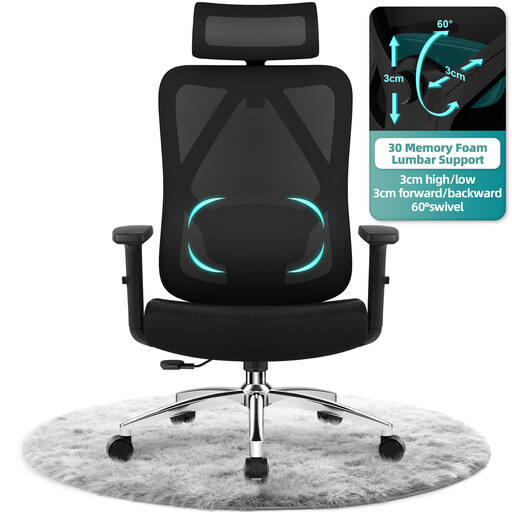
Why We Recommend This Product: This model, which can be classified as an executive chair, is distinguished by its exceptionally high load capacity of up to 200 kg and its precisely adjustable lumbar support. According to the manufacturer, the aluminium alloy base has passed over 120,000 pressure tests. The 3D memory foam lumbar support is adjustable by 3 cm in height and depth and can pivot 60°. This allows for highly targeted support of the lumbar region.
Pros:
Who It's For: This chair is an excellent choice for heavier individuals or for anyone who demands the highest standards of stability, durability, and precisely adjustable lumbar support.
The models presented here represent a selection that covers specific requirements. You can find a broader spectrum of specialised seating solutions for various needs and budgets in our main category for Gaming and Office Chairs.
1. What makes an office chair ergonomic? A chair is considered ergonomic if it can be adjusted to the user's body dimensions and movements. Key features include an adjustable seat height, an adjustable backrest with lumbar support, customisable armrests, and a mechanism that supports dynamic sitting (e.g., a synchronous mechanism).
2. How do I correctly adjust an ergonomic office chair? Start with the seat height: your feet should be flat on the floor, and your knees should form an angle of approximately 90 degrees. Adjust the seat depth so there is a gap of about two to three fingers' width between the back of your knees and the front edge of the seat. The lumbar support should fill the natural curve of your lumbar spine. The armrests should be adjusted so that your forearms rest horizontally on them with your shoulders relaxed.
3. Is a gaming chair also suitable for the home office? Yes, many gaming chairs offer ergonomic features comparable to, or even more advanced than, office chairs. These include adjustable lumbar and neck pillows, 4D armrests, and a deep recline function. Their design is often more athletic, but the fundamental ergonomic principles for support during long periods of sitting are frequently met, making them a valid option for the home office.