
Lieferung heute & morgen

Qualitätsgarantie

Willkommens-Angebote freischalten: KOSTENLOSE Lieferung | Bis zu 80 % RABATT | Kostenlose 30-Tage-JoyPlus-Testphase
App herunterladen
Long hours spent sitting at a desk are a daily reality for many people working from home, in the office, or studying. An ill-fitting chair can quickly lead to discomfort and muscle tension. However, the office chair market is confusing and filled with marketing promises. As your Joybuy Product Recommendation Officer, I'll help you identify the crucial features and avoid common purchasing traps.
Many buyers invest in a supposedly high-quality chair, only to find after a few months that it causes more problems than it solves. This is often due to three common pitfalls:
To make an informed decision, you should focus on the objective and verifiable features of a chair.
Instead of being swayed by advertising slogans, you should examine three key aspects. These determine whether a desk chair is ergonomic and suitable for your needs.
A back-friendly office chair must adapt to your body's dimensions, not the other way around. Look for the following adjustments:
An integrated office chair with lumbar support (also called lordosis support) is crucial for stabilising the lower back. It fills the gap between the backrest and your lumbar spine, preventing a slouched posture. Basic models have a fixed, integrated curve, while higher-end chairs offer height- and depth-adjustable support that can be precisely tailored to your spinal curve.
The material affects both comfort and durability.
Additionally, always check the maximum weight capacity of the gas lift and the entire chair to ensure safety and stability.
Here are some recommendations tailored to different user profiles that specifically avoid the pitfalls mentioned.
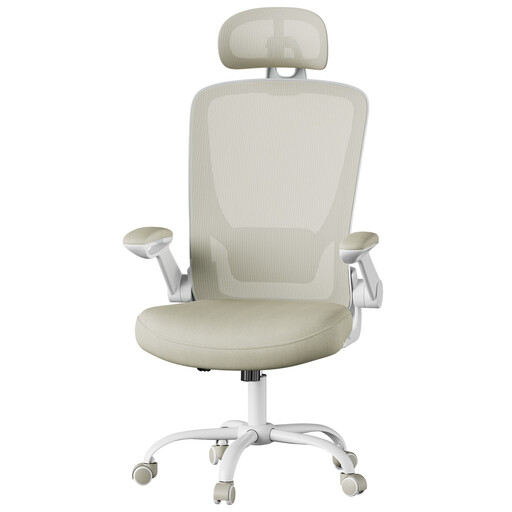
Why This Fits Their Persona: Ideal for students or as a first home office chair. This model offers basic ergonomic functions without breaking the bank. It's a pragmatic solution for occasional to moderate use.
It sidesteps the "empty ergonomics" trap with an adjustable lumbar support and an adjustable headrest—concrete features, not just marketing buzzwords.
Breathable mesh back for comfort on warmer days. Flip-up armrests provide flexibility and save space.
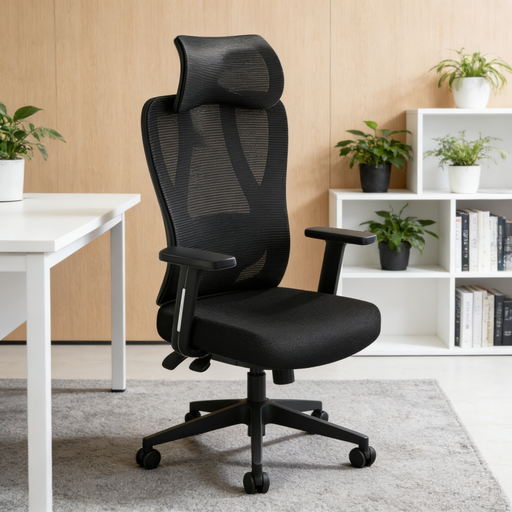
Why This Fits Their Persona: Designed for people who spend many hours at their desk every day. The advanced adjustment options and higher-quality materials justify the investment for long-term, intensive use.
It bypasses the material trap with a double-layered, breathable mesh fabric that combines support and air circulation. The 4D lumbar support offers far more precise adjustment than standard models.
The 4D pivoting lumbar support dynamically adapts to your movements. The high recline function (up to 140°) allows for relaxing breaks.
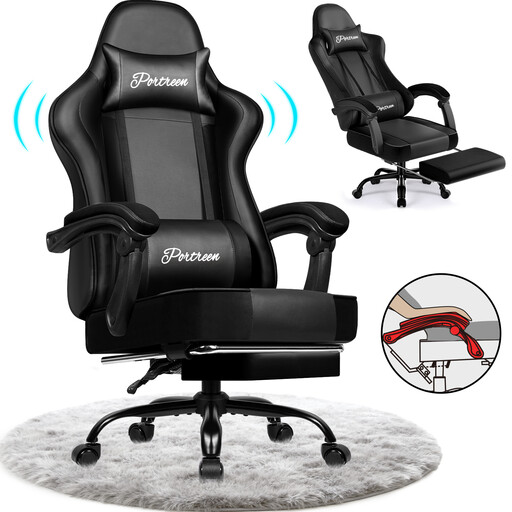
Why This Fits Their Persona: This chair is designed for gamers and multimedia users who need a chair for long, intense sessions and relaxing breaks. The aesthetics and special features are tailored to this use case.
Avoids the trap of an unsafe build by having BIFMA and SGS certifications, which attest to the stability and safety of its components. The high weight capacity of 150 kg indicates a robust construction.
The retractable footrest and extreme recline function (up to 170°) allow for a nearly flat position for relaxation. The PU leather is water- and stain-resistant.
We have compiled a complete, up-to-date list of products that fully meet these strict selection criteria and the German safety regulations.
Start with the seat height: your feet should be flat on the floor. Then, adjust the seat depth so there is a gap of about two to three fingers' width between the back of your knees and the front edge of the seat. The lumbar support should be positioned in the natural curve of your lower back. Finally, adjust the armrests so your forearms rest comfortably and your shoulders are relaxed.
The lifespan of a gas lift depends on its quality and frequency of use. For high-quality chairs, often certified to standards like BIFMA, you can expect them to last for several years. On cheaper models, performance may decline after just one to two years. Pay attention to the specified maximum weight capacity to avoid overloading it.
With a rocking mechanism, the seat and backrest tilt backward together at a fixed angle. This is a simple form of dynamic sitting. The synchronous mechanism is more advanced: when you lean back, the backrest reclines more than the seat (e.g., at a 2:1 or 3:1 ratio). This opens up the angle between your torso and thighs, promoting circulation and optimally supporting the body in any position.