
Lieferung heute & morgen

Qualitätsgarantie

Willkommens-Angebote freischalten: KOSTENLOSE Lieferung | Bis zu 80 % RABATT | Kostenlose 30-Tage-JoyPlus-Testphase
App herunterladen
The search for the right ergonomic office chair can quickly become overwhelming. Many models advertise themselves as "ergonomic," but not all live up to their claims. An unsuitable chair doesn't just cause discomfort; it can also negatively impact your long-term productivity and well-being. Before you make a decision, it's crucial to understand the common pitfalls that often lead to a bad purchase.
Common Pitfalls When Buying an Office Chair:
To avoid a costly mistake, you should focus your attention on a few key parameters. These objective criteria will help you separate the wheat from the chaff and find a chair that actively supports your health.
One of the most important components is the lumbar support. It supports the natural S-curve of the lower spine and prevents slouching. A good office chair with lumbar support should not only be present but also adjustable in height and, ideally, depth. This allows the support to be precisely adapted to the individual shape of your back, instead of applying pressure in the wrong place.
For an office chair designed for long sitting, the breathability of the material is a key factor.
An ergonomic desk chair adapts to you—not the other way around. Look for the following adjustment options:
Based on the criteria mentioned, we have identified several models suitable for different user profiles and requirements.
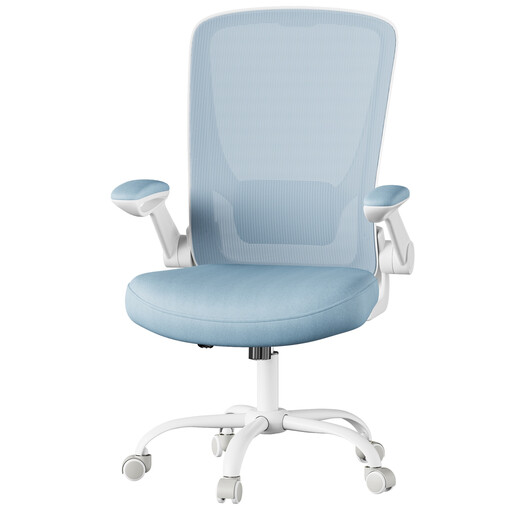
Why This Fits Their Persona: Ideal for home offices with limited space. The flip-up armrests allow the chair to be pushed completely under the desk, saving space. It offers basic ergonomic features like height-adjustable lumbar support and a rocking function for an affordable entry-point.
Offers a breathable mesh backrest to prevent heat buildup and adjustable lumbar support, going beyond a mere marketing promise.
Flip-up armrests for space-saving storage; thick, resilient seat cushion for comfort.
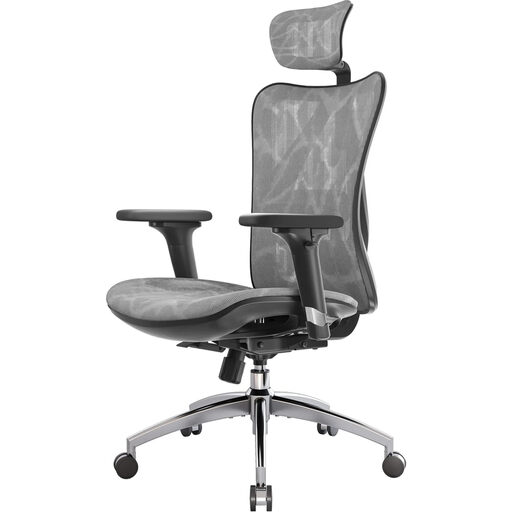
Why This Fits Their Persona: Designed for individuals who spend many hours at their desk daily. With five adjustment modes, including 3D armrests, adjustable lumbar support, and a customisable headrest, this chair offers comprehensive personalisation for maximum comfort and support.
This chair is BIFMA and SGS certified and supports up to 150 kg (330 lbs), ensuring stability and durability. The extensive adjustment options go far beyond a simple ergonomics label.
Fully customisable with 5 adjustment modes; breathable mesh backrest and a W-shaped seat cushion to relieve leg pressure.
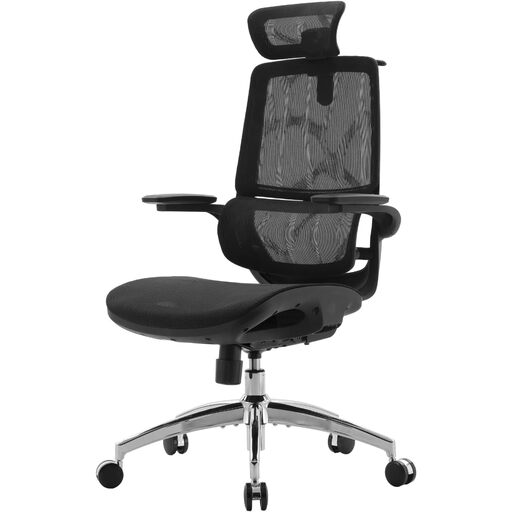
Why This Fits Their Persona: Suitable for users who need dynamic and continuous lower back support. The split-backrest design with adaptive lumbar support automatically adjusts to the user's movements, providing constant support.
Instead of static support, this model offers an adaptive function that goes beyond standard ergonomics. The BIFMA and SGS certifications also confirm its high load capacity and safety.
Split-backrest with adaptive lumbar support; saddle-shaped seat cushion for pressure reduction; 80° flip-up armrests.
We've compiled a complete, up-to-date list of products that meet these strict selection criteria and fully comply with German safety standards.
The lifespan of an ergonomic office chair depends heavily on the quality of its materials and construction. Models with a robust steel or aluminum frame and certifications like BIFMA are designed for extended use, often for five years or more with daily use. Regular maintenance, such as tightening screws, can further extend its lifespan.
A breathable office chair with a mesh back offers excellent air circulation, which is a major advantage, especially during long sitting sessions and in warmer environments. It also flexibly conforms to the shape of your back. Padded chairs can also be very comfortable if designed correctly, but they are more prone to heat buildup. The choice ultimately comes down to personal preference and your work environment.
Proper adjustment is crucial. Start with the seat height: your feet should be flat on the floor with your knees at an approximately 90-degree angle. Adjust the lumbar support to support the natural curve of your lower back. The armrests should be positioned so that your shoulders are relaxed and your forearms can rest on the desk surface at a 90-degree angle.