
Lieferung heute & morgen

Qualitätsgarantie

Willkommens-Angebote freischalten: KOSTENLOSE Lieferung | Bis zu 80 % RABATT | Kostenlose 30-Tage-JoyPlus-Testphase
App herunterladen
The right office chair is the foundation for productive work, whether in a corporate setting or a home office. However, the market is saturated, and many products fail to live up to their descriptions. A chair advertised as "ergonomic" isn't automatically a good choice. This guide will help you identify the crucial features and avoid common purchasing traps, enabling you to make an informed decision for your new desk chair.
Before we dive into the essential features, let's look at the three most common problems that lead to dissatisfaction and unnecessary expenses.
executive chair made of faux leather might look impressive, but it often leads to heat buildup and discomfort during hours of use. Breathable mesh or high-quality fabric covers are typically the more practical choice for all-day use, as they allow for better air circulation.To avoid buyer's remorse, you should carefully examine three technical aspects. These determine whether an office swivel chair or home office chair will meet your needs.
The mechanism is the heart of any office chair. While simple models often have only a basic tilt mechanism where the seat and backrest are rigidly connected, a synchronous mechanism is crucial for dynamic sitting. With this feature, the backrest and seat tilt at a coordinated ratio (e.g., 3:1), which keeps the body in motion, relieves pressure on the spinal discs, and promotes circulation. A backrest that can be locked in multiple positions offers additional flexibility for focused work phases and short breaks.
An office chair with lumbar support is only effective if the support can be adjusted to your individual spinal curve. Good lumbar support is adjustable at least in height, and ideally also in depth. It should gently support the lower back (the lumbar region) without exerting uncomfortable pressure.
Equally important is an office chair with armrests that can be customised.
The choice of material affects both comfort and longevity.
Also, pay attention to the quality of the gas lift (often specified in classes like Class 3 or Class 4) and the base. A base made of steel or aluminium is generally more stable than one made of plastic. Always check the maximum load capacity of the chair to ensure it is designed for your body weight.
Instead of making a one-size-fits-all recommendation, we have selected models tailored to specific requirements and usage scenarios.

Why This Fits Their Persona: A solid choice for a first home office or for users seeking a functional chair without a high investment. It provides the necessary basic features for occasional to regular desk work.
This chair avoids the empty "ergonomics" promise by offering adjustable lumbar support and a breathable mesh backrest—two concrete, functional features.
The flip-up armrests are space-saving, and the mesh backrest ensures good climate comfort. According to the manufacturer, the maximum load capacity is 120 kg.
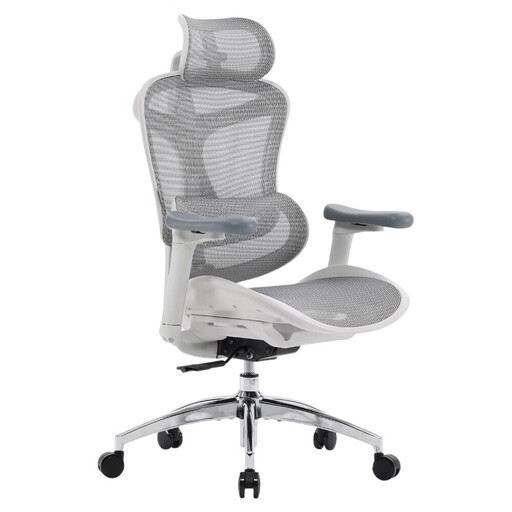
Why This Fits Their Persona: Ideal for professionals who spend many hours at their desk daily and require advanced, adaptive support to prevent muscle strain.
This model goes far beyond basic ergonomics. The dynamic, self-adjusting lumbar support and 3D armrests are sophisticated features that actively respond to your movements.
The intelligent, weight-sensitive mechanism automatically adjusts the backrest resistance. The manufacturer states the chair meets standards like EN1335 and SGS BIFMA and supports up to 150 kg.
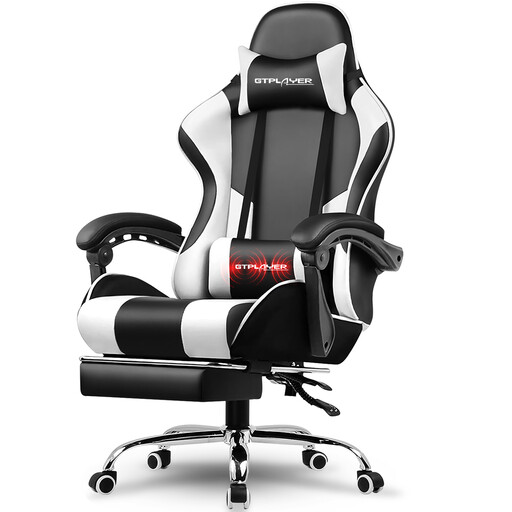
Why This Fits Their Persona: Suitable for users who need a chair for both focused work and relaxed gaming sessions or media consumption, and who value additional comfort features.
Although made of faux leather, this chair avoids the trap of being purely aesthetic by offering concrete additional features like a retractable footrest and a lumbar cushion with vibration massage.
The combination of a high backrest, up to 135 degrees of recline, and a footrest allows for a relaxed, reclined position. The massage function can help alleviate fatigue.
We have compiled a complete, up-to-date list of products that fully meet these strict selection criteria and German safety regulations.
The lifespan of an office chair depends heavily on the quality of its materials and how it's used. A high-quality model with a sturdy metal base and a Class 4 gas lift can last 7 to 10 years with regular use. Cheaper models with plastic components often only have a lifespan of 2 to 5 years. Regular maintenance, such as tightening screws, can extend its durability.
A gaming chair can be an alternative, but it follows a different design philosophy. Gaming chairs often feature a bucket seat design intended to stabilize the body during fast movements, and their padding is usually firmer. In contrast, an ergonomic office chair is designed for dynamic, active sitting over many hours and often offers more refined adjustment options for lumbar support and armrests. For purely office-related work, a classic ergonomic chair is usually the more practical choice.
Sit up straight and push your pelvis all the way back against the backrest. Adjust the height of the lumbar support so that it fits into the natural curve of your lower spine. It should provide noticeable but comfortable support without pushing your back forward. If the support is also depth-adjustable, fine-tune the pressure until it feels like comfortable support.