
Lieferung heute & morgen

Qualitätsgarantie

Willkommens-Angebote freischalten: KOSTENLOSE Lieferung | Bis zu 80 % RABATT | Kostenlose 30-Tage-JoyPlus-Testphase
App herunterladen
A fabric office chair is often the top choice when a home office needs to be not only functional but also inviting and stylish. Unlike leather or mesh models, fabric chairs blend harmoniously into a living environment and offer a warm, pleasant tactile quality. However, the vast selection of designs and price points also presents pitfalls. Many models look good at first glance but turn out to be uncomfortable or unstable after just a few months.
This guide will help you identify the crucial features and avoid common purchasing mistakes. This way, you can find a chair that meets your needs both aesthetically and practically.
Before you make a decision, you should be aware of the typical flaws often hidden behind an appealing exterior.
To avoid a poor purchase, focus on these three objective criteria. They are crucial for comfort, durability, and functionality.
The fabric cover is more than just a visual element. Pay attention to the material composition. High-quality cotton-linen blends or specially treated polyester fabrics with a linen look are breathable and durable. Another often-overlooked detail is the padding. A high foam density (specified in kg/m?) ensures that the seat retains its shape even after months and doesn't feel "sat-through."
The foundation of any good swivel chair is its mechanism. A height-adjustable task chair should have a reliable gas lift. A clear mark of quality is a steel base, which offers significantly more stability than plastic alternatives. Pay attention to the specified maximum static load capacity. A chair rated for up to 150 kg is not only a good choice for heavier individuals but also generally indicates a more robust overall construction and more durable components.
Even a designer office chair should meet minimum ergonomic standards. A gently S-curved backrest supports the natural curvature of the spine better than a straight one. The ability to swivel 360 degrees and smooth-rolling casters are standard, but the quality of the casters (e.g., floor-friendly nylon) makes a difference in daily use. For longer workdays, an ergonomic office chair with additional adjustment options, such as customisable lumbar support, is a worthwhile investment.
Here are some models that are suitable for various user profiles, based on objective criteria.
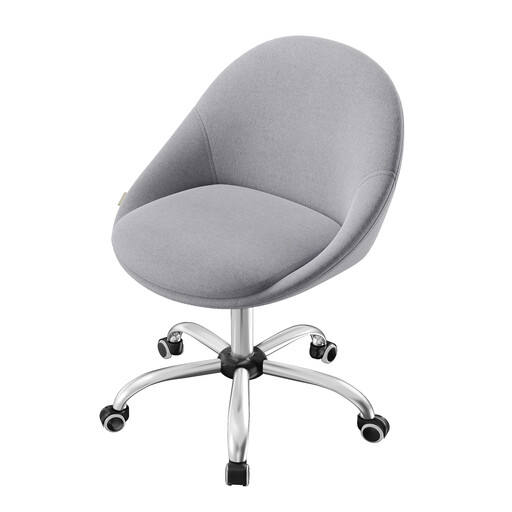
Why This Fits Their Persona: Ideal for students or as a multi-functional chair for a vanity table and occasional workspace. The armless design has a small footprint and can be pushed completely under the desk, which is a great advantage in smaller apartments or rooms.
The cotton-linen blend upholstery is more breathable than pure synthetic covers, thus avoiding the trap of low-quality material choice.
Compact, space-saving design; versatile for work, study, or as a vanity chair.
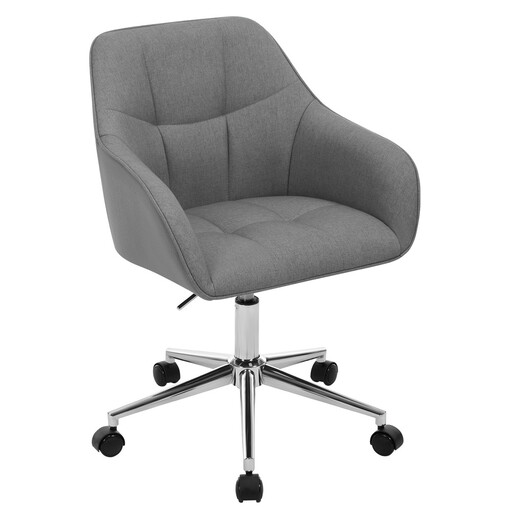
Why This Fits Their Persona: Perfect for users seeking a stylish grey swivel chair that seamlessly integrates into a modern living concept without compromising on stability. The elegant stitching and Scandinavian aesthetic make it a true designer office chair.
This model directly addresses the pitfall of poor stability. With a chrome-plated steel base and a high static weight capacity of up to 150 kg, it offers far above-average robustness in this design category.
Combines high weight capacity (150 kg) with a sophisticated design; breathable linen-look upholstery.
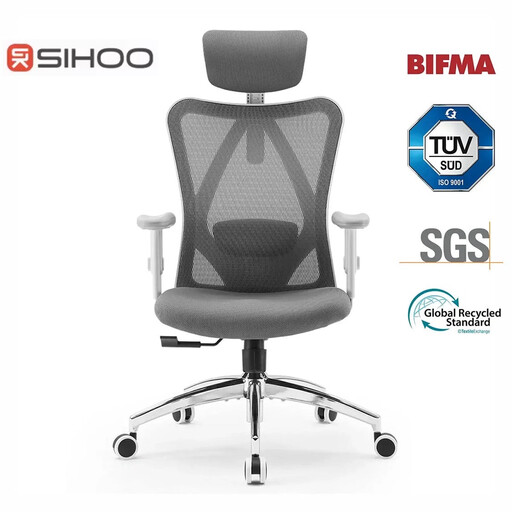
Why This Fits Their Persona: For individuals who spend many hours a day in their home office chair and place maximum value on ergonomics. This chair prioritises posture and individual customisation over a purely residential look, without skimping on modern design.
This chair is the direct answer to the neglected ergonomics pitfall. With five adjustment points, including an adjustable headrest and lumbar support, it offers comprehensive customisation to fit your body, which is lacking in simple design chairs.
Comprehensive ergonomic adjustments; high weight capacity up to 150 kg; breathable mesh back for excellent air circulation.
We have compiled a full, up-to-date list of products that fully meet these strict selection criteria and German safety regulations.
1. How do I clean a fabric office chair? Most fabric covers are best cleaned by regularly vacuuming them with an upholstery attachment to remove dust and crumbs. For stains, it is advisable to treat them immediately with a slightly damp cloth and possibly a mild soap solution. Always test cleaning agents on an inconspicuous area first. Pay attention to the manufacturer's instructions, as removable and washable covers are the exception rather than the rule.
2. What does a weight capacity of 150 kg really mean? The specified maximum static load capacity is an important indicator of the overall quality and robustness of a chair. A model designed for 150 kg typically uses more stable materials for the base (often steel instead of plastic), a more powerful gas lift, and a more solid mechanism. So, it's not just about whether the chair can support the weight, but also how stable and durable it is in daily use.
3. Is an armless swivel chair suitable for a home office? That depends on your usage. For short work sessions or if the chair is used for multiple purposes (e.g., at a vanity table), an armless model can be practical as it offers more freedom of movement and can be tucked away to save space. However, for long workdays of eight hours or more, armrests are recommended as they relieve strain on the shoulder and neck muscles by providing a place to rest your arms.