
Lieferung heute & morgen

Qualitätsgarantie

Willkommens-Angebote freischalten: KOSTENLOSE Lieferung | Bis zu 80 % RABATT | Kostenlose 30-Tage-JoyPlus-Testphase
App herunterladen
Sitting at a desk for long hours doesn’t just put strain on your back. When your feet don’t have firm contact with the floor, your pelvis can tilt forward or backward more easily, your legs dangle beneath the desk, and your sitting position often shifts without you realising. A suitable ergonomic footrest can help you rest your feet steadily and better adapt the available seating area to your own height.
However, not every model is suitable as a footrest for the office. Some products look comfortable but are too high, slide on smooth floors, or can’t be positioned sensibly under the desk. Before buying, it’s worth checking a few practical features.
A fixed height doesn’t automatically suit every desk chair. If the desk footrest is too low, your thighs may not stay horizontal. If it’s too high, the angle between your upper and lower legs can become uncomfortable.
An adjustable-height footrest offers more flexibility here. With simple two-level models, you should check whether each height setting works with your sitting position and the underside of your desk.
A smooth underside can cause the footrest to shift every time you move on laminate, tiles or parquet. Even a textured surface isn’t automatically sufficient: what matters is the combination of the underside, weight, footprint and floor covering.
An anti-slip footrest should sit flat on the floor and not tip over under normal pressure from your feet. These products are generally not intended for children or for standing on. You must follow the relevant safety instructions and the stated weight limit.
A compact footstool can work well in the living room, but isn’t necessarily suitable for daily use under a desk. Conversely, a technical plastic model might look out of place next to a sofa.
Before buying, you should be clear about whether the footrest will be used in a home office, a student workspace, at the dining table, or as an extra seat in the living area.
First, measure the distance from the floor to the underside of your thighs while sitting upright on your work chair. Your feet should be able to rest fully on the footrest without your knees being noticeably higher than your hips.
For an office footrest, the dimensions of the surface area are also important. A larger footprint gives you more freedom to move, but also needs more space under the desk. The model shouldn’t collide with either the desk legs or the castors of your office chair.
A textured or studded top surface can help reduce foot slippage. With a non-slip footrest, you should also look at the underside. Rubberised elements or a sufficiently wide base are practical indicators of better stability, but don’t replace checking it on your own flooring.
If you move the footrest frequently between your study and living room, you should also consider weight and cleaning. Plastic can usually be wiped clean with a damp cloth, while fabric covers need care appropriate to the material.
The weight capacity should match the intended use. A footrest is normally designed for resting your feet, not for standing or jumping on. For a footstool with a seating function, follow the manufacturer’s specifications for maximum load.
Also look out for:
The term “ergonomic” alone is not a technical quality guarantee. More meaningful are specific details about dimensions, material, height settings and weight limit.
The following models cover different areas of use. The selection is based on the product features stated, not on general promises of effectiveness.
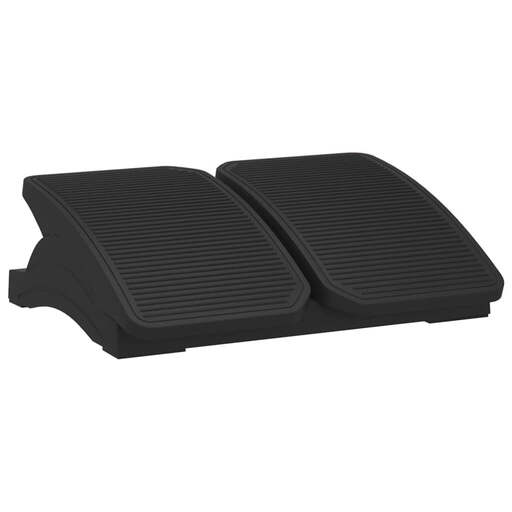
Why this product fits the profile: This compact footrest made from HIPS plastic offers two height levels and is suitable for a study, student use or home use.
The textured anti-slip surface and two-level adjustment address the most common problems of sliding or incorrectly high footrests.
43.5 × 32.5 × 10.5 cm, HIPS material, two height levels and a wipe-clean surface.
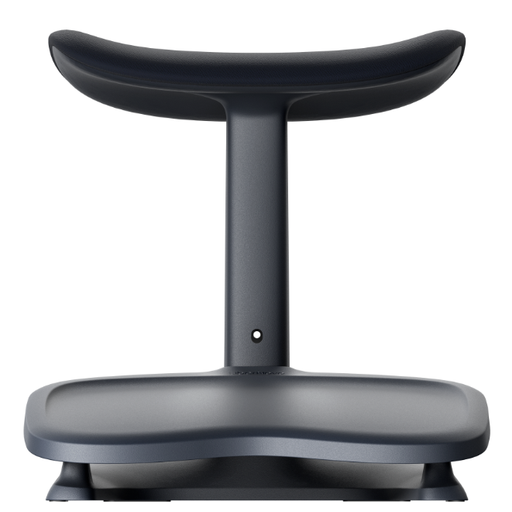
Why this product fits the profile: The dual-layer design is aimed at people who prefer different support heights or a changeable foot position in their home office.
The multi-layer construction offers more adjustment options than a completely rigid footrest. The textured surface and anti-slip base are designed for stability.
Dual-layer construction, adjustable support height, textured surface and black colour scheme for the workplace.
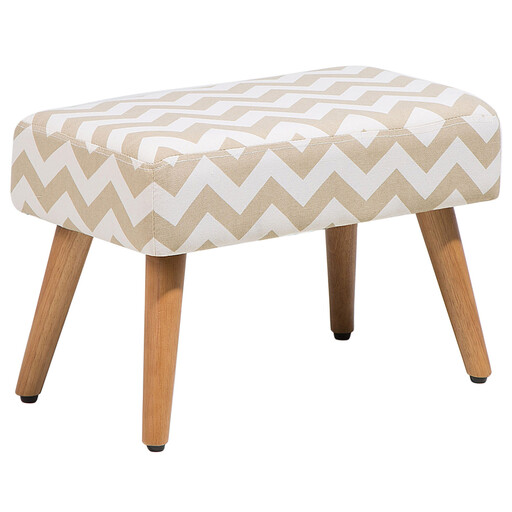
Why this product fits the profile: This fabric footstool is ideal for anyone who wants a footrest that can also serve as an extra seat or as a homely piece of furniture next to a sofa or armchair.
The clear purpose specification prevents it from being wrongly categorised as a purely desk footrest. Before using it under a desk, you should check the 35 cm height against your own sitting position.
50 × 30 × 35 cm, cotton cover, rubberwood legs, maximum load capacity of 130 kg and use as a seat or footstool.
We’ve put together a complete, regularly updated list of products that fully meet these strict selection criteria and the safety regulations in force in the EU.
Position the footrest so that both feet rest fully on it. First, adjust your office chair to a seat height where your shoulders stay relaxed and your forearms are roughly horizontal on the desk. Then adjust the footrest to match your leg length.
A footrest for back pain shouldn’t be seen as a medical device. It can change your sitting position, but it doesn’t replace breaks, movement or professional advice for persistent discomfort. Change your posture regularly and get up from time to time.
The right height depends on your body height, chair height and desk underside. Both feet should rest firmly while your thighs aren’t pushed noticeably upward. If you’re unsure, a model with several height levels is more practical than a fixed footrest.
The lifespan depends on the material, load, assembly and floor surface. Plastic models should be checked regularly for cracks and deformation. With a footstool, loose legs or damaged connections are a reason to stop using it. The stated maximum load capacity must not be exceeded.
In normal use, there are no ongoing costs. Expenses may only arise from replacement parts, damaged components or cleaning products suitable for the material. For fabric covers, follow the care instructions; plastic surfaces can usually be cleaned with a damp cloth.