
Lieferung heute & morgen

Qualitätsgarantie

Willkommens-Angebote freischalten: KOSTENLOSE Lieferung | Bis zu 80 % RABATT | Kostenlose 30-Tage-JoyPlus-Testphase
App herunterladen
Long gaming sessions, focused work from home or several hours at a PC place particular demands on your seat. An ergonomic gaming chair should therefore be more than just eye-catching. Reliable information about adjustability, weight capacity, padding and mechanism is what really matters.
Many purchasing decisions fall into three typical traps:
The seat height should be adjustable so that both feet rest securely on the floor. Your knees should remain at roughly a right angle. An adjustable backrest allows you to switch between an upright working position and leaning back to relax.
For example, among the models considered here, the stated backrest ranges from 90 to 155 degrees on the SYMINO chair. The GTPLAYER model with footrest is described as having a backrest that reclines to 135 degrees. A rocking function can support movement, but it does not replace the right seat height or a correctly adjusted desk height.
A lumbar support should suit your individual body shape and not merely serve as a decorative cushion. Adjustable or adaptive solutions are particularly useful. The SYMINO model features a 3D lumbar support. This may appeal to users who frequently change their sitting position.
A high backrest on a high-back gaming chair can provide better coverage for the shoulders and upper back. At the same time, the width of the backrest should suit your build. Pronounced side bolsters can restrict freedom of movement, while a wingless design allows more lateral mobility.
The maximum weight capacity is a key specification. The SYMINO Gaming Chair is stated to support 150 kg. However, a gaming chair up to 150 kg is only suitable if the seat width, seat depth, base and castors also match your size and intended use. The permitted weight limit should not be exceeded.
A PU leather gaming chair can usually be cleaned with a soft, slightly damp cloth. Sharp objects and harsh cleaning products can damage the surface. Mesh backrests promote air circulation in this area, but they are not automatically paired with an especially soft seat.
Also pay attention to:
The following models are organised according to specific use cases. The details reflect the respective product descriptions. Before buying, check the dimensions, contents and latest retailer information directly on the product page once again.
Why this product suits the profile: The high backrest, PU leather and integrated leg rest appeal to users who want to use a gaming chair for home-working breaks and relaxation as well.
The product name highlights a high backrest, soft padding and a footrest. Before ordering, also check the exact dimensions and weight limit.
PU leather surface, high backrest and pull-out leg rest, according to the product name.
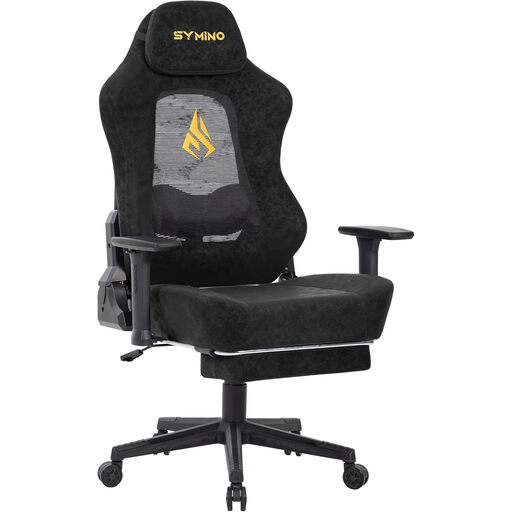
Why this product suits the profile: The combination of a metal frame, mesh backrest, 3D lumbar support and a backrest range of 90 to 155 degrees is aimed at PC users who regularly change their sitting position.
The open backrest addresses the heat typically generated by closed surfaces. The stated weight capacity of 150 kg provides a clear benchmark.
3D lumbar support, 12-degree rocking function, 90- to 155-degree recline and a stated weight capacity of 150 kg.
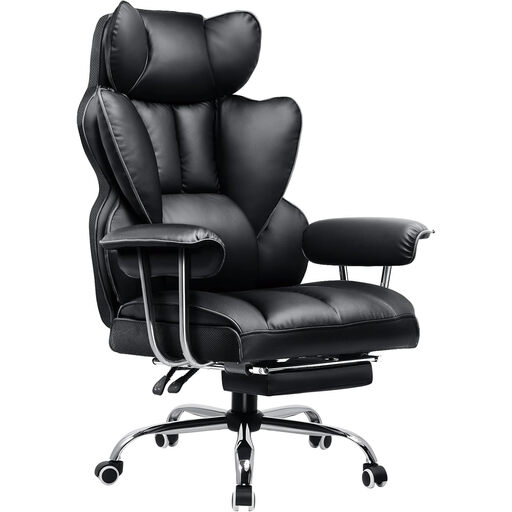
Why this product suits the profile: For users looking for an executive chair for working from home, gaming and taking breaks, this model offers a pull-out footrest, adjustable height and a backrest that reclines to 135 degrees.
The possible uses go beyond gaming alone. Before ordering, compare the seat width, seat depth and space required when the footrest is extended with the dimensions of your desk.
Pull-out footrest, PU leather, adjustable backrest up to 135 degrees and height-adjustable seat.
We have put together a complete, regularly updated list of products that fully meet these strict selection criteria and the safety regulations applicable in the EU.
A gaming chair is often characterised by a high backrest, substantial padding and a rocking or reclining function. An ergonomic office chair, on the other hand, often focuses more on an upright sitting position, flexible armrests and a more understated design.
For daily screen-based work, it is not the label that matters but the adjustability. If you spend eight hours at your desk, you should adjust the armrests, seat height and backrest to suit your desk and monitor. A gaming model with a footrest can be useful for breaks, but it requires more space than a traditional office chair.
First, adjust the seat height so that both feet reach the floor. The backrest should then support your back without restricting your freedom of movement. Align the armrests with the height of the desk so that your shoulders remain as relaxed as possible. Change your sitting position regularly and stand up from time to time.
Its lifespan depends on daily usage, body weight, material, flooring and care. Check the castors, screws, rocking mechanism and gas lift regularly. PU leather should be protected from direct heat and sharp objects. A stated weight capacity of 150 kg is a technical upper limit, not a recommendation for every body size.
Yes, particularly when the footrest is extended. Measure the distance between the seat and the wall, as well as the clearance beneath the desk. In small rooms, a compact backrest or a model without a footrest may be more practical.