
Lieferung heute & morgen

Qualitätsgarantie

Willkommens-Angebote freischalten: KOSTENLOSE Lieferung | Bis zu 80 % RABATT | Kostenlose 30-Tage-JoyPlus-Testphase
App herunterladen
An ergonomic gaming chair should provide a comfortable sitting position for gaming, working and relaxing. Many models advertise large cushions, futuristic designs or an especially wide range of adjustment options. In practice, however, appearance alone does not determine whether a chair suits your body, desk and usage habits.
Anyone who spends several hours a day at a computer should check for common marketing pitfalls before buying. These include unclear load ratings, armrests that can only be adjusted in limited ways, and lumbar support that is present but cannot be positioned effectively.
The specification “gaming chair with a 150 kg load capacity” initially describes the maximum load declared by the manufacturer. On its own, it says nothing about the seat width, seat depth or suitability for your height. A sturdy metal frame may still be paired with a seat that is too narrow.
You should therefore check:
A gaming chair with lumbar support may have height-adjustable padding or a cushion that is simply inserted loosely. These two options differ considerably in terms of adjustability. A headrest also only supports the neck effectively if its height and position suit your body.
Look for specific information about:
A gaming chair with a reclining function can be practical for breaks or short periods of rest. For focused work, however, the backrest must not only recline far back but also provide a stable upright position. A wide reclining angle is therefore no substitute for a suitable seat height and correct desk height.
You should be able to adjust a height-adjustable gaming chair so that both feet rest firmly on the floor. Ideally, your knees should be approximately level with your hips; the exact position depends on your build and preferred sitting posture. The armrests should support your forearms without raising your shoulders.
An ergonomic office chair with a wider adjustment range may be worth considering if you switch between gaming and working from home. Also check whether the seat height is suitable for your desk. A chair with an excessively high minimum height can cause an awkward posture despite having good cushioning.
A backrest with a specified adjustment range is more informative than the general term “ergonomic”. For example, the second model featured has a declared backrest range of 90 to 170 degrees, supplemented by a 30-degree rocking function. This allows you to adopt different positions for work, gaming and breaks.
Lumbar support should follow the natural curve of your lower back rather than forcing it into position. If it can be adjusted in height, it can be positioned more precisely. A separate lumbar support cushion may be a useful addition if the integrated support does not suit your body shape. If you already have discomfort or a medical condition, consult a healthcare professional before use.
A gaming chair with adjustable armrests can help you position your forearms more comfortably in relation to the keyboard and mouse. It is important to check whether only the height can be changed, or whether the direction and support surface can also be adjusted.
A footrest is particularly useful for relaxing during breaks. It should extend smoothly and securely, and must not restrict your freedom of movement when standing up. During long working sessions, an active posture that changes regularly remains more beneficial than keeping your legs raised continuously.
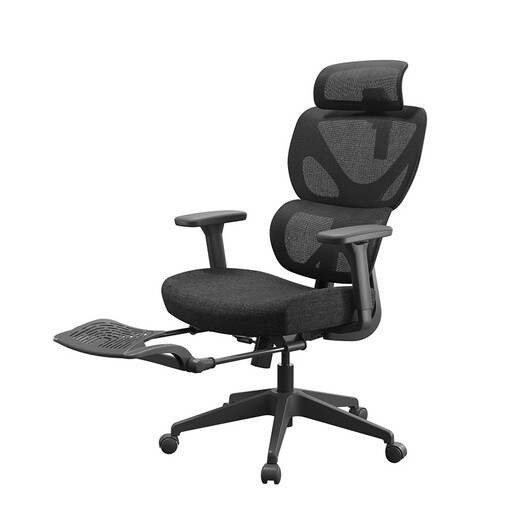
Why this product suits this profile: This model combines a footrest with elastic lumbar support, making it suitable for gaming, occasional home working and relaxing during breaks.
The product details list specific features rather than relying solely on a general ergonomic description: a 132° backrest recline, 10 cm thick seat cushion, and rotating armrest and headrest.
Footrest, elastic lumbar support and padded seat; ideal if you are looking for a combined gaming and relaxation solution.
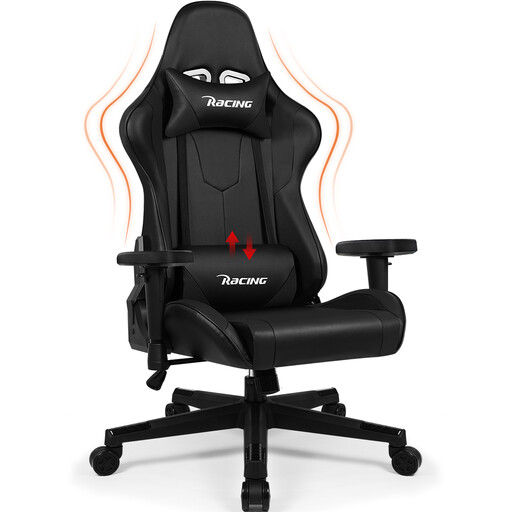
Why this product suits this profile: This model is aimed at users who want to compare specific adjustment ranges, a declared load capacity of up to 150 kg, and a combination of gaming and office-chair features.
The specifications list the materials, a backrest range of 90° to 170°, a 30° rocking function, up to 10 cm of seat-height adjustment and 8 cm of armrest adjustment.
Metal frame, PVC and PU upholstery, adjustable lumbar cushion and headrest; recommended for users between 158 and 190 cm according to the product specifications.
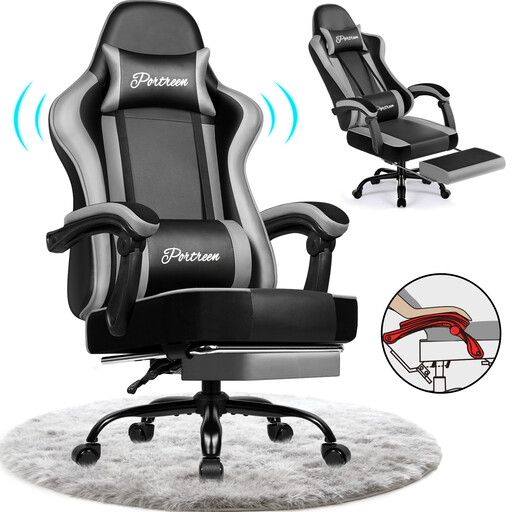
Why this product suits this profile: A retractable footrest, declared load capacity of 150 kg and a backrest range of 90° to 170° make this chair appealing to users who combine gaming, reading and relaxing.
The footrest is described as a retractable design. The specifications also clearly state 10 cm of height adjustment, along with adjustable headrest and lumbar support.
Telescopic footrest, metal frame, height adjustment and padded support for the head and lower back.
We have put together a complete, regularly updated list of products that fully meet these strict selection criteria and the safety regulations applicable in the EU.
Even a well-equipped chair will only work properly when adjusted to suit you. Start by setting the seat height, then position the lumbar support level with the curve of your lower back. The armrests should be close to desk height without pushing your shoulders upwards.
For an office-chair setup when working from home, you should also:
Its lifespan depends on how intensively it is used, the user’s weight, the materials, care and assembly. PVC or PU covers should be cleaned with a soft, slightly damp cloth and mild detergent. Harsh chemicals can damage the surface. Check the castors, screws and gas lift regularly.
A footrest can support breaks and reclined positions. For focused tasks, however, the seat height, armrests and backrest should first provide a stable working position. The footrest is therefore an additional feature, not a substitute for correct desk ergonomics.
A lumbar support cushion can be useful if the integrated support cannot be positioned correctly or if the existing chair provides too little support for the lower back. The key factors are the correct height, sufficient stability and a shape that does not press uncomfortably forwards. If discomfort persists, seek professional medical advice.