What should you look for when buying?
Curved full-size keyboard with cable
A good fit if: You write at a fixed desk and prefer having a number pad and easy access to function keys. CHERRY also sells the KC 4500 ERGO in a German version, model JK-4500DE-2.
Consider: According to CHERRY, the model is 456 mm long and 217 mm wide, and needs a USB-A port. Make sure you have enough space for your mouse and hands too.
Fixed split wireless keyboard
A good fit if: You want a fixed split layout and a wrist rest. In a test published on 3 November 2026, F.A.Z. rated the typing feel and wrist rest of the Logitech ERGO K860 positively.
Consider: The halves can’t be moved independently. The F.A.Z. test also noted that the K860 model it tested had no key backlighting or wired mode, and that the gap between the halves was difficult to clean.
Fully split keyboard
A good fit if: You want to position each half separately. The Kinesis Freestyle2 offers different spacing options, while the Dygma Raise 2 lets you choose your configuration and accessories.
Consider: Check the specific layout and any extra equipment you’ll need. German ISO keycaps are listed as an add-on set for the Raise 2; setting it up and getting used to it may take time.
The Federal Institute for Occupational Safety and Health recommends allowing enough space for your keyboard, mouse and a surface to rest your hands and arms on when working at a screen. The figures below group consumers by the factor they prioritise most when choosing a keyboard for longer writing sessions at home.
| Priority |
What to check when buying |
Who is it important to? |
| Hand position and typing feel |
Assess your hand position, the space in front of the keyboard and the typing feel by writing a longer paragraph. |
When I write longer passages, I want to assess my hand position and typing feel together, rather than relying on an ergonomic claim alone. Around 36% of consumers prioritise hand position when writing long texts. |
| German layout and text navigation |
Check the specific German layout and how easily you can reach frequently used special, arrow and function keys. |
When I rely on familiar key combinations to edit my work, I want to check the key labels and how easy they are to reach beforehand. Around 29% of consumers prioritise layout and navigation. |
| Space and positioning |
Measure the space needed for your keyboard, mouse and a surface to rest your hands and arms on together. |
When desk space is limited, I want to position my keyboard and mouse so that both are easy to reach. Around 21% of consumers prioritise desk space and flexible positioning. |
| Connection and switching between devices |
Check whether your devices need USB-A, Bluetooth or a compatible wireless receiver. |
When I need a particular connection or want to switch between devices, I want to check that the chosen version has the right connections. Around 14% of consumers prioritise connectivity and switching between devices. |
Keyboards for long writing sessions at Joybuy
This selection includes keyboards for longer writing sessions at a desk, with wired and wireless options, as well as compact and fixed split models.
 No image available
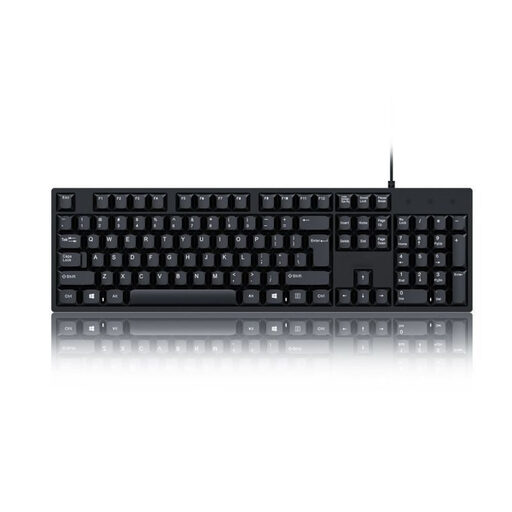
Ergonomic USB keyboard with 104 keys
For longer writing sessions at a desk, if you’re looking for a wired keyboard with 104 keys.
Connection: USB cable.
View at Joybuy
 No image available
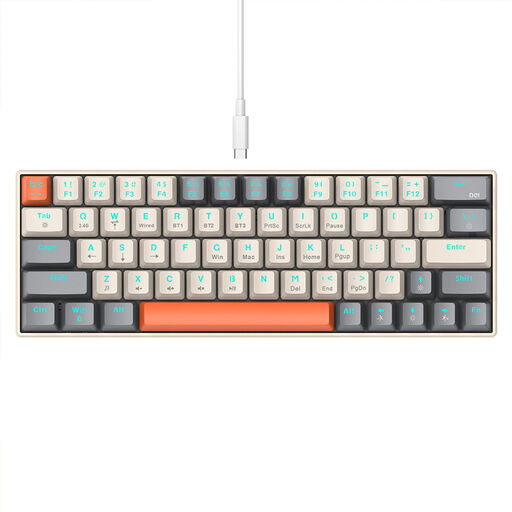
KINSI compact keyboard with 63 keys
The compact design could be a good fit if you want to save desk space; check first that the key layout suits the way you work.
63 keys; mechanical keyboard with Bluetooth, 2.4 GHz and USB-C connectivity.
View at Joybuy
 No image available
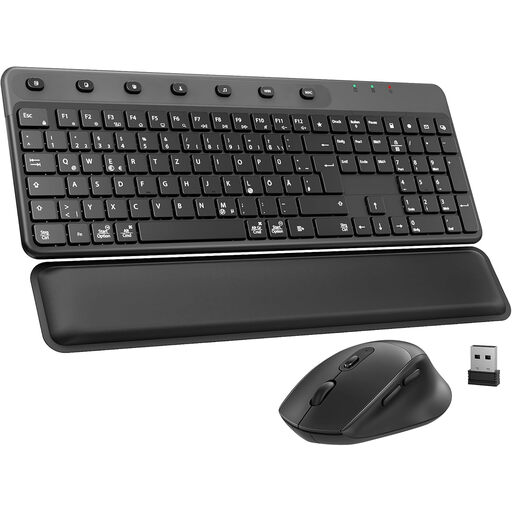
Wireless keyboard and mouse set with full-size QWERTZ layout
For longer writing sessions, if you’re looking for a full-size QWERTZ keyboard with a wrist rest and a mouse included.
Connection: 2.4 GHz USB receiver. The wrist rest is detachable.
View at Joybuy
 No image available
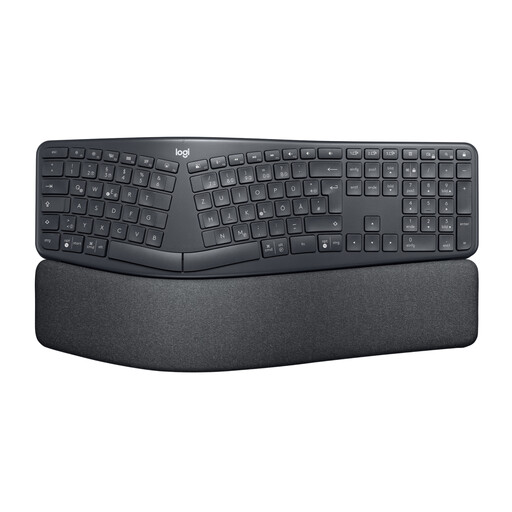
Logitech ERGO K860, QWERTZ
The fixed split layout and built-in wrist rest could suit you if you prefer a set split hand position.
Connections: Bluetooth or USB receiver. Layout: QWERTZ.
View at Joybuy
 No image available
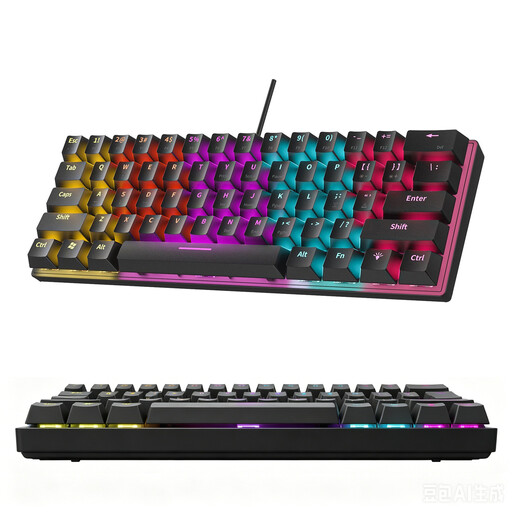
KINSI compact keyboard with 61 keys
The compact design may suit you if you want to free up desk space; the product listing doesn’t specify a German layout.
61 keys; RGB lighting and sculpted keycaps.
View at Joybuy
Frequently asked questions
Do I need a particular ergonomics certificate for a keyboard I use at home?
The relevant German rules don’t impose a general requirement to buy a keyboard with a particular ergonomics certificate. The Workplace Ordinance sets out requirements for applicable workplaces; whether your home workspace counts as a teleworking workstation can’t be determined simply from the fact that you work at home. This is explained by the German government’s Laws on the Internet portal and the Committee for Workplaces.
Do the rules for a teleworking workstation also apply if I only work from home occasionally?
Not automatically. Under the Committee for Workplaces’ definition, a teleworking workstation requires, among other things, a screen-based workstation set up by the employer in the employee’s home and an agreement between them. So working remotely from home occasionally doesn’t automatically mean the same teleworking workstation rules apply.
How should I set up my keyboard and mouse for longer writing sessions?
Allow enough space for both devices and somewhere to rest your hands and arms. The Federal Institute for Occupational Safety and Health recommends positioning your keyboard and mouse flexibly; when you type, also check how they’re positioned in relation to your desk and chair.
What should I consider when cleaning a keyboard with a built-in wrist rest?
Check the cleaning instructions for the specific model and whether you can easily reach into any gaps. In its test published on 3 November 2026, F.A.Z. noted that the gap between the wrist rest and keyboard was difficult to clean on the Logitech ERGO K860 model it tested.
What are my rights if a keyboard I bought online doesn’t suit me or is faulty?
In Germany, consumers who buy online generally have a 14-day right to cancel. The consumer advice centre says the relevant date is when the contract is concluded or the goods are received. You must notify the seller that you’re cancelling. If the product is faulty, your statutory rights against the seller are separate from any voluntary guarantee.


