What to look for when buying
First check how the keyboard will fit on your desk, then make sure its layout supports the way you edit.
| What matters |
What to check before buying |
Who is it important to? |
| Hand position during long writing sessions |
Check the split, stand options and space for a wrist rest and mouse on your desk. |
If you write for long periods, you’ll want to make sure you can position your keyboard, mouse and arms comfortably. Around 36% of consumers put hand position first. |
| Text navigation and German layout |
Check the specific variant for arrow and function keys, umlauts and German key labels. |
If you often move around the text while editing, easy-to-reach keys and familiar character positions matter. Around 29% of consumers give the most weight to text navigation and a German layout. |
| Desk space and mouse position |
Compare the width and depth with the space available, and consider whether you need a number pad. |
If you also need room on your desk for a mouse and documents, a built-in number pad may take up too much space. Around 21% of consumers prioritise the amount of space a keyboard takes up. |
| Connection and setup |
Check whether USB-A, Bluetooth or a receiver is compatible with your computer and included with the specific variant. |
If you want a straightforward connection to a desktop computer, choose a connection and setup that suit your workspace. Around 14% of consumers prioritise an easy connection and minimal setup. |
Keyboards at Joybuy
This selection includes keyboards for typing in German, different desk sizes and wired or wireless connections.
 No image available
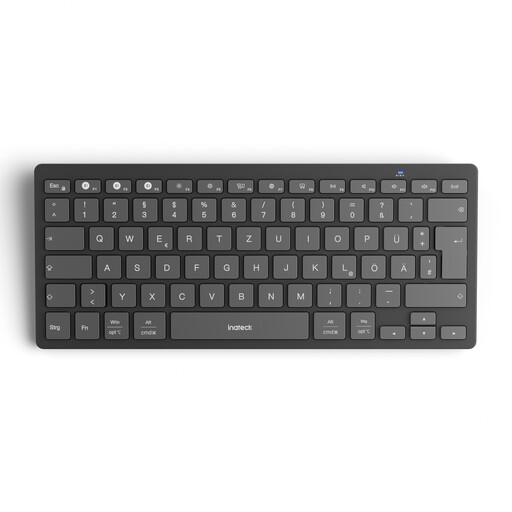
Inateck KB01003G Bluetooth keyboard, QWERTZ
May suit you if you’re looking for a slim keyboard with a German QWERTZ layout and Bluetooth.
The product title mentions Bluetooth connections with up to three devices, as well as compatibility with iPad, Windows, Android and iOS.
Joybuy
 No image available
Ticktype EVO75 tri-mode keyboard, ISO-DE
May suit you if you’re looking for a compact keyboard with a German ISO-DE layout and are happy with the stated 75% layout.
The product details list 80 keys, as well as Bluetooth, 2.4 GHz wireless and USB-C. The layout includes Ä, Ö, Ü and ß.
Joybuy
 No image available
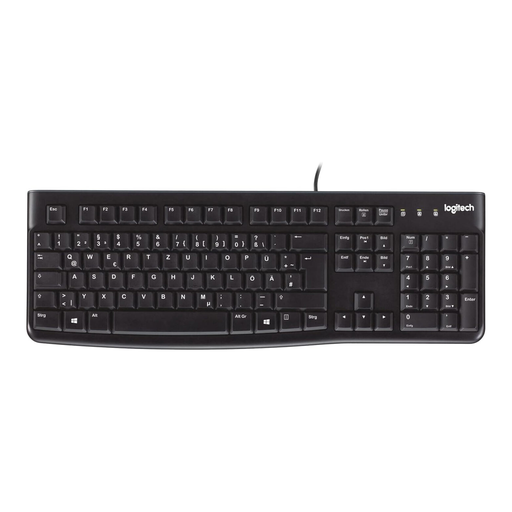
Logitech K120, German QWERTZ layout
May suit you if a German layout, easy-to-reach function keys and a number pad matter more to you than a specialist ergonomic design.
The product details list a full-size keyboard with 104 keys, adjustable feet and a wired USB connection.
Joybuy
 No image available
Logitech ERGO K860, QWERTZ
May suit you if you’re looking for a full-size, fixed-split keyboard with an integrated wrist rest.
According to Logitech, the model offers Bluetooth or a USB receiver. The product details also mention adjustable tilt legs; the full-size design with number pad takes up more desk space.
Joybuy
 No image available
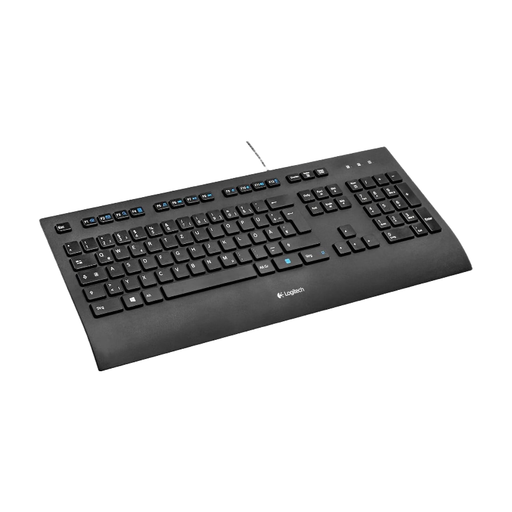
Logitech K280e, German QWERTZ layout
May suit you if you’re looking for a wired keyboard with a wrist rest for typing in German.
The product details list a USB connection and a large wrist rest.
Joybuy
Frequently asked questions
How can I tell if a keyboard is suitable for frequent text edits?
Check the specific variant for German key labels and make sure the arrow and function keys are easy to reach. The F.A.Z. Kaufkompass notes that the Dygma Raise 2 has no separate arrow or F keys; if you’re considering this model, allow for an alternative way of using them.
How should I set up my keyboard and workspace?
Leave enough room on your desk to position your mouse and keyboard comfortably and support your arms. The BAuA points out that adjusting your desk and chair, and avoiding long periods in a static posture, also matter.
Should I budget for ongoing costs with a wireless or wired keyboard?
Check the power supply and what’s included with the specific variant. Logitech says the ERGO K860 comes with AAA batteries and a USB receiver; the Perixx PERIBOARD-512 uses a USB-A cable. You may need a connection adapter if your computer doesn’t have a compatible port.
Can I return a keyboard bought online if I don’t like how it feels to type on?
According to the Verbraucherzentrale, online consumer purchases generally come with a 14-day right to cancel; you must notify the retailer that you wish to cancel. Check the terms of your specific purchase and distinguish this legal right from any longer return period offered voluntarily.
Does workplace law require a particular ergonomic keyboard for my home office?
Not simply because you’re editing a book review at home. Under its scope, ASR A6 applies to teleworking workplaces, among other settings, but not generally to screen use in private homes. For a teleworking workplace, Section 2 of the ArbStättV lists requirements including an agreement and equipment provided and installed by the employer. Whether these conditions apply to you will need to be assessed individually.


