
Lieferung heute & morgen

Qualitätsgarantie

Willkommens-Angebote freischalten: KOSTENLOSE Lieferung | Bis zu 80 % RABATT | Kostenlose 30-Tage-JoyPlus-Testphase
App herunterladen
An ergonomic neck pillow should support your head, neck and shoulders in line with your sleeping position. However, a striking shape alone doesn’t guarantee a comfortable sleeping position. Details such as the pillow’s actual height, its cover and how well it allows air to circulate often determine whether it’s suitable for everyday use.
This buying guide from the Joybuy Product Recommendation Officer will help you assess marketing claims and choose a model based on objective criteria.
Side sleepers generally need more height than back sleepers, as the gap between the shoulder and mattress needs to be filled. Stomach sleepers often find a lower pillow more comfortable. A rigid pillow with just one height may therefore be too high or too low, depending on your build and how firm your mattress is.
Pillows with two sleeping surfaces or adjustable filling can be practical. However, an adjustable-height pillow shouldn’t just claim to offer several sizes: what matters is whether the heights are clearly stated and genuinely useful in everyday use.
A memory foam neck pillow uses viscoelastic foam to mould to your head and neck. How pronounced this effect is depends, among other things, on the foam density, room temperature and the shape of the core. A core that’s too soft may compress more under greater body weight, while a very firm core won’t feel comfortable for everyone.
So pay attention to the specific design. A head recess, neck roll or ventilation channels tell you more than the term ‘memory foam’ alone.
Foam and latex pillows can retain heat. An breathable pillow should therefore have air channels, a perforated structure or a removable cover. It’s also important to note that the core isn’t automatically washable. With many models, only the cover can go in the washing machine.
If you use your pillow regularly, check before buying whether replacement covers are available, what wash temperature is recommended and whether the material needs airing before first use.
If you sleep on your side, measure roughly the distance between your shoulder and head, or take into account how much your mattress sinks. A lower height is often enough for back sleepers. A back sleeper pillow with a head recess can keep your head centred without rising sharply at the sides.
For stomach sleepers, the pillow should be particularly flat. A pronounced cervical pillow with a high neck contour may not be suitable for this sleeping position.
The term orthopaedic neck pillow isn’t a universally protected quality mark. Instead, look for clear information about the dimensions, material, shape and care instructions.
For people with sensitivities, textiles tested for harmful substances can offer an additional point of reference. If a product lists a certification, it should be clear which components it applies to. However, certification doesn’t guarantee that the material will suit everyone.
A latex pillow isn’t suitable if you have a latex allergy. With memory foam and other foams, you should also check the manufacturer’s material details and safety instructions. A pillow is intended for sleeping and resting only, and should be kept away from naked flames and strong sources of heat.
The selection below matches three models to everyday situations based on their stated features. It isn’t a substitute for individual medical advice. If your symptoms persist or get worse, seek medical advice.
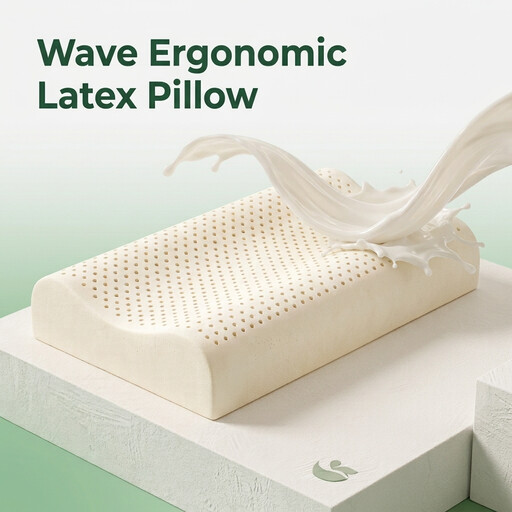
Why this product suits this profile: Its two stated heights and clearly specified latex content make it appealing to people who want to compare the material and pillow height carefully.
The 10 cm and 12 cm sides make it easier to choose the right height than an unexplained one-size option.
93% latex content according to the product details, honeycomb ventilation and removable inner and outer covers; dimensions 60 × 40 cm.
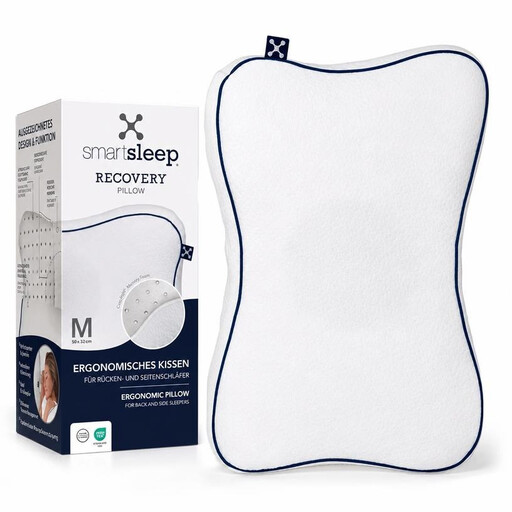
Why this product suits this profile: It’s described as suitable for back and side sleepers. Its memory foam and ventilation channels make it a good option for people who use a pillow regularly and for extended periods.
The head recess and integrated air channels address two common issues: an unclear head position and poor air circulation.
Viscoelastic foam, a head recess, ventilation channels and, according to the product details, materials tested for harmful substances with OEKO-TEX certification.
We’ve put together a complete, regularly updated list of products that meet these strict selection criteria and the safety requirements in force in the EU.
Allow a newly unpacked pillow to air according to the manufacturer’s instructions. Foam or natural latex may have a temporary odour of its own. The cover should be washed regularly, while the core can usually only be spot-cleaned. Don’t soak or machine-wash latex unless this is expressly permitted.
Also check regularly that the core is retaining its shape. A noticeable loss of height or support may indicate that it’s time for a replacement. There’s no set general lifespan, as the material, level of use, room conditions and care all play a part.
Side sleepers often need more support than back or stomach sleepers. The main factors are shoulder width, mattress firmness and how much your head sinks into the pillow. Models with two heights, such as 10 and 12 cm, make it easier to adjust the fit.
Both materials have different properties. Memory foam moulds more slowly to your body’s contours, while latex is more elastic and springs back. Your choice depends on the firmness you prefer, how warm you tend to feel, your material sensitivities and how much care the pillow needs.
A pillow can affect your sleeping position and how comfortable you feel, but it isn’t a treatment. If you have neck or shoulder pain, numbness or persistent symptoms, it’s a good idea to seek medical advice.