
Lieferung heute & morgen

Qualitätsgarantie

Willkommens-Angebote freischalten: KOSTENLOSE Lieferung | Bis zu 80 % RABATT | Kostenlose 30-Tage-JoyPlus-Testphase
App herunterladen
An ergonomic neck pillow is designed to support your head and neck in line with your sleeping position. In practice, though, comfort depends on more than the label. The shape, height, material and breathability all need to suit your posture and mattress. If you choose based only on terms such as “orthopaedic pillow” or “pressure-relieving pillow”, you may overlook important details.
A pillow that is too high can tilt a back sleeper’s head noticeably forwards. A model that is too low may not provide enough support between the shoulder and mattress for a side sleeper. The right height depends on factors including shoulder width, mattress firmness and sleeping position.
A memory foam pillow, also known as a viscoelastic pillow, moulds to your shape in response to body heat and pressure. This can make the material feel comfortable, but depending on its construction, it may also retain heat. That is why details such as air channels, perforated foam or a washable cover are more useful than general promises of comfort.
A contoured pillow with a wave profile or a dimpled surface may look appealing. What matters most, however, is whether its shape supports your head and neck effectively in your preferred sleeping position. If you have sensitive skin, also check whether the cover can be removed and cared for according to the manufacturer’s instructions.
For back sleepers, a medium-height pillow with a stable head recess is often more practical than a very bulky model. Side sleepers usually need more height to fill the gap between the mattress and the head. A side sleeper pillow may be wider, while a back sleeper pillow often has a more pronounced head recess.
Check the following details:
If you often switch between sleeping on your back and side, choose a model whose shape is specifically designed to accommodate both positions.
Viscoelastic foam responds to heat and pressure, so it can mould to the contours of your head and neck. Natural latex is an elastic material with its own spring-back properties. However, the material alone does not tell you whether a pillow is right for you.
So check:
An Öko-Tex label should only be taken into account if it is clearly specified for the particular product. It does not replace checking whether the materials are suitable for you.
An breathable pillow may be designed with air channels, a more open foam structure or an air-permeable cover. This is particularly relevant if you find it uncomfortable to feel warm around your head at night. The word “cooling” should not be considered on its own; specific details about the core and cover are more important.
Foam neck pillows generally cannot be washed in their entirety. Often, only the cover can be cleaned. Before buying, check the care instructions, delivery details and, if available, any trial or returns policy.
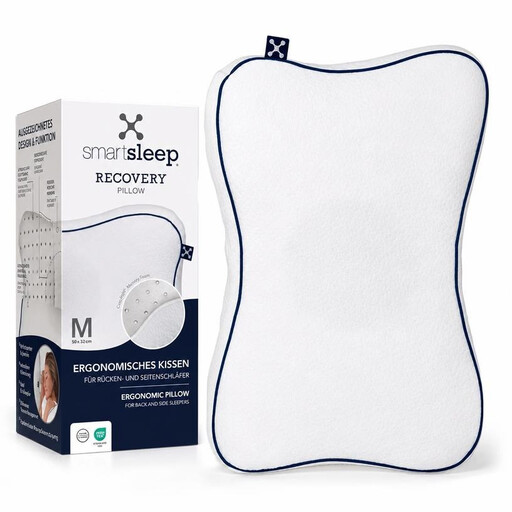
Why this product suits this profile: This model combines a head recess with viscoelastic foam and, according to the product details, is designed for back and side sleepers. The stated 30-night trial can make it easier to see whether it suits you.
The product details specify the material, head recess, integrated air channels and an OEKO-TEX label. This gives you clearer information about the shape, breathability and material testing than a general claim about comfort alone.
Memory foam core, head recess, air channels, stated OEKO-TEX certification and a 30-night trial according to the product description.
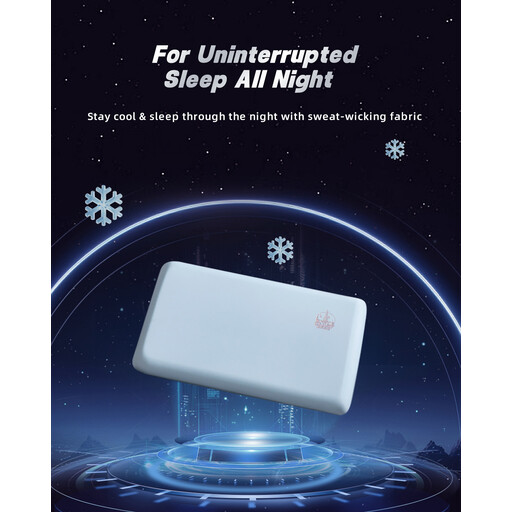
Why this product suits this profile: The 42 × 70 × 8 cm size and stated suitability for side, back and stomach sleepers may appeal to people looking for a longer pillow that can be positioned in different ways.
The specific dimensions mean you do not have to judge the pillow’s shape based on a general description alone. Before buying, also check whether 8 cm is right for your mattress and preferred sleeping position.
Memory foam material, 42 × 70 × 8 cm dimensions and, according to the product name, suitability for several sleeping positions.
We’ve put together a complete, regularly updated list of products that meet these strict selection criteria and fully comply with the safety regulations in force in the EU.
There is no standard height. Side sleepers often need a higher pillow than back sleepers to account for shoulder width. On a soft mattress, your body sinks in further, so a lower pillow may be enough. The key is to keep your head from tilting noticeably upwards or downwards.
Its lifespan depends on the quality of the foam, how much it is used, how it is cared for and how well it regains its shape. Lasting indentations, a loss of shape or a damaged cover are signs that it may be time to replace it. Without specific information from the manufacturer, it is not possible to give a reliable general lifespan.
Look for full material details, a removable cover and clearly documented testing labels. If you have known allergies, read the product information carefully and follow the manufacturer’s advice. If you are unsure, it may be helpful to seek individual medical advice.