
Lieferung heute & morgen

Qualitätsgarantie

Willkommens-Angebote freischalten: KOSTENLOSE Lieferung | Bis zu 80 % RABATT | Kostenlose 30-Tage-JoyPlus-Testphase
App herunterladen
An ergonomic neck support pillow is designed to support your head, neck and shoulders in a way that suits your sleeping position. However, not every contoured pillow will automatically provide a comfortable sleeping position. The wrong height, unclear information about materials or a cover that is difficult to care for can all mean a pillow ends up unused after a short time.
This buying guide explains which technical details to check before buying a neck support pillow, and which models may suit different sleeping habits.
Side and back sleepers usually need different levels of support. When you sleep on your side, the pillow needs to fill the gap between the mattress and your head. When you sleep on your back, a pillow that’s too high can lift your head too far and alter your sleeping position.
So, check:
A contoured ergonomic pillow may be a good choice if it suits your body shape and mattress. However, there’s no one-size-fits-all answer when it comes to the right pillow height.
When buying a memory foam neck support pillow, it’s worth considering the core material, shape and cover separately. Viscoelastic foam moulds under pressure, but can feel different depending on the room temperature. Ventilation is also important, as foam cores can retain heat.
Useful details to look for include:
So, a cooling neck pillow shouldn’t rely on its name alone. Look for clear information about the cover, air circulation and internal construction.
Latex pillows are often chosen for their responsive support and breathable qualities. However, natural rubber may be unsuitable for people with a latex allergy. Check the stated percentage of each material and any warnings before buying.
Similarly, calling a pillow “orthopaedic” doesn’t in itself prove that it has a medical effect. A pillow may support your sleeping position, but it’s no substitute for medical advice if you have persistent discomfort, numbness or severe pain.
A pillow for side and back sleepers should take into account the different needs of both positions. Side sleepers often benefit from firmer support along the side, while back sleepers tend to prefer a flatter surface.
Contoured pillows with two different heights can give you more choice. Before buying, check whether the dimensions suit your shoulder width and whether the shape provides natural support for your head and neck.
Memory foam responds to body heat and pressure, so its surface can mould to the contours of your head and neck. Even so, a pressure-relieving pillow shouldn’t let you sink in too far or lose its support every time you move.
Latex pillows typically spring back more readily. If a model contains 93% natural latex and 7% other materials, this composition should be clearly stated in the product information. “Natural latex” doesn’t mean the product is made entirely of latex.
A removable cover and clear care instructions are useful for allergy sufferers and anyone with higher hygiene requirements. Foam and latex cores often shouldn’t be machine-washed or soaked completely. Some products are designed for the cover to be cleaned separately or for the core to be wiped carefully.
If you have sensitive skin, information about harmful substance testing, material composition and ventilation after unpacking may also be useful. Latex products can have a temporary natural odour. Follow the manufacturer’s instructions for each product.
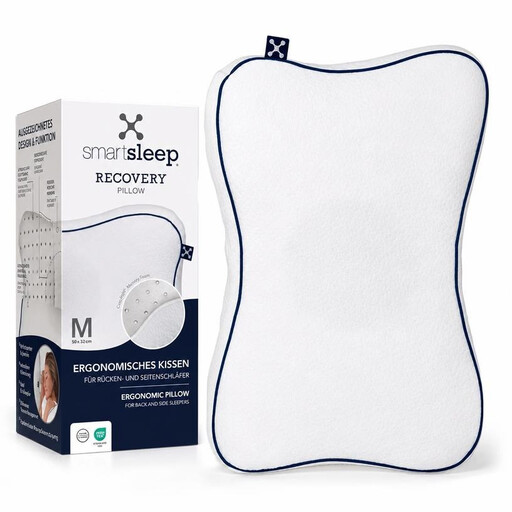
Why it suits this profile: This memory foam pillow is designed for side and back sleepers looking for certified materials, ventilation and a well-defined headrest.
The product information lists memory foam, integrated air channels and a material standard tested to OEKO-TEX. This makes it easier to check the materials and ventilation.
Memory foam core, air channels, a head recess and a stated 30-night trial period.
We’ve put together a complete, regularly updated list of products that meet these strict selection criteria and fully comply with the safety regulations in force in the EU.
It may take a short while to adjust, particularly if you’re switching to a firm contoured pillow or memory foam. Start by using the pillow in your preferred sleeping position, and check that your head and neck aren’t tilted sharply. If you remain uncomfortable, reconsider the pillow’s height or model.
How long it lasts depends on the material, how much it’s used, how well it’s cared for and how well it holds its shape. Check regularly for a core that has permanently compressed, contours that have lost their definition or a worn cover. Always follow the care instructions and refer to the manufacturer’s warranty or product information.
An ergonomic pillow can affect your sleeping position and comfort. However, you can’t assume that it will have a medical effect. If your discomfort keeps coming back or gets worse, it’s best to seek medical advice rather than simply changing your pillow.