
Lieferung heute & morgen

Qualitätsgarantie

Willkommens-Angebote freischalten: KOSTENLOSE Lieferung | Bis zu 80 % RABATT | Kostenlose 30-Tage-JoyPlus-Testphase
App herunterladen
An ergonomic neck support pillow should keep your head and neck in a suitable position without creating pressure points or an unstable sleeping sensation. Side sleepers have different requirements from back or stomach sleepers. Allergy sufferers, physically active people and anyone looking for a pillow for travel or camping should also look beyond product images and marketing claims.
Three common problems often arise when buying:
The pillow height should match your shoulder width, mattress firmness and preferred sleeping position. Side sleepers generally need more height to prevent the head from tilting towards the mattress. For back sleepers, a lower profile with a recess for the head may be suitable. Stomach sleepers often prefer a lower, more yielding pillow.
A contoured shape or so-called butterfly design can offer different support areas. However, this does not replace checking the actual dimensions. When choosing a side sleeper pillow, you should therefore check the height, width and sleeping surface in the product description.
A memory foam pillow is usually made from viscoelastic foam, which yields under heat and pressure. Its response depends, among other things, on the room temperature, body weight and length of time you lie on it. A viscoelastic pillow can therefore provide a different feel from a traditional fibre or feather pillow.
It is important to distinguish between the foam core and the cover:
For example, the smartsleep model lists memory foam, integrated air channels and OEKO-TEX-certified materials. This information relates to the product description and does not replace an individual assessment of suitability.
A cooling neck pillow should not simply be marketed using that term. Check whether the product specifies a ventilation structure, breathable cover or concrete material details. Air channels in the foam may support air circulation, but they do not guarantee a particular sleeping or room temperature.
For a travel pillow or camping pillow, weight, packed size and shape are also important. A large ergonomic sleeping pillow may be comfortable at home but impractical to transport. Information about the returns period, trial period and care requirements can help to reduce the risk of buying.
If neck discomfort is persistent or severe, a pillow should not be regarded as a medical treatment. Seeking professional advice may be advisable.
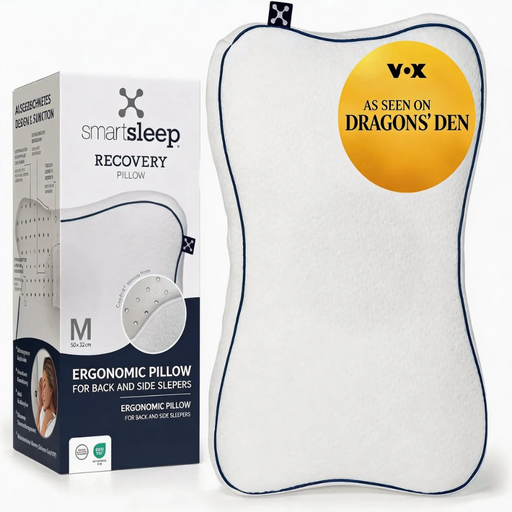
Why this product suits this profile: According to the description, the pillow combines a head recess, memory foam, integrated air channels and OEKO-TEX-certified materials. It is designed for back and side sleepers, as well as anyone interested in material and breathability details.
The product description lists specific construction and material features rather than relying solely on general comfort claims. It also states that a 30-night trial period is available.
Head recess and memory foam; integrated air channels; according to the product description, OEKO-TEX-certified materials and a 30-night trial period.
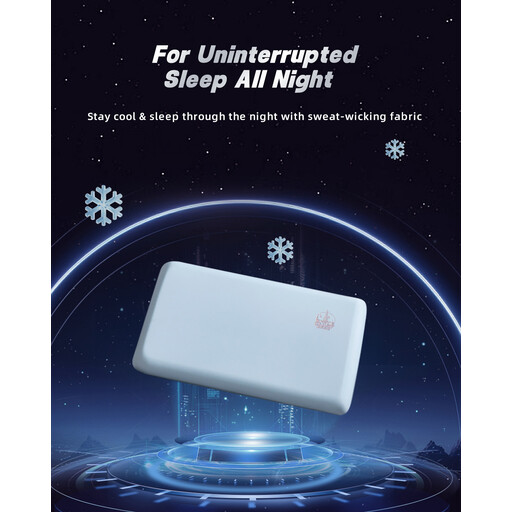
Why this product suits this profile: The stated dimensions of 42 × 70 × 8 cm make it easier to plan for a standard bed. According to the product name, the pillow is designed for side, back and stomach sleepers and is marketed as a cooling model.
The exact external dimensions are provided. This allows you to check before buying whether the pillow will fit your existing cover and whether the height of 8 cm suits your sleeping position.
Memory foam construction; dimensions of 42 × 70 × 8 cm; according to the product name, designed for several sleeping positions and as a cooling bed pillow.
We recommend this quick checklist before placing your order:
We have put together a complete, regularly updated list of products that fully meet these strict selection criteria and the safety regulations applicable in the EU.
That depends on your sleeping position, shoulder width and mattress. Side sleepers often need a higher model than back or stomach sleepers. The manufacturer’s specifications are important, as is maintaining a straight, comfortable alignment of the head and neck without excessive bending.
There is no universal lifespan. Material quality, daily use, body weight, room temperature and care all affect how well the pillow retains its shape. If the foam becomes permanently soft or uneven, or loses its original level of support, you should consider replacing it.
A pillow can affect your sleeping position and personal comfort. However, this does not generally establish any preventative or therapeutic effect. If discomfort is recurring, severe or getting worse, you should seek medical advice.