
Lieferung heute & morgen

Qualitätsgarantie

Willkommens-Angebote freischalten: KOSTENLOSE Lieferung | Bis zu 80 % RABATT | Kostenlose 30-Tage-JoyPlus-Testphase
App herunterladen
An ergonomic neck pillow is designed to support your head, neck and shoulders in line with your sleeping position. But choosing one isn’t always straightforward. Many models are advertised as having an ‘orthopaedic’ shape, pressure-relieving foam or especially breathable materials, without clearly explaining important details such as their height, core construction and care requirements.
Buy in a hurry and you could end up with a pillow that’s too high, too soft or difficult to wash. The following criteria can help you look beyond the marketing claims and choose a neck support pillow that suits the way you sleep.
A pillow that’s, for example, 8, 10 or 12 cm high won’t automatically suit everyone. What matters is how high your shoulder sits when you sleep on your side, how much the foam compresses and whether the pillow has a contoured shape. A pillow that’s too high can tilt your head to one side when you’re lying down, while one that’s too low may not fill the space around your neck sufficiently.
Look for details on the actual height when lying on the pillow, its shape and, where available, the different heights you can use. A height-adjustable neck pillow or a model with sides at different heights gives you more options to find the right fit.
Memory foam, also known as viscoelastic foam, responds to heat and pressure. This can make it feel snug when you lie down. However, different types of foam respond differently to room temperature, body weight and sleeping position.
Check for:
A memory foam pillow shouldn’t be assumed to relieve pressure automatically. How it feels depends on its shape, firmness and how well it suits you.
Back, side and front sleepers often need different levels of support. A pronounced neck contour may suit back or side sleepers, while front sleepers often prefer a flatter side with less contouring.
If you have existing or recurring symptoms, a pillow is no substitute for medical advice. Product listings may describe a pillow as a pillow for neck pain, but this usually refers to its intended use and isn’t a guarantee of medical benefits.
Side sleepers should consider the gap between the mattress and their neck. A pillow that’s too low lets your head sink towards the mattress; one that’s too high can tilt it towards the other side. Lower contours are often more comfortable for back and front sleepers.
A pillow with a clearly defined head hollow and neck support can be a practical choice. If you’re looking for a pillow for back and front sleepers, check that the flatter side can actually be used.
Memory foam spreads pressure over a larger area and responds to heat and pressure. Natural latex is more elastic and usually returns to its original shape more quickly. A latex pillow may have perforations or a honeycomb structure to help with airflow.
Check the material information carefully. For example, the JoySelect model is listed as containing 93% latex and comes with two covers. If you have a latex allergy, check the material details particularly carefully. Natural latex isn’t automatically suitable for everyone with allergies.
A removable, washable cover makes regular cleaning easier. The foam or latex core, on the other hand, often shouldn’t be machine-washed or soaked. Always follow the care instructions provided for the product.
For a more comfortable sleeping environment, integrated air channels, perforated cores or breathable cover materials may be worth considering. Certifications such as OEKO-TEX should apply to the specific material or product named. Certification is no substitute for checking the pillow’s height, shape and care instructions.
Why this product suits this profile: Its stated height of 8 cm and memory foam construction make it a clear starting point for students, guest rooms or anyone looking for a low-profile neck support pillow.
The specific 8 cm measurement makes it easier to compare with other low-profile models and reduces the risk of choosing based on vague comfort claims alone.
A stated memory foam core and low profile for anyone who prefers a less elevated contour.
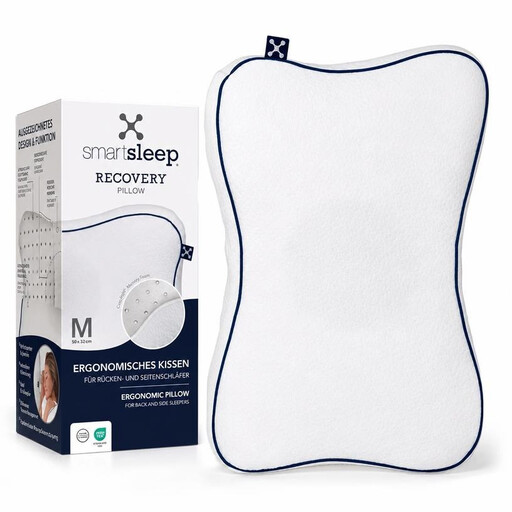
Why this product suits this profile: According to the product description, this model is designed for back and side sleepers. It combines a head hollow with viscoelastic foam and integrated air channels.
The description details the material, sleeping positions, air channels and care instructions, rather than relying solely on a general ‘ergonomic’ label.
OEKO-TEX-certified materials are listed, and the manufacturer states that there’s a 30-night trial period.
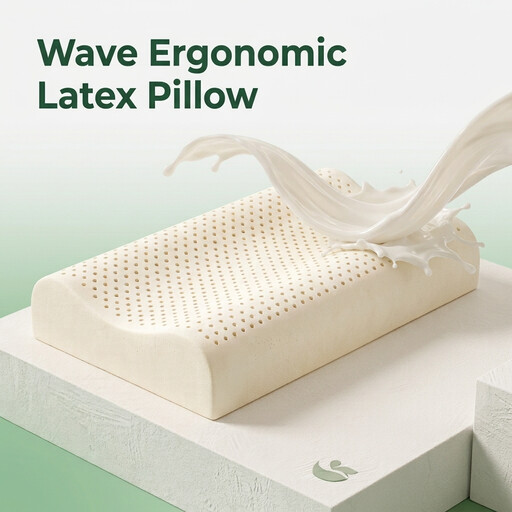
Why this product suits this profile: The contoured design has two stated heights: 10 and 12 cm. This may be practical if you change sleeping positions or prefer different pillow heights.
Both heights are clearly stated. The product also comes with a removable outer cover and a separate protective cover.
Stated latex content of 93%, dimensions of 60 × 40 cm and a washable outer cover.
We’ve put together a complete, regularly updated list of products that meet these strict selection criteria and the applicable EU safety regulations.
It mainly depends on your sleeping position, shoulder width, mattress firmness and how much the pillow compresses. Side sleepers often need a higher pillow than back or front sleepers. Don’t just look at the stated product height; also check the height of the surface once it’s under load.
There’s no single answer, as it depends on the material, how much it’s used, how it’s cared for and how often you sleep on it. Persistent dips, crumbling foam, distorted contours or a lasting change in smell are signs that it may be time to replace the pillow. Wash the cover regularly in line with the care instructions.
This can only be assessed by checking the specific material and care information. A washable cover can make it easier to keep the pillow clean, but the core often can’t be washed. Anyone with a latex allergy should avoid latex models or seek medical advice before buying. Claims such as ‘hypoallergenic’ should always be checked against the full product information.