
Lieferung heute & morgen

Qualitätsgarantie

Willkommens-Angebote freischalten: KOSTENLOSE Lieferung | Bis zu 80 % RABATT | Kostenlose 30-Tage-JoyPlus-Testphase
App herunterladen
An ergonomic neck support pillow is designed to keep your head, neck and shoulders in a suitable position. However, choosing the right one can be difficult: product names often promise “orthopaedic” support, while important details about height, materials or care are missing. A pillow for neck pain also cannot guarantee that discomfort will disappear. Its effectiveness depends on factors including your sleeping position, body shape, mattress and personal preferences.
A measurement such as 8, 10 or 12 cm usually describes the pillow’s maximum height. With a contoured pillow, the actual supporting surface may be lower. For side sleepers, the distance between the shoulder and head is also crucial. Back sleepers generally need a lower pillow, while stomach sleepers often struggle with a high neck support.
A memory foam pillow can adapt to pressure and body shape. However, without information about its construction, it is difficult to tell how stable the core is. Soft material may feel comfortable for some users, but the wrong height can place the head in an unfavourable position. More useful details include the foam layers, contour, density – where stated – and recovery behaviour.
A breathable neck pillow should have a removable, washable cover or a clearly explained ventilation structure. In many cases, the foam core itself is not suitable for machine washing. Claims such as “temperature-regulating” should therefore be checked against specific information about the cover and construction.
Memory foam responds to body heat and pressure and generally adapts slowly. This can provide even support, but often requires a short adjustment period. A multi-layer construction can combine different functions, such as a softer top layer and a more supportive base.
Latex pillows typically spring back more quickly. If natural rubber is used, allergy sufferers should check the material information and warnings. The term “93% latex” is more specific than a general description such as “latex comfort”, but it does not replace checking the cover and core in full.
Check the following before buying:
If you have known allergies, read the complete material information. A certified cover, for example one carrying an OEKO-TEX reference in the product description, relates to the materials named there and should not be interpreted as a general medical statement.
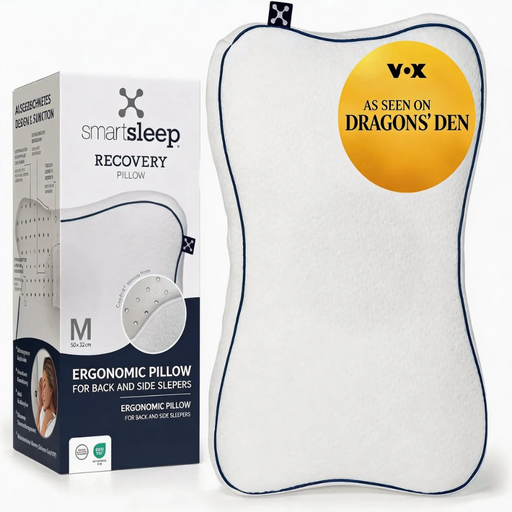
Why this product suits this profile: For buyers who value documented material properties and a cover suitable for sensitive users, the product description specifies viscoelastic foam, integrated air channels and OEKO-TEX certification for the stated materials.
Instead of simply promoting it as “ergonomic”, the description gives specific details about the head recess, sleeping positions, air channels and materials. Allergy sufferers should check the complete labelling.
Memory foam core with integrated air channels; according to the product description, a 30-night trial period.
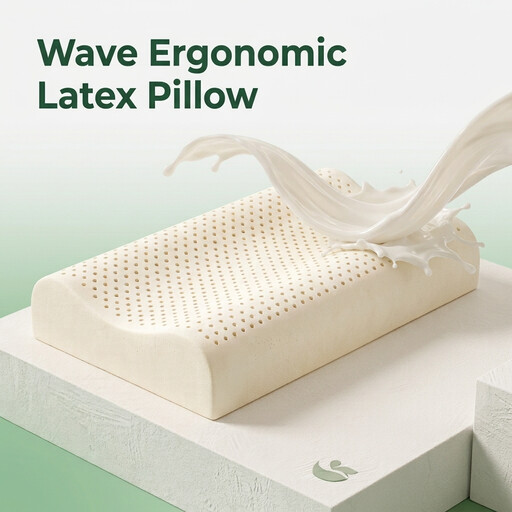
Why this product suits this profile: The two stated heights of 10 and 12 cm, together with its 60 × 40 cm shape, are aimed at users who want to choose between different support heights.
The dual-height design reduces the risk of being restricted to one fixed height. According to the warning, the product is not suitable for people with a latex allergy without checking the materials first.
93% latex content according to the product information; two heights and a removable outer cover with washing instructions.
We have put together a complete, regularly updated list of products that fully meet these strict selection criteria and the safety regulations applicable in the EU.
Do not consider the pillow’s height alone. Take your shoulder width, mattress firmness and sleeping position into account as well. When sleeping on your side, your head should ideally remain straight between your shoulder and spine. When sleeping on your back, the neck support should not push your head strongly forwards. If you are unsure, an adjustable-height pillow or a model with two heights may be a sensible choice.
A neck support pillow can change your sleeping position and the distribution of pressure. However, this does not provide a reliable basis for claiming that it will relieve pain. If you experience persistent, severe or newly occurring discomfort, seek medical advice. Your mattress, sleeping posture and how long you have been using the pillow can also make a difference.
There is no standard lifespan that applies to every pillow. Material quality, daily use, moisture and care are all important factors. Follow the manufacturer’s instructions and replace the pillow if it remains permanently misshapen, the core starts to crumble or the support diminishes. Clean the core according to the care instructions and air it regularly.