
Lieferung heute & morgen

Qualitätsgarantie

Willkommens-Angebote freischalten: KOSTENLOSE Lieferung | Bis zu 80 % RABATT | Kostenlose 30-Tage-JoyPlus-Testphase
App herunterladen
An ergonomic neck support pillow is designed to keep your head at a suitable height and support your neck while you sleep. However, side, back and stomach sleepers have different needs. A distinctive shape or the term ‘orthopaedic neck pillow’ alone tells you little about whether a pillow is actually right for you.
A pillow that’s too high can push a back sleeper’s head forwards. A model that’s too flat may not provide enough support between the shoulder and mattress for side sleepers. That’s why measurements such as 8 cm or 10 cm should always be considered in relation to your shoulder width, mattress firmness and preferred sleeping position.
A memory foam or viscoelastic pillow moulds to your shape under pressure. That doesn’t mean every design will suit every body, though. Some people may find the slow recovery comfortable, while others prefer a material that responds more quickly. The contour, height and firmness of the support zones are also important.
A foam core can retain heat. Integrated air channels or a breathable cover are therefore useful features to look for, but they don’t replace a suitable sleep environment. You should also check whether the cover is removable and washable according to the care instructions. Memory foam cores generally shouldn’t be machine-washed.
An ergonomic pillow with a head recess can help keep your head centred. Raised sides may be designed for side sleeping, while a lower centre can support you when sleeping on your back. The contour should do more than look appealing: it should suit your own body shape.
The term ‘cervical pillow’ often refers to a shape designed to support the neck area, but it isn’t a consistent, protected quality standard. Check the specific product details rather than relying on the name alone.
Look for clear information about the materials, manufacturer, care instructions and responsible person in the EU. For example, the smartsleep model lists a material certified to OEKO-TEX standards. This relates to material testing and isn’t a claim of medical effectiveness.
Latex products should include a warning about possible contact with latex. If you have a known allergy, check the materials list. A pillow is no substitute for medical advice if you have persistent symptoms, numbness or restricted movement.
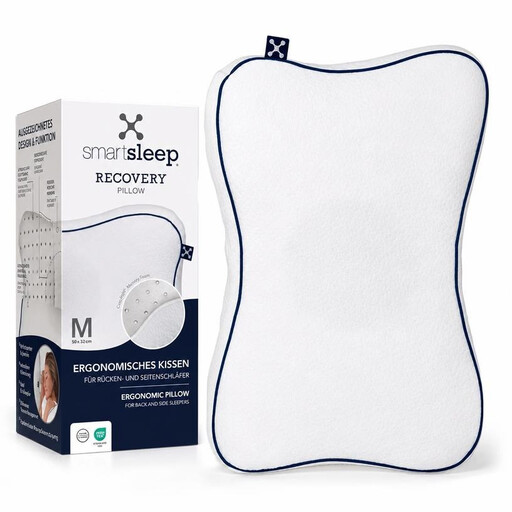
Why this product suits this profile: This model combines memory foam, a head recess and an ergonomic contour with a cover made from material listed as OEKO-TEX certified.
Integrated air channels in the viscoelastic core and a certified material claim provide specific information about the pillow’s construction and features.
Head recess; air channels in the foam core; a 30-night trial period is listed in the product information.
Why this product suits this profile: Its stated height of 8 cm may appeal if you’re looking for a lower neck support pillow for your bedroom, a hotel or student accommodation.
The height is clearly shown in the product name, making it easier to compare this model with 10 cm options or higher contours.
Memory foam, according to the product name; 8 cm profile; listed as suitable for students and adults, and for overnight stays in different settings.
We’ve put together a comprehensive, regularly updated list of products that meet these strict selection criteria and the applicable EU safety requirements.
Start by lying on it for a short time and check that your head and neck are in a neutral position. The pillow shouldn’t push your head sharply upwards or let it sink noticeably. If you’ve bought a new foam pillow, it’s also a good idea to air it for the time recommended by the manufacturer.
Its lifespan depends on the quality of the material, how often it’s used, body weight, room conditions and care. Persistent indentations, crumbling foam or reduced support are signs that it may be time for a replacement. Always check the individual manufacturer’s information on the guarantee and expected lifespan.
A pillow can affect your sleeping position and how comfortable you feel when lying down. This doesn’t mean it will reliably relieve neck or shoulder pain. If your symptoms are frequent or getting worse, seek medical advice to find out what’s causing them.