
Lieferung heute & morgen

Qualitätsgarantie

Willkommens-Angebote freischalten: KOSTENLOSE Lieferung | Bis zu 80 % RABATT | Kostenlose 30-Tage-JoyPlus-Testphase
App herunterladen
An ergonomic office chair should suit your body, desk and daily routine. Product descriptions often list plenty of features that look impressive at first glance, but don’t necessarily add up to a comfortable seat in everyday use. What matters is clear information about dimensions, adjustment ranges and weight limits – not simply the number of controls.
An adjustable-height desk chair can only be set up properly if the seat height, seat depth and armrests suit your height. A headrest or lumbar support with only a few fixed positions won’t fit everyone equally well. Before you buy, check which parts can actually be adjusted.
The 150 kg office chair rating describes the product’s maximum intended load. It is not a measure of quality and shouldn’t be taken to mean the chair can withstand unlimited use over time. The chair should also be placed on a level surface, assembled correctly and never used as a step.
A mesh office chair can help air circulate around your back, while velvet or faux leather offers a different feel and requires a different cleaning routine. Look for specific details about the seat padding, backrest, castors, frame and care. Soft padding isn’t automatically suitable for long periods of sitting if the seat height or depth is wrong.
Adjust the seat height so your feet rest firmly on the floor and your knees are roughly at a right angle. Leave a little space between the edge of the seat and the backs of your knees. The manufacturer’s recommended height range can help you choose. For example, the GTIMEX model has a 50 × 53 cm seat and is listed as suitable for people between 155 and 185 cm tall. The NEWTRAL NT002 is described as suitable for people between 160 and 190 cm tall.
You’ll also need to consider your desk. An ergonomic swivel chair may be adjusted correctly but still not fit under your desk if the armrests or seat are too high. Folding armrests can be handy in a compact home office.
Ideally, adjustable lumbar support should move up and down and, where specified, in and out too. Selected GTIMEX models are listed with lumbar support that adjusts in height by up to 6 cm; another model also offers up to 3 cm of depth adjustment. These are specific product features you can check, but they don’t replace adjusting the chair to suit you.
An S-shaped backrest, tilt function or reclining backrest that locks in position can accommodate different working postures. Check whether the backrest can be locked upright for working. The GTIMEX office chair has a listed recline range of 90 to 135 degrees. According to its product details, the GTIMEX gaming chair reclines between 90 and 170 degrees. A deep recline is best suited to breaks or relaxing, rather than focused writing.
Look for a sturdy five-star base, suitable castors and a durable gas lift. Some products list BIFMA and SGS specifications. Treat these as manufacturer or product claims, and check which specific product they apply to. The GTIMEX model is also listed as having a gas lift and base tested against BIFMA and SGS criteria.
Before using the chair, check all the screws and follow the assembly instructions. Do not exceed the maximum load. Softer castors or a floor protector may be useful on hard floors; castors perform differently on carpet.
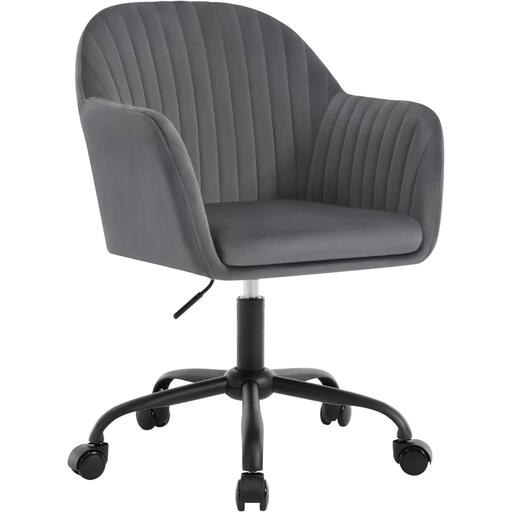
Why it suits this profile: This height-adjustable desk chair has a seat height of 45 to 52.5 cm, armrests, 360-degree swivel and a listed weight capacity of up to 150 kg.
The specific seat-height measurement makes it easier to check whether the chair suits your desk and height, rather than relying on vague claims about comfort.
Metal frame, PU castors and 360-degree swivel; several colour options listed in the product description.
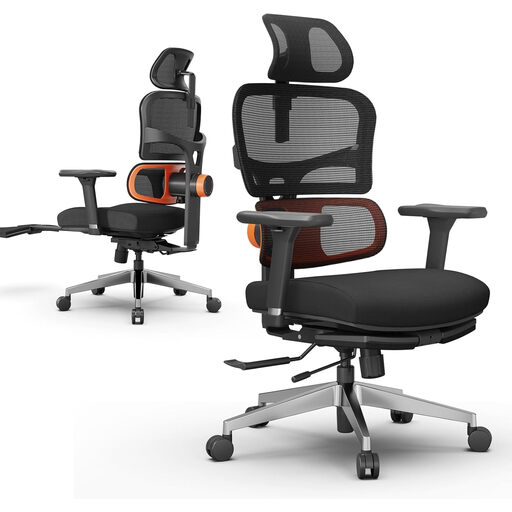
Why it suits this profile: This model offers several defined adjustments for the seat position, backrest, headrest and armrests, as well as an integrated footrest.
The product description gives specific adjustment ranges: 5 cm of seat-depth adjustment, 5 cm of backrest-height adjustment and 4D armrests with movement in several directions.
Korean Filo mesh, three listed recline positions and a weight capacity of up to 150 kg according to the product details.
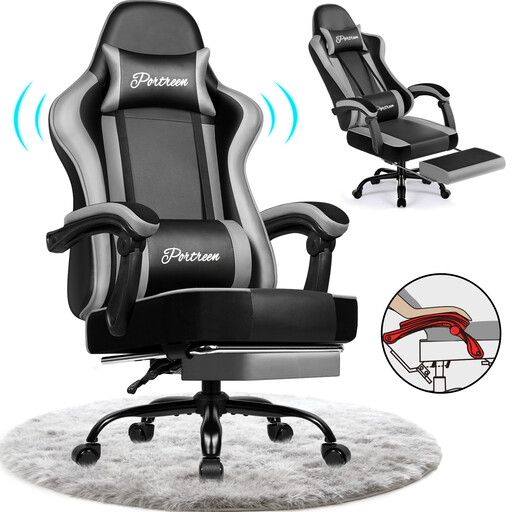
Why it suits this profile: For gaming, reading and taking breaks, this model combines an adjustable backrest with a headrest, lumbar support and an extendable footrest.
The recline range of 90 to 170 degrees and 10 cm of height adjustment are clearly specified, making it easier to plan for different ways of using the chair.
Extendable footrest, PU upholstery, BIFMA and SGS specifications listed in the product description, and a weight capacity of up to 150 kg.
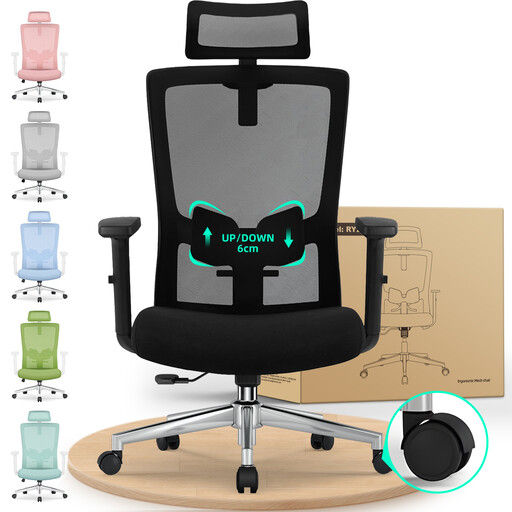
Why it suits this profile: This mesh office chair has adjustable lumbar support, armrests and a headrest, plus a tilt function that lets you switch between working and resting positions.
The listed 6 cm lumbar-support adjustment, 11 cm headrest-height adjustment and 90 to 135-degree recline range are clearly specified.
Breathable mesh backrest, 50 × 53 cm seat and listed BIFMA/SGS certifications.
We’ve put together a complete, regularly updated list of products that meet these strict selection criteria and fully comply with the safety regulations applicable in the EU.
There’s no single ideal height. Your height, desk height and how firmly your feet reach the floor all matter. The chair’s seat-height range should suit these factors.
Lifespan depends on the load, how often the chair is used, how it’s assembled, the floor surface and how well it’s cared for. Check the castors, screws, gas lift and padding regularly. A listed weight capacity of 150 kg doesn’t guarantee a particular lifespan.
A footrest can be useful for breaks or reclined positions. For focused work, your sitting position should still allow for a suitable desk height, firm foot support and enough freedom to move.