
Lieferung heute & morgen

Qualitätsgarantie

Willkommens-Angebote freischalten: KOSTENLOSE Lieferung | Bis zu 80 % RABATT | Kostenlose 30-Tage-JoyPlus-Testphase
App herunterladen
An ergonomic office chair 150 kg shouldn’t be chosen based solely on weight capacity or looks. For home offices, long working days, studying and gaming, the key factors are the right dimensions, adjustable support and a well-thought-out construction. If you focus only on flashy design or lots of features, you can easily overlook important details.
The “150 kg” rating primarily describes the maximum load the manufacturer intends. It doesn’t automatically tell you whether the seat, backrest and armrests suit your height and sitting posture. So also check the seat width, seat depth, height range and recommended body height.
A sturdy gas lift alone doesn’t make a model a suitable ergonomic desk chair. For regular use, a robust frame, a stable base construction and correctly fitted connecting parts are also important.
An office chair with lumbar support, headrest and armrests can be highly adjustable. What really matters, however, is whether the adjustments can actually be tailored to you. A lumbar support that only moves a few centimetres won’t suit every height.
Look for specific figures, such as 10 cm seat height adjustment, 6 cm lumbar support adjustment or a height-adjustable headrest. Vague marketing claims like “suitable for all body types” mean little without measurements.
An office chair with a rocking or tilt mechanism can be handy for switching between focused work and leaning back. For desk work, though, the backrest should allow an upright position and lock securely. Check whether the tilt range is stated and whether the resistance can be adjusted.
For models with a footrest, note: the footrest is for resting your legs and isn’t designed as a step. While using the chair, it should stand on a level, stable surface.
For an office chair 150 kg, the maximum load should be clearly stated in the product details. It normally refers to body weight and must not be exceeded. Information about tests or certifications should also come directly from the product information.
According to product details, selected models have gas springs or components certified or tested to BIFMA and SGS standards. These details refer to the specific product description and shouldn’t be applied to all variants. Before ordering, it’s worth checking the colour, model number and specification.
A height-adjustable office chair should be set so that your feet rest flat on the floor and your knees are roughly at a right angle. The seat shouldn’t press into the backs of your knees.
As a guide, some models give specific ranges: a seat might be 50 cm wide and 53 cm deep, or offer a 10 cm seat height adjustment. Users with a height of around 155 to 185 cm or 158 to 190 cm should compare the manufacturer’s details with their own measurements.
An S-shaped backrest, an adjustable lumbar support and suitable armrests can individually support your sitting position. This is especially relevant if the chair is used as an office chair for long sitting periods or as an office chair for the home office.
For armrests, height and distance from the desk surface matter. Foldable armrests or those that can be raised 90 degrees can save space at smaller workstations. A headrest is mainly useful if you regularly work in a reclined position or spend breaks in the chair. For constant forward-facing screen work, it’s no substitute for the correct monitor height.
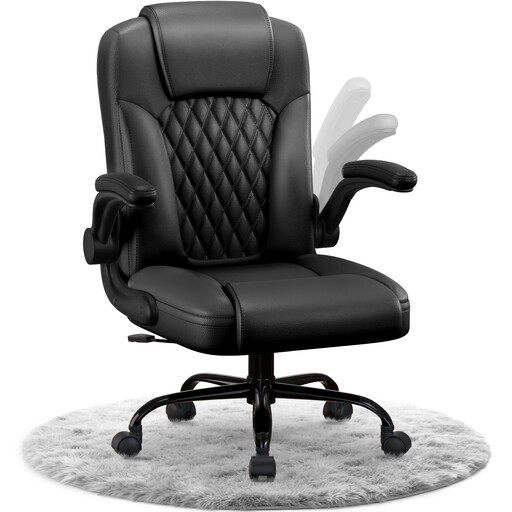
Why this product fits the profile: The adjustable seat height, flip-up armrests and backrest with a range of 90 to 120 degrees offer a straightforward set of features for home offices, studying and occasional use.
The product details state the 150 kg weight capacity, 10 cm seat height adjustment and the specific tilt range, rather than just advertising with a general ergonomics claim.
PU faux leather, padded armrests and a metal frame; assembly accessories and a two-year warranty are included according to the product description.
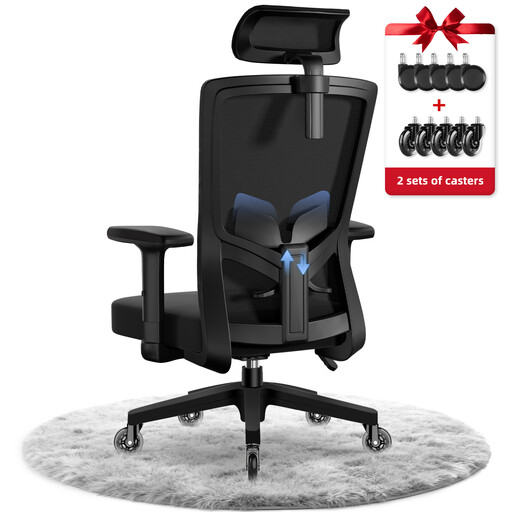
Why this product fits the profile: The combination of a breathable nylon mesh backrest, adjustable lumbar support, headrest and armrests is aimed at users who want to regularly adapt their office chair to their own sitting position.
The adjustment ranges are clearly stated: 6 cm for the lumbar support, 10 cm for the armrests and seat height, and 11 cm for the headrest.
According to the product details, the gas lift has BIFMA and SGS certifications and a static pressure test of 1136 kg; the maximum weight capacity is 150 kg.
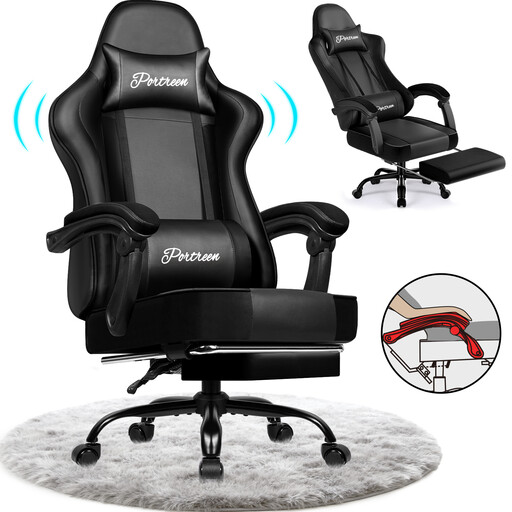
Why this product fits the profile: This model is designed for gaming, reading, working and breaks. The adjustable backrest from 90 to 170 degrees and the extendable footrest appeal to users who frequently switch between an upright and a reclined position.
The product description clearly defines the footrest’s function as a leg rest and explicitly states the maximum weight capacity of 150 kg.
Height adjustment up to 10 cm, headrest and lumbar support, and a metal frame on the footrest; according to the product details, BIFMA and SGS certifications apply.
Even a well-adjustable office chair with armrests needs a suitable desk. First, set the seat height and check that both feet are stable on the floor. Then adjust the backrest, lumbar support and armrests. Your shoulders shouldn’t be raised when you rest your forearms.
For an office chair with a headrest, the headrest shouldn’t push your head forward. A rocking function is good for changing position, but shouldn’t lead to a permanently tilted-back working posture. For wooden floors, a protective mat can be useful, especially with hard castors.
We’ve put together a full, regularly updated list of products that fully meet these strict selection criteria and the safety regulations in force in the EU.
Start with the seat height: your feet should be flat on the floor. Then adjust the seat depth, lumbar support, backrest and armrests. The top edge of the screen should be roughly at eye level so that your head isn’t permanently tilted downwards.
The lifespan depends on frequency of use, assembly, floor surface and care. Regularly check the screws, castors, gas lift and tilt mechanism. The stated weight capacity is an upper limit and not a guarantee of a specific service life.
In normal use, there are no ongoing energy costs because the footrest is extended mechanically. Possible follow-up costs relate to replacement castors, damaged upholstery or wear parts. Regular cleaning and tightening the connections can help maintain usability.