
Lieferung heute & morgen

Qualitätsgarantie

Willkommens-Angebote freischalten: KOSTENLOSE Lieferung | Bis zu 80 % RABATT | Kostenlose 30-Tage-JoyPlus-Testphase
App herunterladen
For individuals with a higher body weight, finding an office chair that is both robust and ergonomic can be a challenge. Standard models are often only rated for up to 120 kg or 150 kg, failing to provide the necessary stability and longevity for intensive use. An ergonomic office chair with a 200 kg weight capacity is more than just a seat; it is the foundation for focused, comfortable work, particularly during extended periods of sitting.
This article serves as a guide. We will explain the crucial features to look for when making your selection and present a range of models designed for high weight capacity. Our goal is to provide you with a solid basis for an informed decision, based on objective product characteristics.
Choosing the right chair depends on more than just its maximum weight capacity. The following criteria are crucial for comfort and durability.
The foundation of any heavy-duty chair is its base. A star base made of an aluminium alloy offers superior strength and corrosion resistance compared to plastic or steel. Look for durability specifications, such as pressure tests the frame has undergone. Certifications to standards like BIFMA (Business and Institutional Furniture Manufacturer's Association) provide additional assurance regarding the load capacity and safety of components, including the gas lift and castors.
For tall individuals and users who spend many hours at their desks, custom adjustments are essential. An advanced 3D lumbar support is a key feature here. Unlike simple, height-only adjustable supports, it can also be adjusted in depth and sometimes angle to provide targeted relief to the lumbar region. Other important functions include:
Prolonged sitting often leads to heat build-up and pressure points. A breathable mesh back promotes air circulation and prevents excessive sweating. For the seat cushion, the foam composition is crucial. A combination of high-density foam (for structural integrity) and softer natural foam (for comfort) can effectively distribute pressure on the thighs and provide a comfortable seating surface even after many hours.
Based on the criteria mentioned, we have compiled a selection of models that stand out for their construction and ergonomic features.
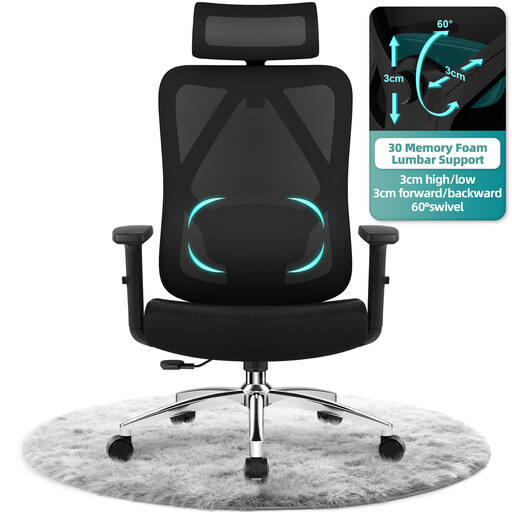
Why this model stands out: This model is specifically designed for a maximum load of 200 kg. Its foundation is an aluminium alloy base that, according to the manufacturer, has passed over 120,000 pressure tests. The combination of high weight capacity and advanced ergonomics makes it an option for demanding users.
Advantages:
Who is this model for? For individuals seeking an extremely stable and highly adjustable desk chair for tall people or those with a body weight of up to 200 kg. Ideal for use in a professional office or home office where durability and comprehensive ergonomic support are top priorities.
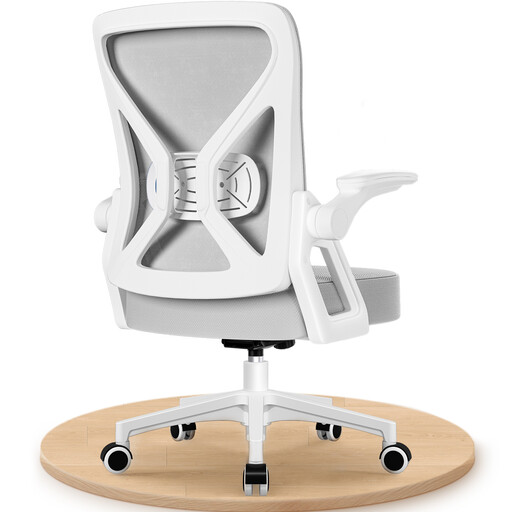
Why this model stands out: This model combines a solid weight capacity of up to 150 kg with the flexibility of flip-up armrests. This feature allows the chair to be pushed under a desk to save space or to be used without armrests if desired.
Advantages:
Who is this model for? For users up to 150 kg who are looking for a reliable and comfortable office chair for their home office or workplace and value flexible, space-saving armrests.
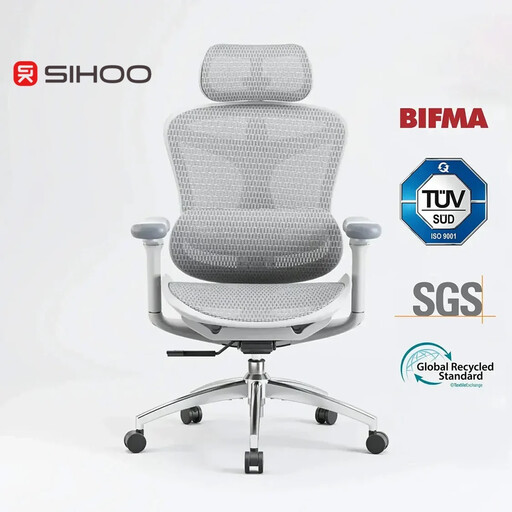
Why this model stands out: The Sihoo Doro C300 is distinguished by its self-adaptive, dynamic lumbar support. It automatically adjusts to the user's movements, providing continuous support without the need for manual readjustments.
Advantages:
Who is this model for? For users up to 150 kg who prefer a technologically advanced seating solution that dynamically adapts to their posture. Especially suitable for individuals who are frequently in motion and need a chair that provides active support.
An ergonomic chair is just one part of a productive work environment. If you're looking to complete your office setup, you can find a selection of matching desks that combine functionality and design in our Grey Executive Desk category.
1. What does BIFMA certification mean for an office chair? BIFMA (Business and Institutional Furniture Manufacturer's Association) sets safety, durability, and functional standards for office furniture. A BIFMA-certified chair has been tested for aspects such as stability, frame strength, castor lifespan, and gas lift load capacity. This is a key indicator of a chair's quality and longevity, especially in the heavy-duty category.
2. How important is a 3D lumbar support? A 3D lumbar support offers multi-dimensional adjustment (height, depth, and sometimes angle). This allows for more precise support of the natural curve of the lumbar spine than a rigid or height-only adjustable support. For individuals prone to back pain or who sit for very long periods, this targeted relief can make a significant difference in comfort.
3. Is a mesh-back office chair as comfortable as a padded one? Both materials have their pros and cons. A breathable mesh back is ideal for air circulation and prevents heat build-up, which is particularly beneficial in the summer or during long periods of sitting. A well-padded back can feel softer and distribute pressure differently. The choice depends on personal preference and sensitivity to heat. Modern mesh fabrics are designed to be both supportive and comfortable.