
Lieferung heute & morgen

Qualitätsgarantie

Willkommens-Angebote freischalten: KOSTENLOSE Lieferung | Bis zu 80 % RABATT | Kostenlose 30-Tage-JoyPlus-Testphase
App herunterladen
By: Joybuy Product Recommendation OfficerDate: July 18, 2026
Spending long hours at a desk has become the norm for professionals in the office or working from home. However, this can lead to tension in the neck and shoulders, as well as back pain. A suitable ergonomic office chair is not a luxury item, but a fundamental component for a healthy and productive workspace. This article serves as a guide to help you understand the essential features and make an informed decision based on objective criteria.
Selecting the right chair depends on individual needs. However, a few core features are universally crucial for comfort and support.
Adjustability is a key feature. A good height-adjustable swivel chair allows you to set the seat height so your feet are flat on the floor and your knees form a 90-degree angle. Equally important is an office chair with lumbar support. This should be adjustable in height and, ideally, in depth to conform to the natural S-curve of the spine. This can be a decisive factor in an office chair for back pain prevention. Adjustable armrests provide additional relief for the shoulder and neck muscles.
The material affects both seating comfort and longevity. A mesh back office chair is a popular option as it offers high breathability and promotes air circulation. This is particularly advantageous during long work sessions or in warmer environments. Seat cushions should be made of high-density moulded foam to retain their shape and supportive function even with continuous use. The material of the frame and base (e.g., aluminium or reinforced nylon) is critical for the chair's stability and maximum weight capacity.
Independent certifications like BIFMA (Business and Institutional Furniture Manufacturer's Association) or SGS provide insight into the safety, durability, and structural integrity of an office chair. These standards test aspects such as load capacity, stability, and the life cycle of components under stress. Always pay attention to the maximum weight capacity specified by the manufacturer to ensure the chair is designed for your body weight.
Based on the criteria mentioned, we have compiled a selection of models that cater to different requirements and use cases.
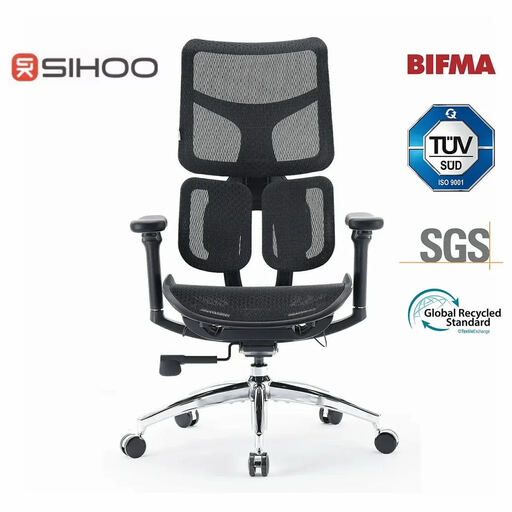
Why it stands out: The S100 model is distinguished by its dual-dynamic lumbar support system. According to the manufacturer, this system automatically adapts to different body shapes and sitting postures to provide continuous support for the lower back.
Pros:
Who it's for: Individuals who place a high value on advanced and adaptable lumbar support and are looking for a chair for intensive, daily use as a home office desk chair or in a professional office.

Why it stands out: This model combines essential ergonomic features with a space-saving design. The flip-up armrests allow the chair to be easily pushed under the desk when not in use, making it a practical choice for multi-purpose rooms or smaller workspaces.
Pros:
Who it's for: Home office users who need a functional and comfortable chair that can be easily and compactly stored when not in use.
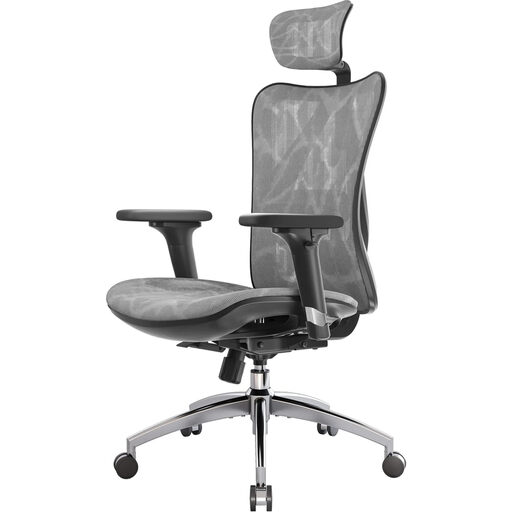
Why it stands out: The Sihoo office chair M57S offers a high degree of personalisation through its five separate adjustment modes. This allows users to fine-tune the chair's settings—from the lumbar support to the armrests—to achieve a highly individualised fit.
Pros:
Who it's for: Users who want maximum control over their chair's individual settings and are looking for a robust solution for different body sizes and weights.
If the models presented don't match your aesthetic preferences or if you're looking for an alternative that also suits gaming setups, another type of chair might be an interesting option. Explore our selection of models, such as an orange gaming chair, for a different approach to seating comfort and design.
An ergonomic office chair is characterised by its multiple adjustment options that allow it to be tailored to an individual's body shape. These typically include adjustable seat height, seat depth, an adaptable backrest with lumbar support, and adjustable armrests. The goal is to promote a healthy sitting posture and minimise strain.
For a basic ergonomic setup, your feet should be flat on the floor and your knees should form an angle of about 90 degrees. The lumbar support should support the natural curve of your lower spine. With your shoulders relaxed, your forearms should also rest at a 90-degree angle on the armrests or desk.
A mesh back office chair is a great choice for many users. The material is breathable, which reduces heat and moisture build-up, especially during long periods of sitting or in warmer environments. Additionally, the mesh flexibly conforms to the contours of the back, providing even support.