
Lieferung heute & morgen

Qualitätsgarantie

Willkommens-Angebote freischalten: KOSTENLOSE Lieferung | Bis zu 80 % RABATT | Kostenlose 30-Tage-JoyPlus-Testphase
App herunterladen
Long hours at a desk, whether in a home office or a corporate setting, have become the norm for many. An unsuitable chair can quickly lead to tension and discomfort. An ergonomic office chair is designed to support the body and promote a healthy posture. This article serves as a guide to help you understand the essential features of such a chair and make an informed decision.
Selecting the right model depends on individual needs and the work environment. Two key aspects should be considered when making your choice.
A back-friendly office chair should adapt to your body, not the other way around. Look for the following adjustment options:
The material affects both the comfort and the durability of the chair.
Here is a selection of models that are well-suited for use in the office or as a chair for a home office due to their functional features.

Why This Model Stands Out
This model combines comprehensive ergonomics with a space-saving design. The S-shaped contoured backrest with adjustable lumbar and head support promotes a healthy posture. The flip-up armrests are a practical feature for workspaces with limited room, as the chair can be pushed completely under the desk.
Benefits
Who Is This Model For? This desk chair is an excellent choice for home office users seeking a functional, breathable chair with flexible, space-saving features.
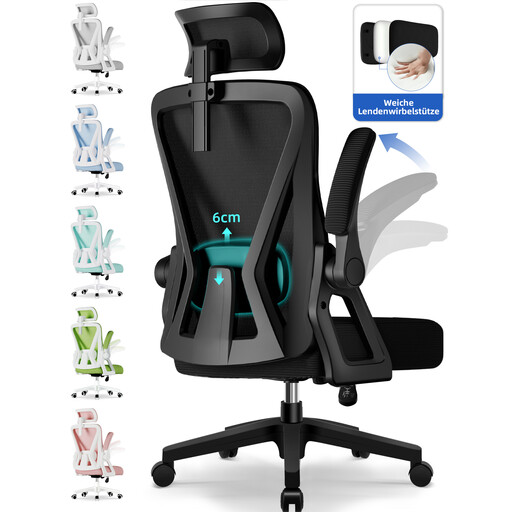
Why This Model Stands Out
This model is distinguished by its high weight capacity and an extended recline function. The backrest can be tilted up to 135°, allowing for relaxing breaks during long workdays. The robust construction is designed for a load of up to 150 kg.
Benefits
Who Is This Model For? This chair is suitable for individuals who need an especially sturdy swivel chair with lumbar support and value a significant recline function for back relief.
Why This Model Stands Out
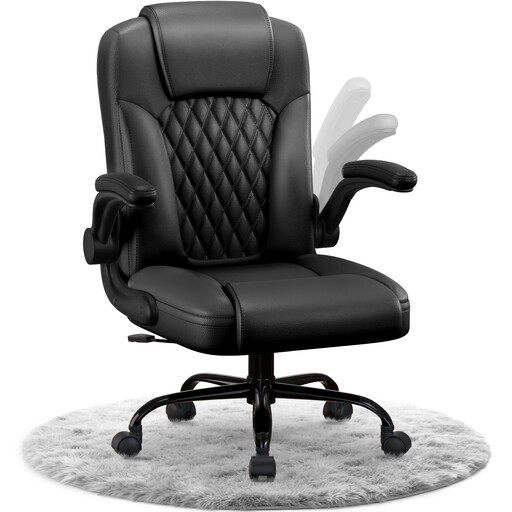
This model blends the classic aesthetic of an executive chair with modern ergonomic functions. According to the manufacturer, the PU faux leather cover is 25% thicker than conventional covers, suggesting greater durability. The seat has a multi-layered construction, combining memory foam, natural latex, and high-density foam for balanced pressure distribution.
Benefits
Who Is This Model For? Ideal for users who prefer the design of a leather chair but do not want to compromise on ergonomic adjustments like a rocking function and flip-up armrests.
An ergonomic workspace is important, but sometimes you're also looking for a special design accent for your living room or study. If the models presented here don't quite match your vision, you might find inspiration in other categories. For example, explore our selection of seating options like the [Golden Velvet Stool] to gather more interior design ideas.
1. What makes an office chair ergonomic? An office chair is considered ergonomic if it has a wide range of adjustment options to adapt to the user's body measurements and needs. These include an adjustable seat height, a customisable backrest, lumbar support, and adjustable armrests. The goal is to support a healthy sitting posture and minimise strain.
2. How do I properly adjust an ergonomic office chair? Start with the seat height: your feet should be flat on the floor. Adjust the seat depth so there is a gap of about two to three fingers' width between the back of your knees and the front edge of the seat. The lumbar support should support the natural curve of your lower spine. The armrests should be positioned so that your shoulders are relaxed and your forearms can rest on the desktop at a 90-degree angle.
3. Are flip-up armrests on an office chair useful? Yes, office chairs with flip-up armrests offer a clear practical advantage, especially in a home office or in offices with limited space. They allow the chair to be pushed completely under the desk when not in use. This creates more freedom of movement in the room and ensures a tidy appearance.