
Lieferung heute & morgen

Qualitätsgarantie

Willkommens-Angebote freischalten: KOSTENLOSE Lieferung | Bis zu 80 % RABATT | Kostenlose 30-Tage-JoyPlus-Testphase
App herunterladen
Long hours at a desk, whether in the office or at home, are a daily reality for many professionals and students. Inadequate posture can lead to tension in the neck and back. An ergonomic office chair is designed to support the body and promote a healthy posture. This article serves as a guide to help you understand the features of a suitable chair and make an informed purchasing decision.
As your Joybuy Product Recommendation Officer, I have compiled objective product information and criteria to help you find the right chair for your needs.
The choice of a chair should be based on individual needs and objective product features. Three key aspects are particularly important to consider.
An ergonomic desk chair is defined by its adaptability. Look for the following adjustment options to tailor the chair to your body's dimensions:
The chair's material affects both comfort and durability. Creating a breathable office chair is a common goal for manufacturers to prevent heat build-up during long periods of sitting. Mesh fabric is a popular choice here, as it allows for good air circulation and flexibly adapts to the body. In contrast, seats made of high-density moulded foam offer firm support and retain their shape even with intensive use.
The maximum weight capacity is an important indicator of safety and quality. An office chair with a 150 kg capacity offers a robust construction for a wide range of users. Look for certifications such as BIFMA (Business and Institutional Furniture Manufacturer's Association) or SGS. These standards define requirements for the safety, durability, and functional performance of office furniture. A stable base made of aluminium or steel, as well as high-quality gas lifts, contribute to overall stability.
Based on the criteria mentioned, we present a selection of models from the SIHOO brand. Each SIHOO office chair in this list is distinguished by specific features that cater to different user requirements.
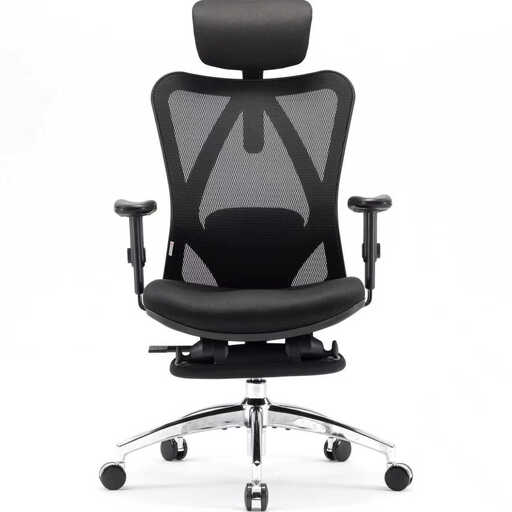
Why it stands out: This model integrates a retractable footrest, offering additional relaxation options during work breaks.
Pros:
Who is it for? Users looking for a versatile home office chair that not only supports focused work but also enables comfortable breaks with their legs elevated.
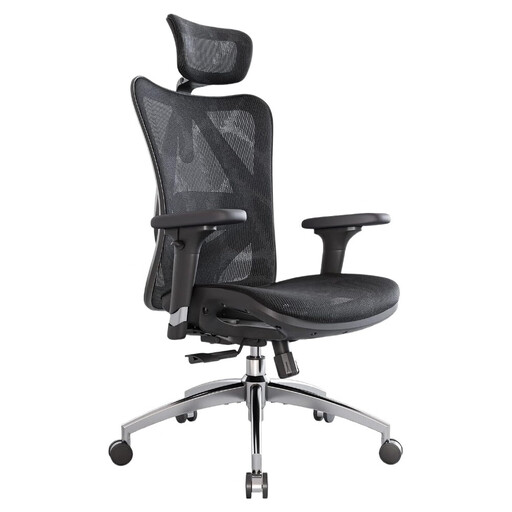
Why it stands out: The 3D armrests offer advanced adjustment options in height, depth, and rotation for precise adaptation to any work or relaxation posture.
Pros:
Who is it for? Users who place the highest value on detailed and flexible adjustment of the armrests and lumbar support to precisely optimise their sitting position.

Why it stands out: The 80° flip-up 3D armrests make this chair particularly space-saving, as it can be pushed completely under the desk.
Pros:
Who is it for? Individuals with limited space in their home office or workplace who need a flexible chair that can be easily stowed away when not in use, without sacrificing ergonomic features.
The models presented already cover a wide range of needs. However, if you wish to explore further alternatives, especially if you are specifically looking for a mesh office chair with footrest, you will find additional models with different features in our broader category selection.
An office chair is considered ergonomic if it has multiple adjustment options to adapt to the individual body dimensions and movements of the user. These typically include adjustable seat height, seat depth, backrest, armrests, and lumbar support. The goal is to support a neutral body posture and minimise strain on the spine, neck, and joints.
A basic adjustment is typically done in this order:
Lumbar support is a very important feature of an ergonomic office chair. It fills the natural curve of the lumbar spine (lordosis) and prevents the lower back from slumping into an unhealthy, flat, or outwardly curved position. This significantly helps to relieve pressure on the intervertebral discs and prevent back pain that can result from prolonged sitting.